

Jammu, April 1:
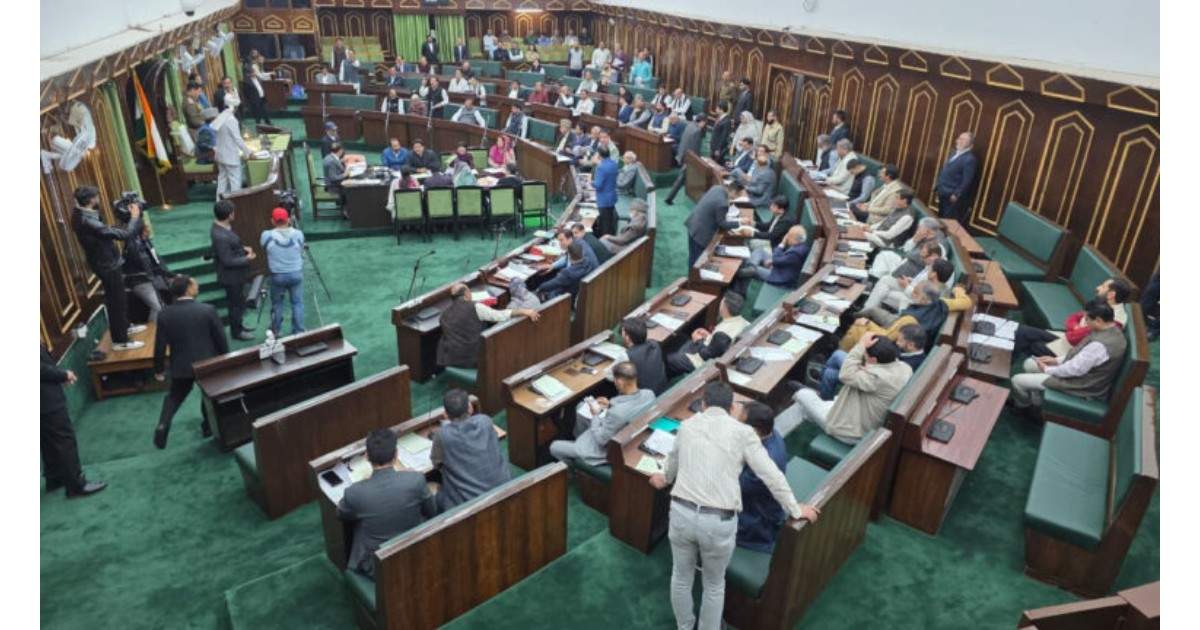
A rare show of unity unfolded in the Jammu and Kashmir Legislative Assembly on Wednesday as lawmakers from multiple political parties raised strong objections over the absence of senior bureaucrats during the crucial Question Hour session. The issue triggered a collective protest, with members across party lines demanding stricter enforcement of administrative accountability within the House.
The concern was first flagged towards the end of the Question Hour by National Conference (NC) MLA Nazi Gurezi, who criticized what he described as a declining respect for legislative proceedings by the bureaucracy. His remarks quickly resonated with legislators from both ruling and opposition benches, leading to a broader demonstration inside the Assembly.
Key Announcements / Highlights
- Legislators across parties protested the absence of bureaucrats during Question Hour.
- Concerns were raised about declining accountability of the executive to the legislature.
- BJP, NC, PDP, Congress, and independent MLAs jointly supported the protest.
- The Speaker clarified that only relevant departmental officials are required to attend due to space constraints.
- Calls were made to defer departmental business if officials fail to attend.
Lawmakers Question Administrative Accountability
Initiating the discussion, NC MLA Nazi Gurezi expressed concern over what he viewed as a growing disconnect between elected representatives and the administrative machinery. Drawing from his long tenure in the Assembly, he noted that earlier, the officers’ gallery used to be consistently occupied by senior officials during Question Hour.
Gurezi pointed out that the absence of key bureaucrats, including top-ranking officials such as the Chief Secretary and departmental secretaries, reflects a lack of seriousness towards legislative responsibilities. He argued that Question Hour is a fundamental mechanism through which elected representatives seek answers and hold the government accountable.
He further urged the Chief Minister to intervene and ensure that officials attend Assembly proceedings regularly. According to him, bureaucrats are public servants and must remain answerable to elected representatives, who in turn represent the people.
Cross-Party Unity in Protest
What made the development significant was the immediate support Gurezi received from members of various political parties. Legislators from the Bharatiya Janata Party (BJP) were among the first to stand in protest, signaling that the issue transcended political affiliations.
Soon after, MLAs from the National Conference, Peoples Democratic Party (PDP), Congress, Peoples Conference (PC), and independent members joined the protest, creating a rare moment of consensus in the Assembly.
Such unified demonstrations are relatively uncommon in legislative settings, where political divisions often dominate proceedings. The collective response underscored the seriousness of the issue and highlighted a shared concern among lawmakers about the functioning of the administrative system.
Speaker’s Clarification on Attendance Norms
Responding to the concerns, Speaker Abdul Rahim Rather acknowledged the importance of bureaucratic presence but also highlighted practical limitations. He clarified that while it is essential for senior officials to be present during discussions related to their departments, it is not feasible for the entire secretariat to attend due to space constraints in the Assembly.
The Speaker emphasized that only the top officials of departments whose questions are listed for the day should be present in the officers’ gallery. This, he suggested, would ensure both efficiency and adherence to procedural norms without overcrowding the limited space available.
His remarks aimed to strike a balance between ensuring accountability and addressing logistical challenges within the Assembly infrastructure.
Opposition Pushes for Stricter Enforcement
Despite the Speaker’s clarification, several legislators insisted that existing rules already mandate the presence of relevant administrative officials during Question Hour.
BJP MLA Sham Lal Sharma pointed out that the Assembly’s rulebook clearly requires the attendance of departmental secretaries when questions related to their departments are being discussed. He argued that non-compliance with these rules undermines the legislative process.
Sharma went a step further by suggesting that the business of any department should be deferred if its officials fail to attend the session. This proposal, if implemented, could significantly impact how government business is conducted in the Assembly, potentially forcing stricter adherence to attendance norms.
Another BJP legislator, Pawan Gupta, echoed similar concerns, questioning the absence of bureaucrats and reiterating the principle that the executive branch is accountable to the legislature. He stressed that such accountability is a cornerstone of democratic governance and must be upheld at all times.
Why Question Hour Matters
Question Hour is widely regarded as one of the most important segments of legislative proceedings. It provides a structured opportunity for elected representatives to question the government on its policies, decisions, and performance.
Through this mechanism, legislators can seek clarifications, highlight issues affecting their constituencies, and ensure transparency in governance. The presence of senior bureaucrats during this period is crucial, as they provide detailed and accurate responses to queries raised by MLAs.
Any disruption or dilution of this process can weaken the accountability framework and reduce the effectiveness of legislative oversight.
Context / Background
The issue of bureaucratic accountability has been a recurring theme in legislative bodies across India. Over the years, several state assemblies and even Parliament have witnessed similar concerns being raised by lawmakers.
In Jammu and Kashmir, the evolving administrative structure and governance challenges have added further complexity to the relationship between the executive and the legislature. Ensuring that bureaucrats remain responsive and accessible to elected representatives is seen as essential for maintaining public trust in democratic institutions.
Historically, the presence of senior officials during Assembly sessions has been viewed as a sign of respect for the legislative process. Any deviation from this norm tends to attract criticism from lawmakers, as seen in Wednesday’s proceedings.
Public Impact
The issue may appear procedural at first glance, but it has broader implications for governance and public service delivery.
When bureaucrats are present in the Assembly, they are directly exposed to the concerns and questions raised by elected representatives. This helps ensure that government policies are implemented effectively and that grievances from the public are addressed promptly.
On the other hand, the absence of officials can lead to delays in obtaining information, weaken oversight, and reduce the overall efficiency of governance. For citizens, this could translate into slower resolution of issues and reduced accountability from government departments.
The protest by legislators, therefore, reflects a deeper concern about maintaining the integrity of democratic processes and ensuring that governance remains transparent and responsive.
Future Outlook and Next Steps
The developments in the Assembly are likely to prompt discussions within the government on reinforcing attendance protocols for bureaucrats. There may also be a review of existing rules to ensure clearer guidelines and stricter enforcement.
If suggestions such as deferring departmental business are considered, it could lead to more disciplined participation by officials in legislative proceedings. At the same time, logistical challenges such as space constraints may need to be addressed through administrative adjustments or infrastructural improvements.
The incident also serves as a reminder of the delicate balance between the executive and legislative branches of government. Maintaining this balance is essential for the smooth functioning of democracy and for ensuring that public institutions operate with accountability and transparency.
As the Assembly continues its session, it remains to be seen whether the concerns raised by legislators will lead to tangible changes in administrative practices or whether the issue will resurface in future sittings.
Inputs and images : Hindusthan Samachar
Edited By E. Devanshi varma
Also Read: Odisha Police Marks 91st Foundation Day, Highlights Crackdown on Maoists, Cybercrime and Drugs
Follow us on Google News: Click Here