

The arrival of the southwest monsoon is one of the most closely watched annual weather events in India. Beyond bringing relief from intense summer heat, the monsoon plays a crucial role in agriculture, water supply, power generation, and the broader economy. Every year, millions of people track its progress as it moves across the country, determining planting schedules, reservoir levels, and rainfall expectations for the months ahead.
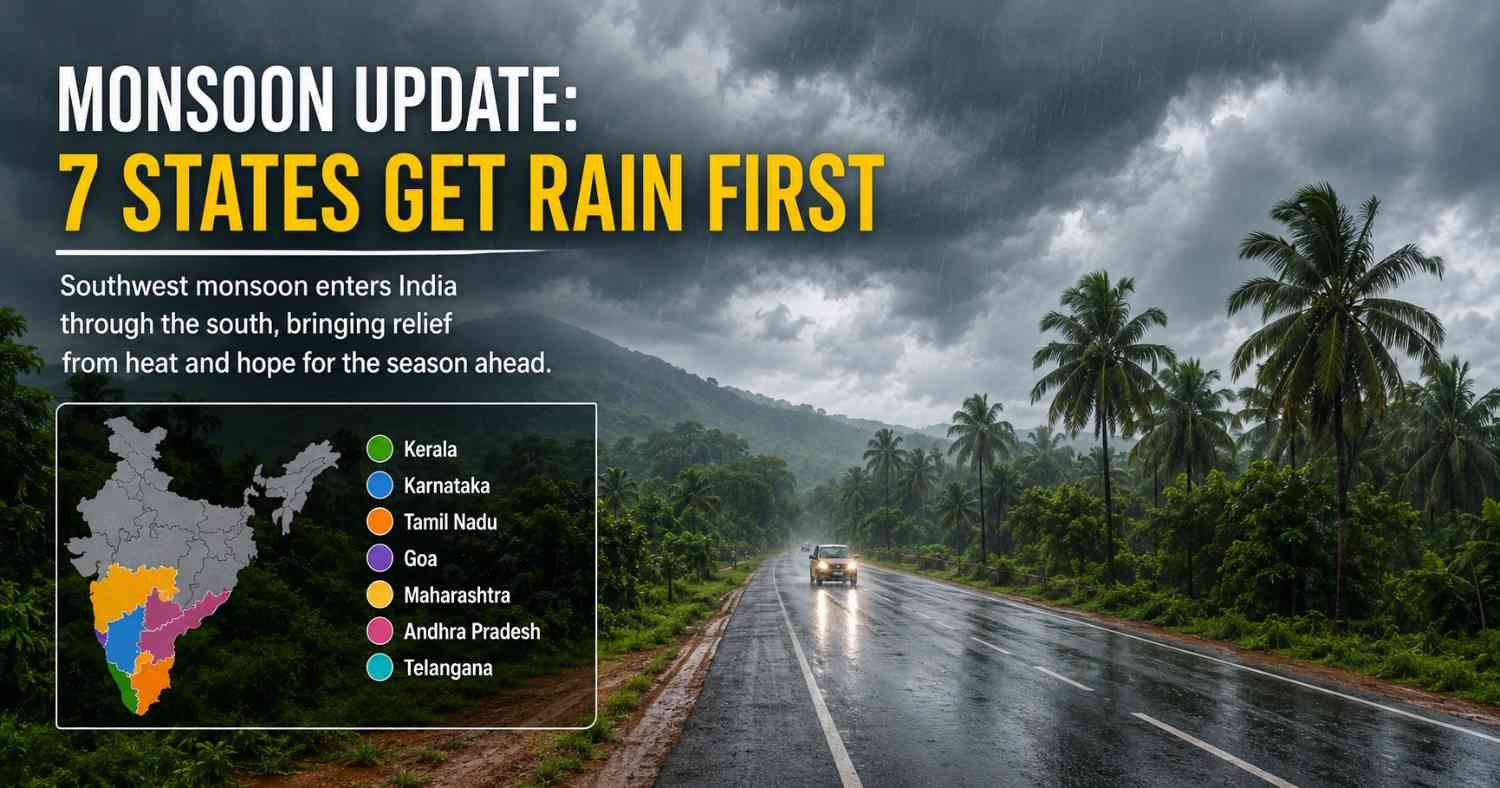
As the rainy season begins its journey over the Indian subcontinent, certain states experience monsoon showers much earlier than others due to their geographic location and exposure to moisture-laden winds from the Arabian Sea and the Bay of Bengal. These regions effectively serve as India’s gateway to the monsoon season.
Why the Monsoon Reaches Some States First
The southwest monsoon generally arrives over the southern tip of India before advancing northward and eastward. Its progress is influenced by atmospheric conditions, sea-surface temperatures, wind patterns, and pressure systems that develop over the Indian Ocean.
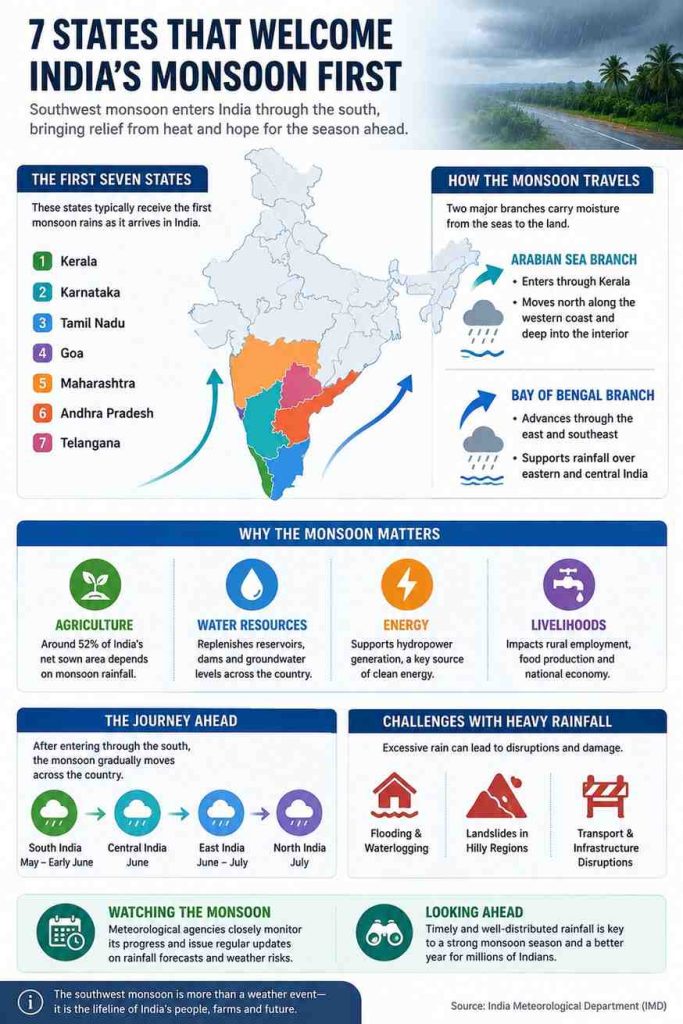
The monsoon consists of two major branches: the Arabian Sea branch and the Bay of Bengal branch. Together, these systems transport vast amounts of moisture toward the Indian landmass. Coastal and southern states are typically the first to experience widespread rainfall because they lie directly in the path of these moisture-bearing winds.
Meteorologists closely monitor factors such as wind speed, cloud formation, rainfall intensity, and atmospheric circulation before officially declaring the onset of the monsoon in different regions.
The States That Usually Receive Monsoon Rain First
Kerala
Kerala traditionally marks the official arrival point of the southwest monsoon in India. The state’s western coastline faces the Arabian Sea, making it highly susceptible to moisture-rich winds. Rainfall often begins with widespread showers accompanied by thunderstorms and cloudy conditions.
The onset of monsoon in Kerala is considered a significant benchmark because it provides an indication of how the rainy season may progress across the rest of the country.
Karnataka
After entering Kerala, monsoon conditions typically spread into coastal and southern parts of Karnataka. Districts along the coast often witness heavy rainfall, while interior regions gradually experience increasing precipitation.
The Western Ghats enhance rainfall in many parts of the state by forcing moisture-laden winds to rise, resulting in intense showers.
Tamil Nadu
Although Tamil Nadu receives a substantial portion of its annual rainfall from the northeast monsoon later in the year, several districts in the western and southern regions can experience southwest monsoon showers during the initial phase of the season.
Rainfall distribution varies considerably across the state because of its diverse geography and rain-shadow regions.
Goa
Goa is among the earliest states to experience monsoon activity after its arrival on the southwestern coast. The state’s coastal location and proximity to the Western Ghats contribute to significant rainfall during the early stages of the season.
The arrival of the monsoon is especially important for water resources, tourism planning, and agricultural activities across the region.
Maharashtra
Parts of Maharashtra, particularly the Konkan region, are among the first areas outside southern India to receive substantial monsoon rainfall. Cities and districts along the western coast often witness heavy downpours as the monsoon advances northward.
Rainfall in the state is critical for reservoirs that supply water to major urban centers and support agricultural production across rural districts.
Andhra Pradesh
Coastal Andhra Pradesh typically begins receiving monsoon rainfall as weather systems strengthen over the Bay of Bengal. Rainfall patterns can vary depending on local conditions, but the state’s coastal districts generally experience increasing precipitation during the early phase of the monsoon season.
Agriculture in Andhra Pradesh depends heavily on timely rainfall, making monsoon progress particularly important for farmers and policymakers.
Telangana
Telangana usually experiences the effects of advancing monsoon systems shortly after neighboring coastal regions begin receiving widespread rainfall. Increased cloud cover, thunderstorms, and steady precipitation often signal the seasonal transition from summer to the rainy period.
Adequate rainfall is vital for groundwater recharge, reservoirs, and crop cultivation across the state.
How the Monsoon Advances Across India
Following its arrival in southern and western regions, the monsoon gradually moves toward central, eastern, and northern India. States such as Odisha, Chhattisgarh, West Bengal, Bihar, Madhya Pradesh, Uttar Pradesh, and eventually parts of northwestern India receive rainfall as the system progresses.
The pace of advancement varies from year to year. Favorable atmospheric conditions can accelerate movement, while unfavorable conditions may temporarily slow its progress.
Weather agencies continuously assess these developments and issue updates regarding expected rainfall intensity, regional forecasts, and potential weather-related risks.
Why the Monsoon Matters to India’s Economy
The significance of the monsoon extends far beyond weather forecasts. Agriculture remains heavily dependent on seasonal rainfall despite advances in irrigation infrastructure. A large share of India’s farmland continues to rely on rain-fed cultivation.
Timely and adequate rainfall supports the sowing of crops such as rice, pulses, cotton, soybean, and sugarcane. Strong monsoon performance can contribute positively to agricultural output, rural incomes, and food production.
Rainfall also influences:
- Reservoir and dam storage levels
- Groundwater recharge
- Hydropower generation
- Drinking water availability
- Rural employment opportunities
- Inflation trends linked to food prices
As a result, economists, policymakers, businesses, and farmers closely monitor monsoon forecasts every year.
Challenges Associated With Heavy Rainfall
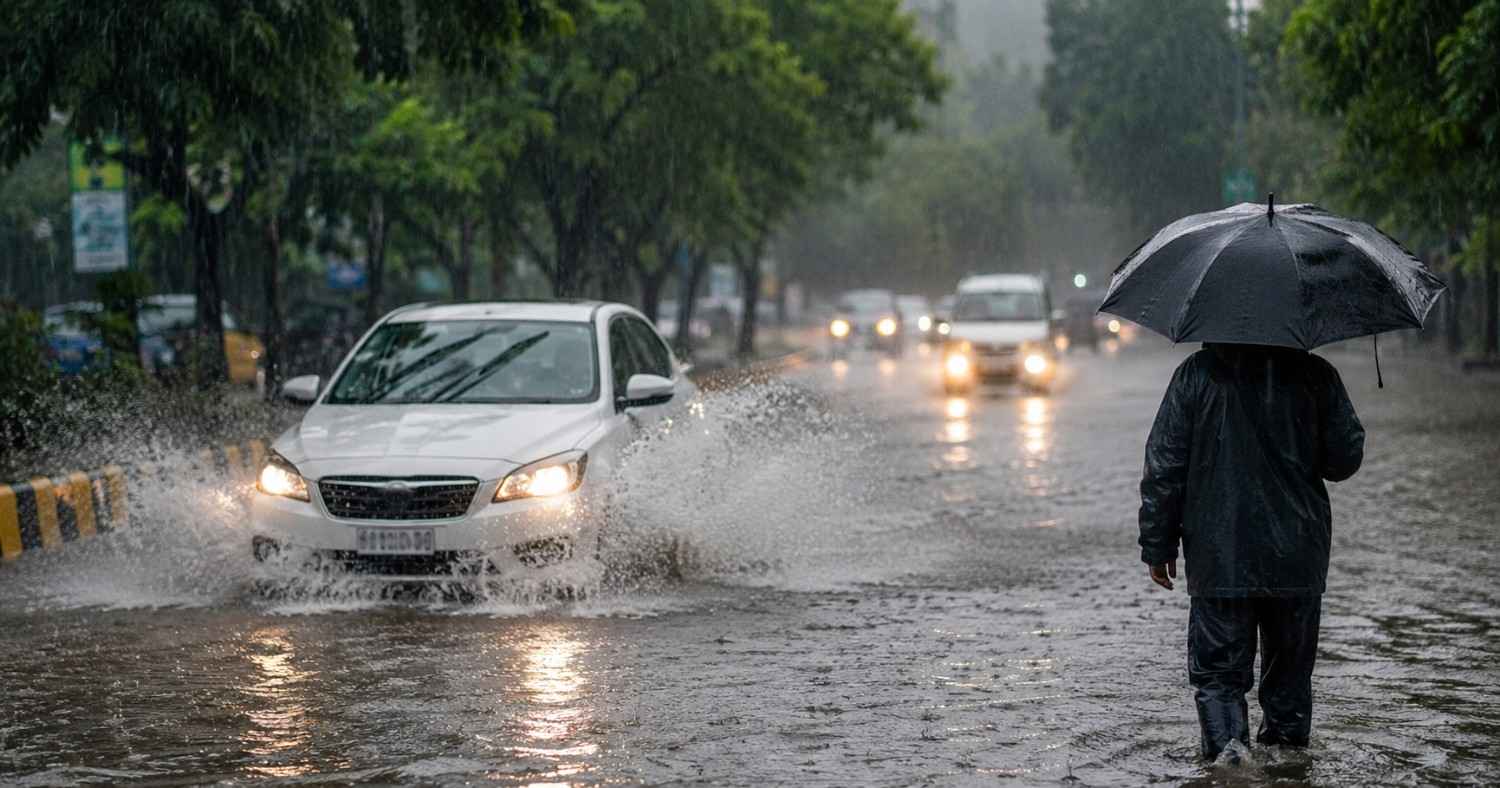
While monsoon rainfall provides substantial benefits, excessive precipitation can create challenges. Urban flooding, waterlogging, landslides, transportation disruptions, and crop damage are common concerns in areas receiving intense rainfall.
Rapid urbanization has increased vulnerability in many cities where drainage systems struggle to cope with heavy downpours. Authorities often issue advisories and preparedness measures during periods of particularly intense rainfall activity.
Coastal regions and districts near hill ranges remain especially susceptible to weather-related disruptions during peak monsoon periods.
What Residents Can Expect During Early Monsoon Weeks
The first weeks of the monsoon season typically bring noticeable changes in weather conditions. Temperatures often decline following prolonged summer heat, humidity patterns shift, and cloud cover becomes more persistent.
Residents in early-arrival states can expect:
- Frequent rain showers
- Thunderstorms in some regions
- Improved air quality after rainfall
- Cooler daytime temperatures
- Increased humidity levels
- Temporary disruptions to travel and outdoor activities
Local weather conditions can still vary significantly, and meteorologists recommend following official forecasts for district-specific updates.
Looking Ahead
The progression of the southwest monsoon remains a closely watched development each year because of its widespread influence on daily life, agriculture, infrastructure, and economic activity. States along India’s southern and western coastlines typically serve as the first recipients of seasonal rainfall, setting the stage for the monsoon’s gradual advance across the country.
As weather systems continue evolving over the coming weeks, rainfall patterns in these early-arrival states will provide important indicators regarding the broader trajectory of India’s most important weather season. For farmers preparing fields, cities managing water resources, and households seeking relief from summer temperatures, the arrival of the monsoon signals the beginning of a period that shapes much of the nation’s year ahead.
Highlights
- Kerala typically marks the official entry point of the southwest monsoon into India each year.
- Karnataka, Tamil Nadu, Goa, Maharashtra, Andhra Pradesh, and Telangana are among the earliest states to experience seasonal rainfall.
- The monsoon advances through Arabian Sea and Bay of Bengal branches, carrying moisture across the country.
- Timely rainfall is crucial for agriculture, reservoir storage, groundwater recharge, and hydropower generation.
- Early monsoon progress is closely monitored because it influences crop sowing and water management decisions.
- Heavy rainfall can also create challenges, including flooding, waterlogging, and transport disruptions.
- Weather agencies continue tracking monsoon advancement as it moves toward central and northern India.
FAQ
1. Which state usually receives the monsoon first in India?
Kerala is traditionally the first state where the southwest monsoon officially arrives before advancing across the rest of the country.
2. Why does the monsoon reach southern states first?
Southern coastal states are geographically closest to the moisture-bearing winds arriving from the Arabian Sea and Bay of Bengal.
3. Which states generally experience early monsoon rainfall?
Kerala, Karnataka, Tamil Nadu, Goa, Maharashtra, Andhra Pradesh, and Telangana are among the earliest states to receive monsoon showers.
4. Why is the monsoon important for India?
The monsoon supports agriculture, water supply, hydropower production, groundwater recharge, and overall economic activity.
5. How does the monsoon spread across India?
After reaching southern India, it gradually advances northward and eastward, covering central, eastern, and northern regions over several weeks.
6. What crops depend heavily on monsoon rainfall?
Rice, soybean, cotton, pulses, sugarcane, and several other kharif crops depend significantly on seasonal rainfall.
7. Can heavy monsoon rainfall cause problems?
Yes. Excessive rainfall may lead to flooding, landslides, waterlogging, infrastructure damage, and transport disruptions.
8. Does every state receive rainfall at the same time?
No. The monsoon follows a gradual progression pattern, meaning different states receive rainfall at different times.
Edited By E. Devanshi varma
Also Read: IPL Honey-Trap Row Sparks 7 Big Questions Before Playoffs
Follow us on Google News: Click Here