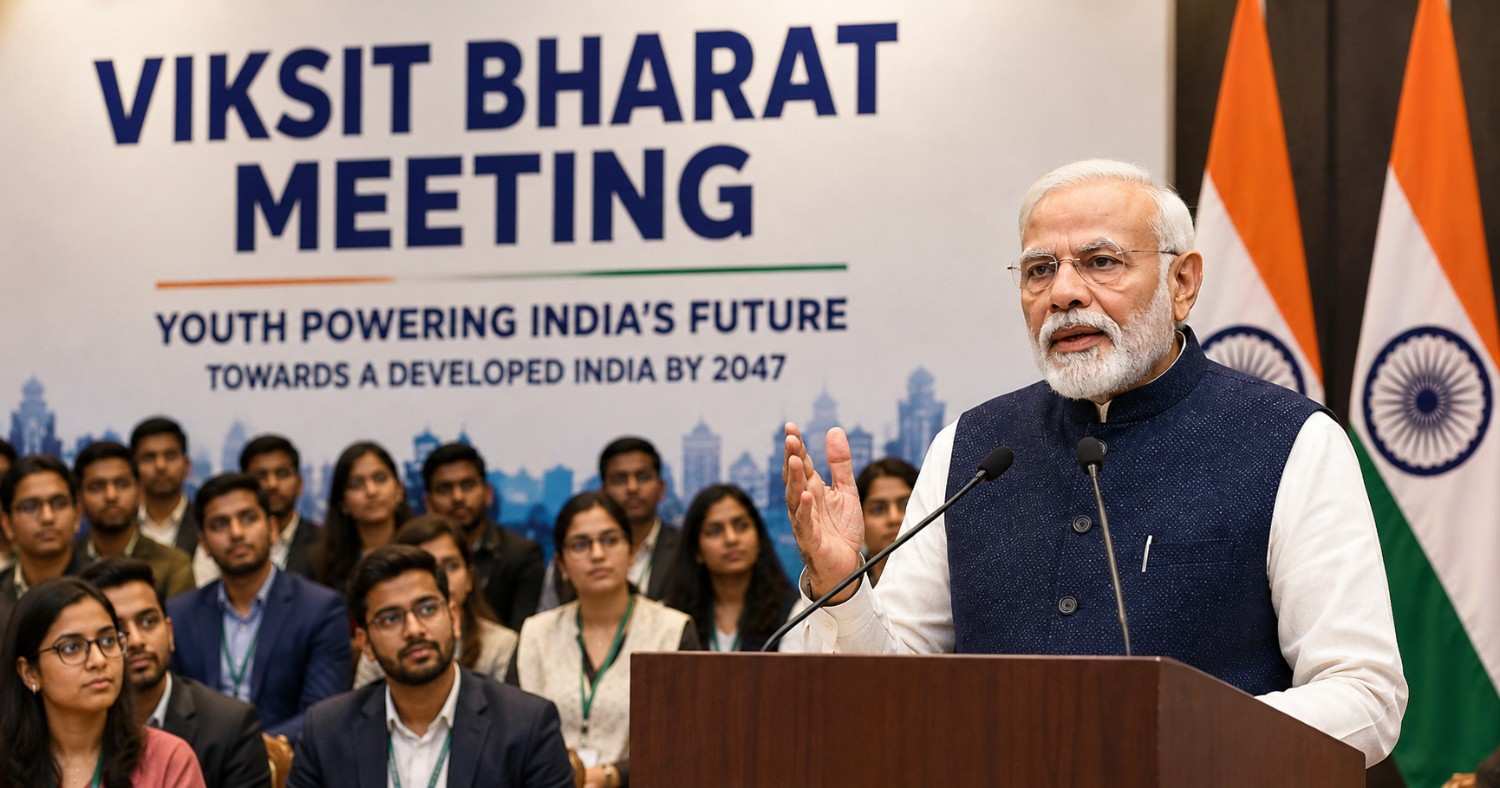


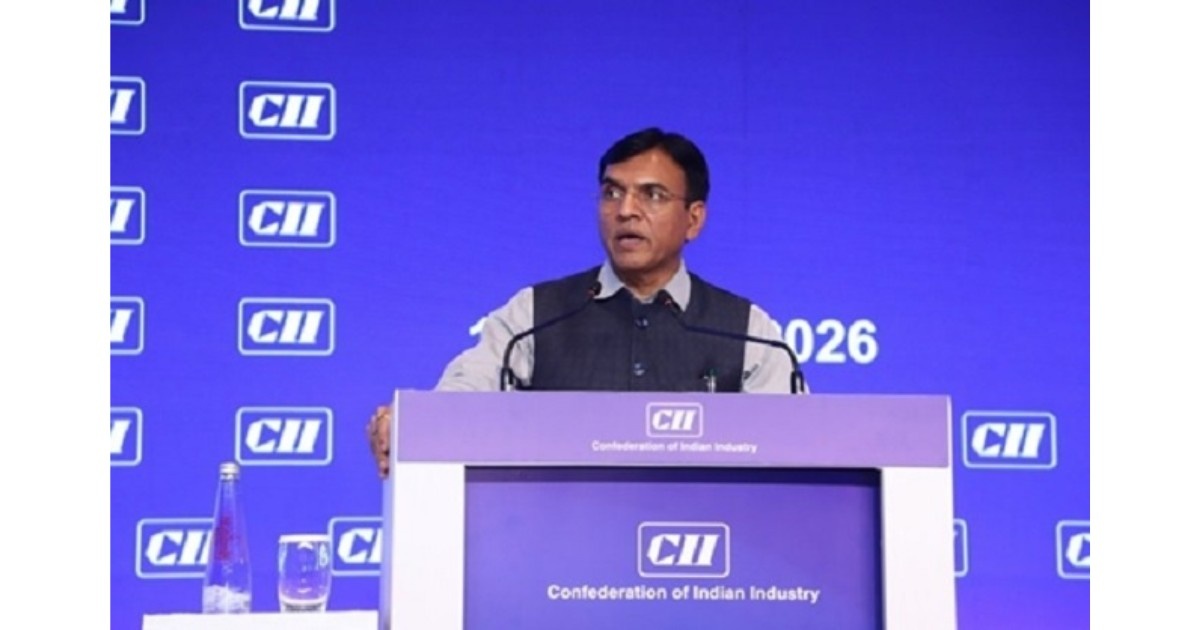
Union Labour Minister Mansukh Mandaviya says the Centre has fully implemented the four labour codes, aiming to balance industrial growth with worker welfare and broader social security coverage.
Union Labour and Employment Minister Mansukh Mandaviya on Tuesday said the Central Government has fully implemented the country’s four labour codes, describing the reforms as both worker-friendly and industry-oriented. Speaking at the annual business summit organised by the Confederation of Indian Industry in New Delhi, the minister said the reforms are designed to create a balance between industrial growth and labour welfare.
Addressing the summit themed “Next-Generation Labour Reforms: Accelerating Industrial Growth and Job Creation,” Mandaviya said the government has focused on reducing compliance burdens for industries while simultaneously expanding social security coverage for workers across the country.
The announcement comes at a time when India is attempting to strengthen manufacturing, improve ease of doing business, and generate large-scale employment opportunities amid changing economic conditions and evolving workplace structures.
Government Pushes Labour and Industry Partnership
During his address, Mandaviya emphasised that labour and industry should not be viewed as competing interests. Instead, he said both sectors must work together to achieve long-term economic growth and employment generation.
According to the minister, the government’s labour reforms are aimed at simplifying older and more complex labour laws that often created confusion for employers as well as workers. He stated that the new framework seeks to create a modern labour ecosystem suited to India’s changing economic needs.
Mandaviya also said the government is committed to protecting workers, farmers, and economically weaker sections while ensuring that industries are able to grow without excessive procedural hurdles.
He noted that industrial growth and labour welfare are interconnected and that a stable workforce with better social security benefits ultimately supports productivity and economic expansion.
What Are the Four Labour Codes?
India’s labour reforms are centred around four labour codes that consolidate 29 existing labour laws into a simplified structure. The reforms were introduced to make labour regulations easier to understand and implement while extending protections to more workers, including those in the unorganised sector.
The four labour codes include:
Code on Wages
This code standardises wage-related laws across sectors. It introduces provisions related to minimum wages, timely payment of salaries, and equal remuneration. One of its significant aspects is the attempt to bring all categories of workers under a common wage framework.
Industrial Relations Code
The Industrial Relations Code focuses on dispute resolution, industrial relations, and working conditions between employers and employees. It also includes rules regarding strikes, layoffs, and retrenchment procedures.
Occupational Safety, Health and Working Conditions Code
This code combines multiple laws related to workplace safety and employee welfare. It covers health standards, working conditions, safety measures, and welfare facilities for workers across industries.
Social Security Code
The Social Security Code aims to widen access to benefits such as provident fund, insurance, maternity benefits, and pension schemes. Importantly, it also seeks to include gig workers, platform workers, and workers from the informal sector under social security systems.
The labour codes were passed by Parliament earlier, but implementation has progressed gradually due to the need for states to finalise rules and administrative mechanisms.
Expansion of Social Security Coverage
One of the central points highlighted by Mandaviya during the summit was the expansion of social security coverage in India over the last decade.
The minister stated that social security coverage has increased from nearly 29 crore people around ten years ago to approximately 94 crore people at present. This expansion, according to the government, reflects efforts to bring more workers into formal welfare systems through various labour and social welfare initiatives.
Social security in India includes schemes related to pensions, employee insurance, provident fund, maternity benefits, and healthcare support for workers and vulnerable populations.
Experts have long argued that a large section of India’s workforce, especially those employed in the informal sector, lacked adequate financial and legal protections. India’s informal sector employs millions of workers in construction, agriculture, transportation, domestic work, and small businesses, many of whom traditionally operated outside formal social security frameworks.
The government has increasingly focused on digitisation, worker registration, and direct benefit systems to improve access to welfare schemes.

Focus on Ease of Doing Business
The government has repeatedly stated that one of the objectives of labour reforms is to improve the ease of doing business in India.
Businesses and industry groups had earlier raised concerns about the complexity of India’s older labour laws, which involved multiple registrations, licences, and compliance requirements under different legislations. The labour codes aim to simplify this structure by creating unified processes and reducing overlapping regulations.
Mandaviya said the government has worked to lower the compliance burden on industries, enabling companies to focus more on productivity and expansion. Supporters of the reforms argue that simplified labour regulations can encourage investment, improve manufacturing competitiveness, and create more formal employment opportunities.
Industry associations have generally welcomed attempts to simplify labour regulations, particularly in sectors such as manufacturing, logistics, textiles, and infrastructure where labour-intensive operations are common.
At the same time, labour unions in different parts of the country have previously expressed concerns over certain provisions related to worker protections, dispute mechanisms, and hiring flexibility. The debate around labour reforms has therefore remained an important issue in India’s economic policy discussions.
Labour Reforms and Job Creation
The Centre has linked labour reforms with its broader goal of boosting employment and industrial development.
India is currently witnessing rapid growth in sectors such as manufacturing, digital services, logistics, renewable energy, and infrastructure development. Policymakers believe market reforms could help industries adapt more efficiently to technological and economic changes while generating employment opportunities for the country’s large youth population.
The government has also emphasised the importance of formalising jobs, improving skill development, and increasing worker participation in organised sectors.
Mandaviya said industries and workers need to adapt to changing economic realities and work together toward a shared future. He stressed that reforms should not be viewed only from a business perspective, but also from the standpoint of worker welfare and long-term economic stability.
Why the Labour Codes Matter
The codes represent one of the biggest structural changes to India’s framework in decades. The reforms are significant because they attempt to address two long-standing challenges simultaneously — industrial competitiveness and worker protection.
For industries, the reforms are expected to reduce legal complexity and administrative burdens. For workers, the government says the changes can improve access to social security and standardised labour protections.
The inclusion of gig and platform workers under the Social Security Code has drawn particular attention in recent years due to the rapid expansion of app-based employment and freelance work in India.
Workers associated with delivery platforms, ride-sharing services, and digital marketplaces often operate without traditional employment contracts or long-term benefits. The new framework attempts to create mechanisms through which such workers may receive social security support.
However, the full impact of the reforms will depend heavily on implementation by both the Centre and states, along with awareness among employers and workers regarding their rights and obligations under the new system.
Industry Response and Policy Outlook
Business leaders attending the CII summit largely focused on how labour reforms can support India’s ambitions of becoming a stronger global manufacturing and investment destination.
India has been competing to attract global supply chains and industrial investments, especially in sectors such as electronics, semiconductors, textiles, and renewable energy manufacturing. Policymakers believe that a predictable and simplified environment could strengthen investor confidence.
The government has also highlighted that reforms are part of a broader policy effort that includes infrastructure development, digital governance, skill training, and production-linked incentive schemes aimed at increasing industrial output.
Even as implementation progresses, labour reforms are likely to remain closely watched by industries, organisations, economists, and policymakers due to their direct impact on employment conditions and economic growth.
Mandaviya reiterated that the government’s approach remains focused on ensuring that economic growth benefits both industries and workers. He said industry must move forward together as India adapts to changing workplace and economic realities in the coming years.
Inputs and images : Hindusthan Samachar
Edited By E. Devanshi varma
Also Read: Assam Assembly Polls See 7 Major Highlights as Turnout Peaks, Counting Set for May 4
Follow us on Google News: Click Here