

India’s retail inflation edged higher in April 2026, driven by rising food and fuel-related costs amid global geopolitical tensions and continued pressure on household expenses.
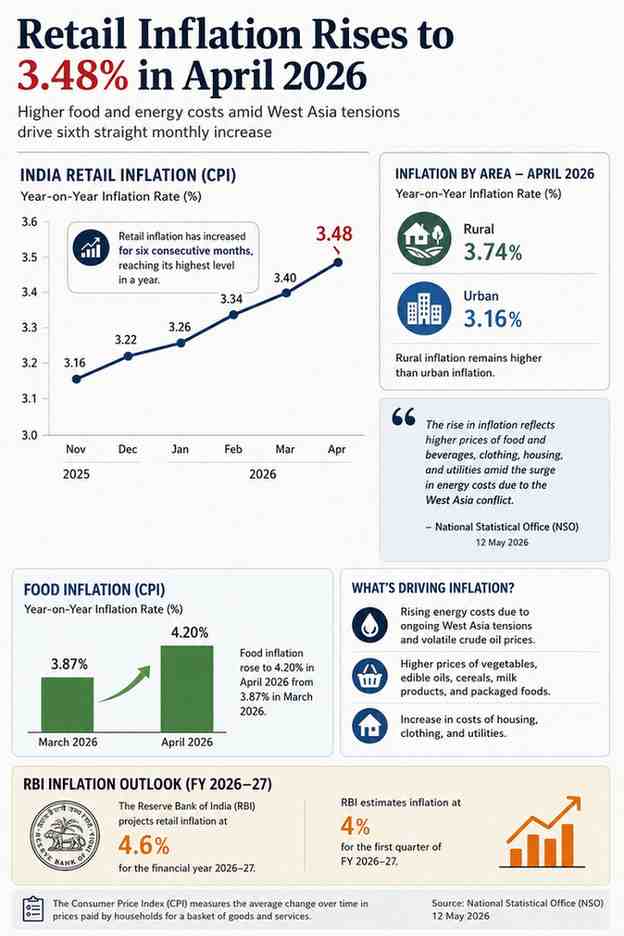
India’s retail inflation rose to 3.48% in April 2026, marking the sixth straight monthly increase in consumer prices as higher food and energy costs continued to affect household budgets across the country. The latest data released by the National Statistical Office showed that inflation climbed slightly from 3.40% recorded in March.
The increase comes at a time when global crude oil prices remain volatile due to ongoing tensions in West Asia, particularly the standoff involving the United States and Iran. Economists and policymakers are closely monitoring the situation, as prolonged geopolitical uncertainty could push transportation, cooking fuel, and essential commodity prices even higher in the coming months.
According to the official figures, inflation based on the Consumer Price Index (CPI) has now reached its highest level in nearly a year, reflecting persistent upward pressure on prices of food items, housing, clothing, and utilities.
Food and Energy Costs Continue to Push Inflation Up
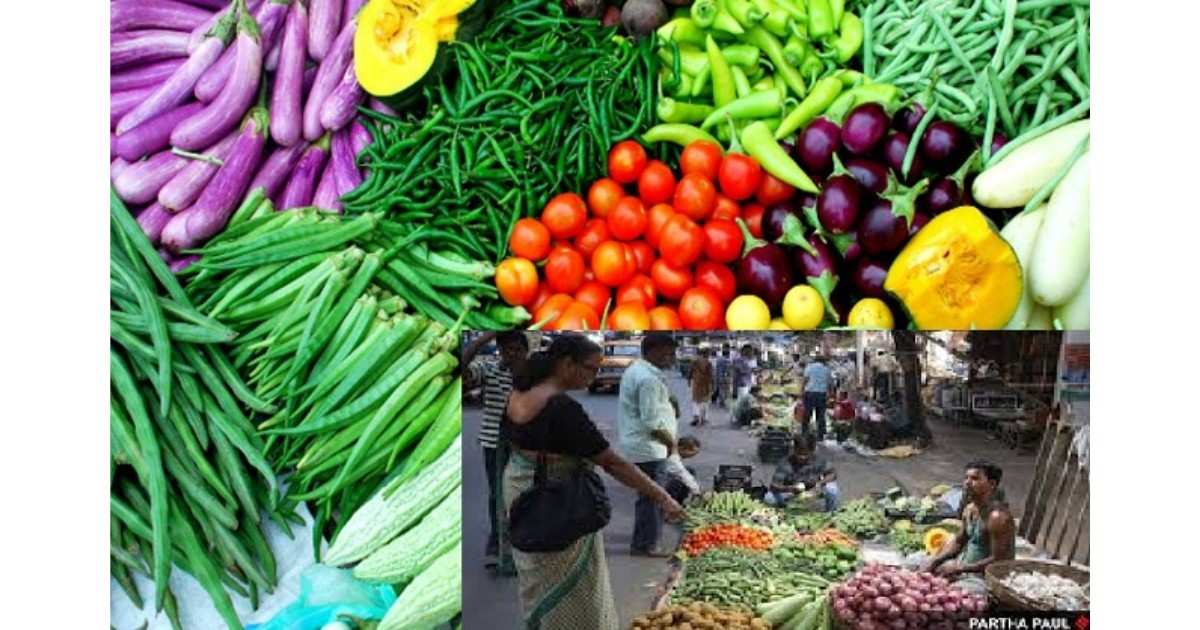
Data from the NSO showed that food inflation rose to 4.2% in April on a year-on-year basis, compared to 3.87% in March. The increase was mainly attributed to higher prices of vegetables, edible oils, cereals, milk products, and packaged food items.
Energy-related expenses also played a significant role in the rise. Higher international crude oil prices have increased transportation and logistics costs, which eventually feed into retail prices paid by consumers.
Analysts say the impact of rising fuel costs is often broader than direct petrol or diesel price increases. Transportation expenses influence the cost of moving agricultural produce, manufactured goods, and daily essentials across states. As a result, consumers tend to experience inflation across multiple categories simultaneously.
The inflation trend also reflects increasing costs in sectors such as housing and clothing, which have seen steady price adjustments over the past few months due to higher input and supply-chain expenses.
Rural Inflation Remains Higher Than Urban Areas
The NSO data indicated that rural inflation stood at 3.74% in April, while urban inflation was lower at 3.16%.
The gap between rural and urban inflation highlights the stronger impact of food prices in rural regions, where households generally spend a larger share of income on essential commodities. Rising prices of vegetables, grains, and cooking essentials tend to affect rural consumers more sharply than urban households.
Economists note that rural inflation trends are particularly important for India because a large section of the population still depends on agriculture and informal-sector earnings. Sustained increases in food prices can directly influence household consumption patterns and savings.
Urban consumers, meanwhile, continue to face pressure from rising utility bills, transportation costs, rental expenses, and higher prices of consumer goods.
What the Latest CPI Numbers Mean
The Consumer Price Index is one of the most important indicators used to measure in India. It tracks changes in the prices of goods and services commonly purchased by households, including food, fuel, housing, clothing, healthcare, education, and transportation.
The Reserve Bank of India uses CPI-based inflation as a major benchmark while deciding interest rates and monetary policy measures.
A moderate inflation rate is generally considered healthy for economic growth, but prolonged increases in prices can reduce consumer purchasing power and affect household spending.
India’s inflation had remained relatively controlled in recent months compared to several major global economies. However, rising geopolitical tensions and volatile commodity prices have renewed concerns about future inflationary pressures.
The latest increase, although modest, suggests that price pressures remain active across multiple sectors of the economy.
RBI’s Inflation Outlook Remains Above Current Levels
Last month, the Reserve Bank of India projected retail inflation at 4.6% for the financial year 2026–27. The central bank also estimated inflation at around 4% during the first quarter of the financial year.
The RBI’s forecast indicates that inflation may continue to remain elevated compared to the current 3.48% reading, especially if global energy prices rise further or food supply disruptions emerge during the monsoon season.
The central bank has consistently maintained that inflation management remains one of its top priorities while balancing economic growth concerns.
In recent years, the RBI has aimed to keep inflation within its target range of 2% to 6%, with an ideal midpoint target of 4%.
Financial market experts believe the latest inflation figures are unlikely to trigger immediate policy changes, but future decisions will depend heavily on international oil prices, domestic food supply conditions, and global economic developments.
West Asia Crisis Adds Fresh Pressure on Global Markets
The continuing tensions in West Asia have become a major concern for energy-importing countries like India. Any disruption in crude oil supply routes or further escalation in the region could lead to sharper increases in global oil prices.
India imports a significant portion of its crude oil requirements, making domestic fuel prices vulnerable to international market fluctuations.
Higher crude prices typically affect multiple sectors, including transportation, manufacturing, aviation, agriculture, and logistics. This can create a chain reaction that increases the overall cost of goods and services.
Experts say that if geopolitical tensions continue for an extended period, inflationary pressure may intensify despite efforts by policymakers to stabilise prices.
The government and the RBI are expected to closely monitor commodity markets and supply-side developments over the next few months.
Impact on Consumers and Household Budgets
For consumers, even a moderate rise in inflation can gradually affect everyday spending patterns. Higher food prices tend to impact middle-income and lower-income households the most, as a significant share of their monthly expenses goes toward essential goods.
Families may also face increased costs for transportation, electricity, cooking fuel, and housing-related expenses if energy prices continue to rise globally.
Retail inflation also influences savings and borrowing patterns. Higher inflation can reduce the real value of savings while potentially affecting loan interest rates over time if monetary policy becomes tighter.
Businesses, particularly small and medium enterprises, may also experience higher operational costs due to rising raw material and transportation expenses.
At the same time, some economists argue that remaining below the RBI’s upper tolerance limit still provides policymakers with room to support economic growth if required.
Food Prices Likely to Remain a Major Factor
Food inflation is expected to remain one of the most closely watched indicators in the coming months, especially ahead of the monsoon season.
Agricultural output, rainfall distribution, transportation costs, and supply-chain efficiency will all play a critical role in determining future price trends.
Any disruptions caused by weather conditions or global commodity volatility could add fresh pressure on essential food prices.
Government agencies are also expected to continue monitoring buffer stocks and supply management measures to prevent sharp spikes in prices of essential commodities.
Economists believe stable agricultural production and easing global crude oil prices would be necessary to keep inflation under control in the second half of the financial year.
For now, the latest data signals that pressures, while still within the RBI’s target range, remain firmly present in the Indian economy. With food and energy costs continuing to rise and geopolitical tensions adding uncertainty to global markets, both policymakers and consumers are likely to remain cautious in the months ahead.
Inputs and images : Hindusthan Samachar
Edited By E. Devanshi varma
Also Read: Assam Assembly Polls See 7 Major Highlights as Turnout Peaks, Counting Set for May 4
Follow us on Google News: Click Here