



The technology sector has long been viewed as one of the most attractive industries for job seekers, offering competitive salaries, rapid career growth, and opportunities to work on cutting-edge innovations. However, the hiring landscape has changed significantly over the past two years. While technology remains a critical driver of economic growth, companies across the sector have become more cautious about recruitment, creating new challenges for job seekers entering the market.
The slowdown in technology hiring has affected professionals ranging from recent graduates to experienced software engineers. As organizations focus on efficiency, cost control, and strategic investments, many candidates are finding that securing a role now requires greater specialization, adaptability, and persistence than during the hiring boom that followed the pandemic.
A Shift From Rapid Expansion to Selective Hiring
During the period of accelerated digital transformation, many technology companies expanded their workforces aggressively. Businesses invested heavily in cloud computing, e-commerce platforms, cybersecurity, digital services, and remote work technologies to meet rising demand.
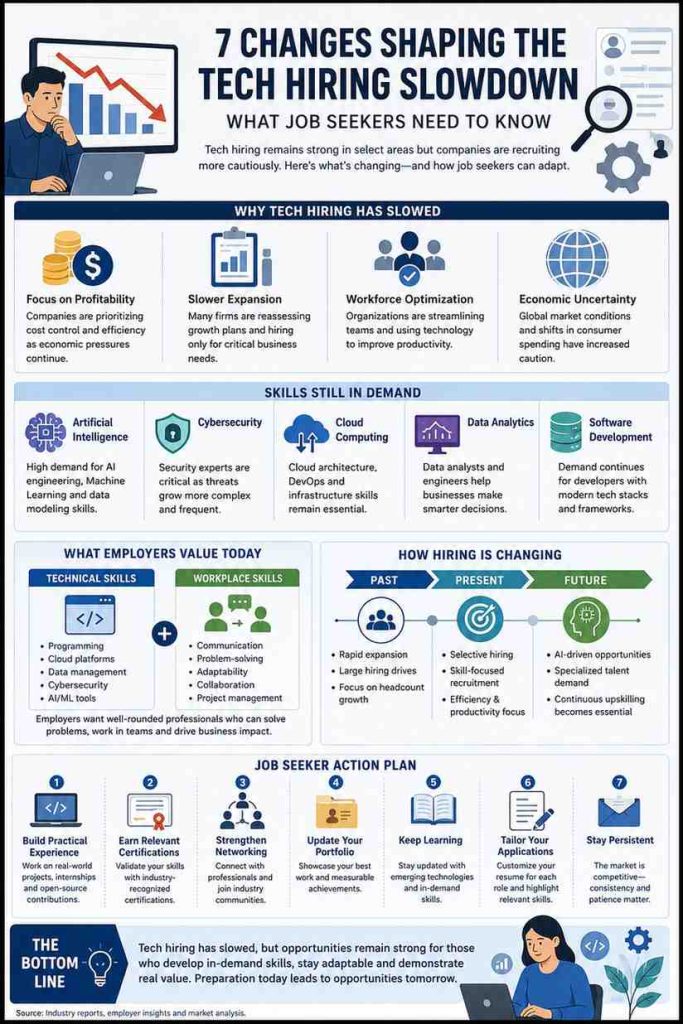
As economic conditions evolved, however, many firms reassessed their growth projections. Higher operating costs, changing consumer spending patterns, and pressure from investors to improve profitability encouraged companies to slow recruitment and streamline operations.
This shift has resulted in fewer open positions compared to previous years, particularly in areas where organizations believe existing teams can handle workloads more efficiently. Instead of large-scale hiring campaigns, employers are increasingly focusing on targeted recruitment for specialized positions.
Why the Slowdown Matters
The technology industry influences employment trends far beyond software companies alone. Financial institutions, healthcare providers, manufacturers, retailers, and government agencies all rely on technology talent.
When hiring slows across the broader technology ecosystem, competition for available roles increases significantly. Candidates often find themselves competing against larger pools of applicants, including professionals with substantial industry experience.
For recent graduates, this environment can be particularly challenging. Entry-level positions may attract hundreds or even thousands of applications, requiring candidates to demonstrate practical skills and project experience beyond academic qualifications.
Artificial Intelligence Is Changing Hiring Priorities
While overall hiring growth has moderated, artificial intelligence continues to reshape recruitment priorities across the industry.
Organizations are investing heavily in AI-related capabilities, creating demand for professionals with expertise in machine learning, data analytics, AI infrastructure, automation, and cybersecurity. Employers are increasingly seeking candidates who can integrate AI tools into existing business operations and improve productivity.
This trend highlights an important reality: a hiring slowdown does not necessarily mean opportunities have disappeared. Instead, demand is shifting toward skills that align with emerging technological priorities.
Job seekers who understand how AI is influencing business operations may find themselves better positioned for future opportunities.
Employers Are Looking Beyond Technical Skills
Technical expertise remains important, but employers are placing growing emphasis on broader workplace competencies.
Communication, problem-solving, collaboration, adaptability, and project management skills have become increasingly valuable. Companies want employees who can work effectively across departments, explain technical concepts to non-technical stakeholders, and contribute to business objectives.
Recruiters frequently report that candidates with a combination of technical knowledge and strong interpersonal skills often stand out during hiring processes.
This shift reflects a broader industry trend in which technology roles are becoming more integrated with overall business strategy rather than operating in isolation.
The Rise of Skill-Based Hiring
Many organizations are moving toward skill-based recruitment practices rather than relying exclusively on traditional degree requirements.
Hiring managers increasingly evaluate candidates based on portfolios, certifications, practical projects, internships, freelance work, and demonstrated competencies. This approach allows employers to identify talent capable of delivering results regardless of educational background.
For job seekers, this trend presents both opportunities and responsibilities. Building a portfolio of real-world work, contributing to open-source projects, earning industry certifications, and developing practical experience can strengthen a candidate’s profile in a competitive market.
The growing acceptance of alternative pathways into technology careers may also help individuals transition from other industries into technology-related roles.
Remote Work Opportunities Continue to Evolve
Remote work remains an important factor in technology recruitment, although policies vary considerably between employers.
Some companies continue to embrace fully remote models, while others have introduced hybrid arrangements that require employees to spend part of the week in physical offices.
The result is a more geographically competitive labor market. Candidates can apply for opportunities across regions, but they also face competition from applicants located far beyond their immediate area.
For employers, remote and hybrid work arrangements expand access to talent pools. For job seekers, they increase the importance of standing out through specialized expertise and measurable achievements.
Strategies Job Seekers Can Use
Although the hiring environment is more challenging than it was during periods of rapid expansion, there are several practical steps candidates can take to improve their prospects.
Focus on In-Demand Skills
Candidates should monitor industry trends and identify skills that employers continue to prioritize. Areas such as cybersecurity, cloud computing, artificial intelligence, data science, and digital infrastructure remain important across many sectors.
Continuous learning can help professionals remain relevant as technology evolves.
Build Practical Experience
Employers often value evidence of real-world problem-solving. Personal projects, internships, freelance assignments, hackathons, and open-source contributions can demonstrate capability and initiative.
Practical experience may be especially valuable for individuals seeking their first technology role.
Strengthen Professional Networks
Networking continues to play a significant role in recruitment. Industry events, professional associations, online communities, and networking platforms can help candidates connect with potential employers and learn about opportunities before they are publicly advertised.
Strong professional relationships can provide valuable career insights and referrals.
Tailor Applications Carefully
Submitting large numbers of generic applications is often less effective than targeting specific roles and aligning resumes with employer requirements.
Candidates who clearly demonstrate how their skills match business needs may improve their chances of progressing through screening processes.
What the Future Could Look Like
Industry analysts generally view the current hiring slowdown as part of a broader adjustment rather than a permanent decline in technology employment. Digital transformation remains a priority for organizations worldwide, and emerging technologies continue to create new business opportunities.
Future hiring trends will likely depend on economic conditions, technological innovation, investment levels, and organizational growth strategies. While recruitment may remain selective in the near term, demand for skilled technology professionals is expected to persist as businesses continue modernizing operations and adopting new technologies.
For job seekers, the environment requires a different approach than during previous hiring booms. Adaptability, continuous learning, and practical expertise are becoming increasingly important factors in career success.
The technology sector remains one of the world’s most influential industries, but the rules of recruitment are evolving. Candidates who focus on developing relevant skills, demonstrating measurable value, and staying aligned with industry trends may be better positioned to navigate the changing employment landscape and capitalize on future opportunities as hiring conditions improve.
Highlights
- Technology companies are hiring more selectively as businesses prioritize efficiency and profitability.
- Competition for available tech jobs has increased, particularly for entry-level positions.
- Demand remains strong in areas such as artificial intelligence, cybersecurity, cloud computing, and data analytics.
- Employers are increasingly valuing communication, adaptability, and problem-solving alongside technical expertise.
- Skill-based hiring is expanding, giving greater importance to portfolios, certifications, and practical experience.
- Remote and hybrid work models continue to influence recruitment and increase competition across regions.
- Continuous learning and specialization may help candidates remain competitive in a changing job market.
FAQ
1. Why is tech hiring slowing down?
Many companies are focusing on cost management, operational efficiency, and profitability after periods of rapid workforce expansion. This has led to more cautious recruitment strategies.
2. Does a hiring slowdown mean technology jobs are disappearing?
No. Demand for technology professionals continues, but hiring is becoming more targeted toward specific skills and business needs.
3. Which tech skills are currently in demand?
Artificial intelligence, cybersecurity, cloud computing, data analytics, machine learning, and digital infrastructure skills remain highly sought after.
4. Are entry-level candidates more affected by the slowdown?
Entry-level applicants often face greater competition because fewer junior roles are available compared to periods of rapid hiring growth.
5. How important are certifications in today’s job market?
Certifications can help demonstrate practical expertise and commitment to learning, particularly when combined with hands-on project experience.
6. Are remote technology jobs still available?
Yes. Many organizations continue offering remote or hybrid roles, though policies vary depending on the employer and position.
7. What can job seekers do to improve their chances?
Develop in-demand skills, build practical experience through projects, strengthen professional networks, and tailor applications to specific roles.
8. Is artificial intelligence creating or eliminating jobs?
AI is changing workforce requirements. While some tasks may become automated, demand is increasing for professionals who can develop, manage, and implement AI technologies.
Edited By E. Devanshi varma
Also Read: IPL Honey-Trap Row Sparks 7 Big Questions Before Playoffs
Follow us on Google News: Click Here