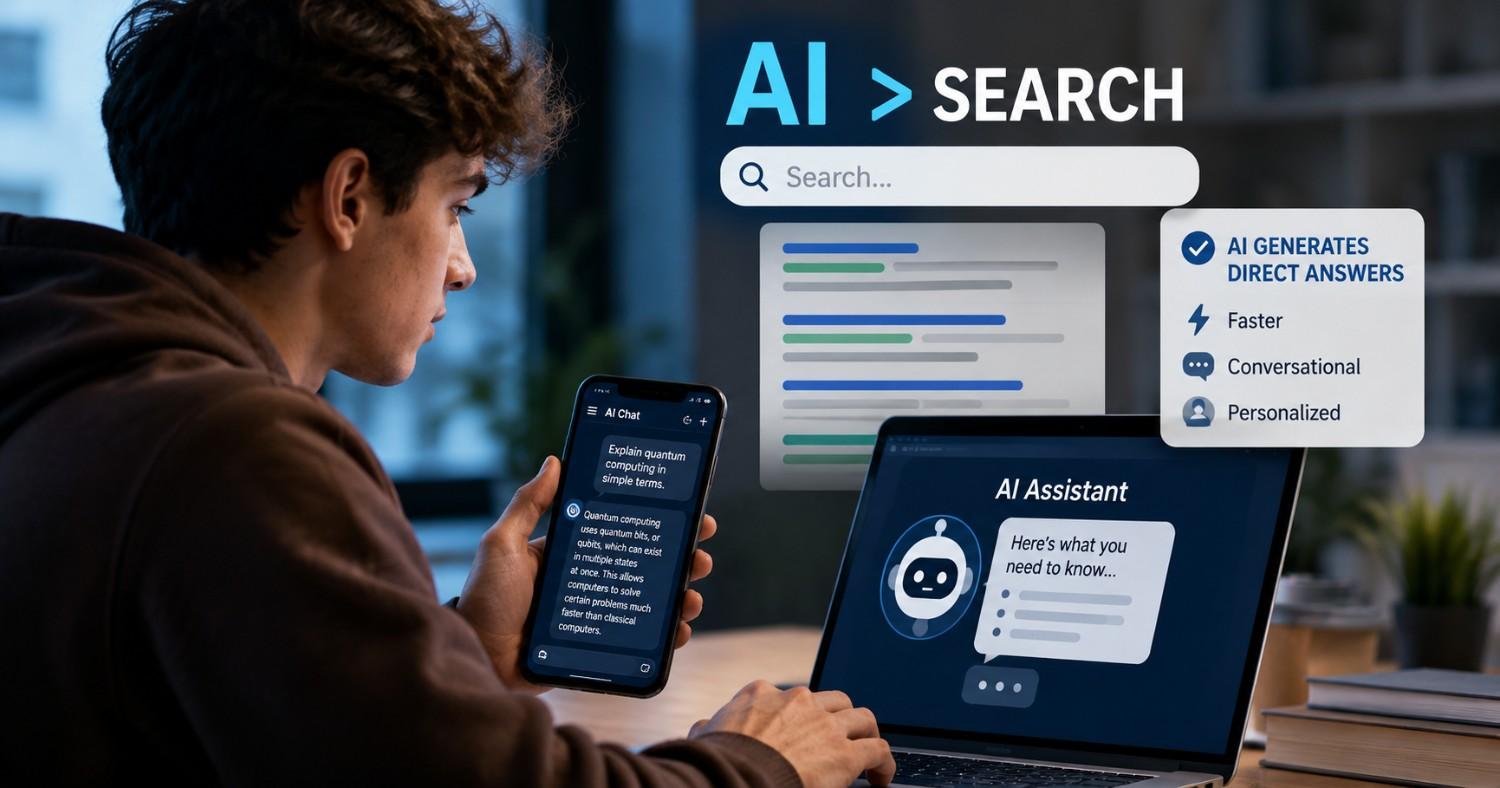


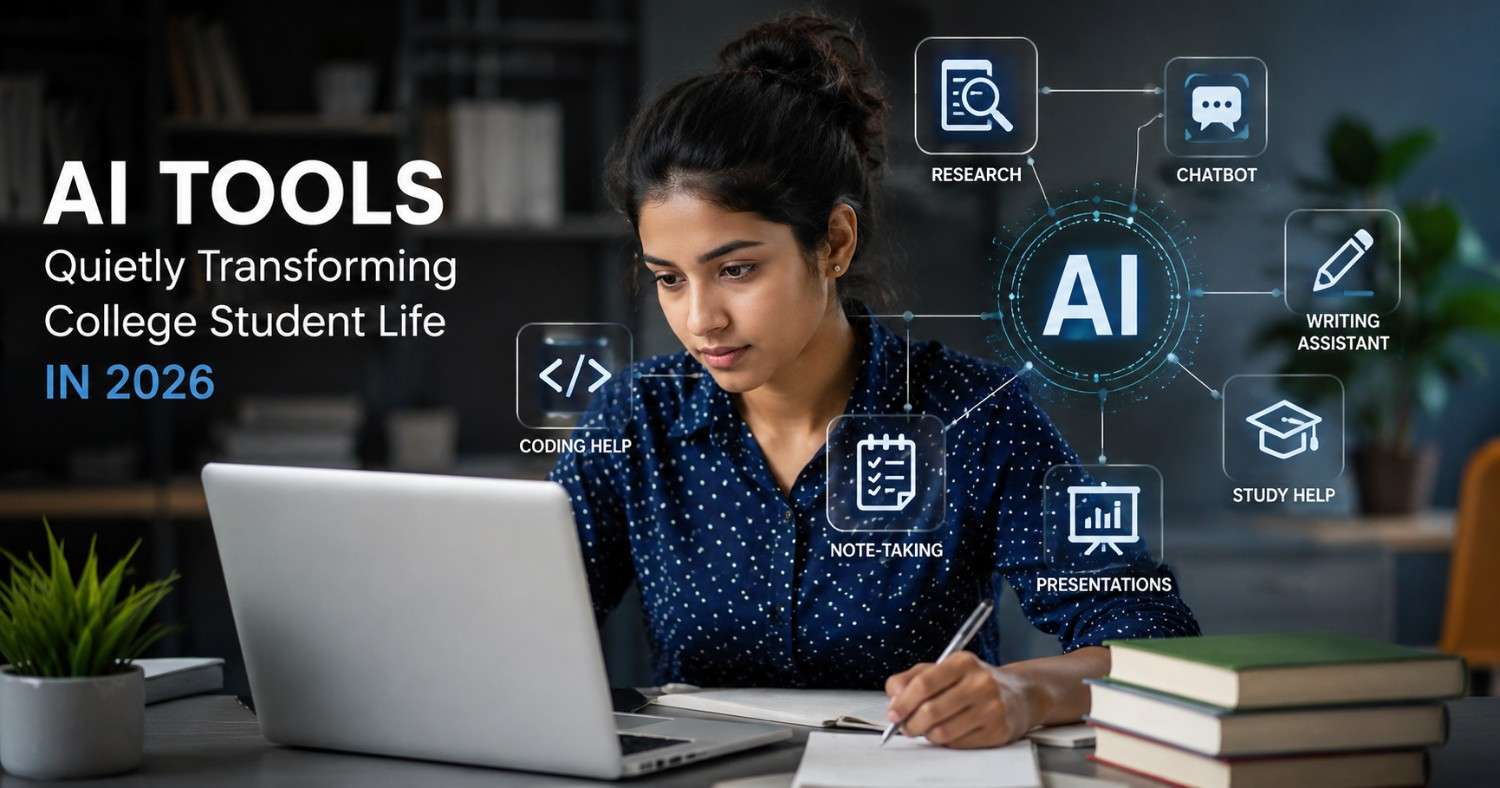
Artificial intelligence has rapidly moved from being a futuristic concept to an everyday academic companion for millions of students worldwide. What began as simple chatbot experiments has evolved into a growing ecosystem of AI-powered platforms that help students write assignments, organize notes, conduct research, create presentations, learn programming, and even prepare for exams.
Across universities and colleges, AI tools are increasingly becoming part of daily study routines. While many institutions continue debating how these technologies should be used in academic environments, students are already integrating them into coursework, project work, and personal productivity systems.
The shift reflects a broader transformation in education, where digital tools are reshaping how information is accessed, analyzed, and presented. Rather than replacing traditional learning methods entirely, many students are using AI to supplement classroom instruction, manage workloads more efficiently, and gain additional support outside lecture halls.
The Growing Presence of AI in Higher Education
The adoption of AI tools among students has accelerated significantly over the past few years. Universities around the world have responded by introducing new guidelines, revising academic integrity policies, and encouraging responsible use of emerging technologies.
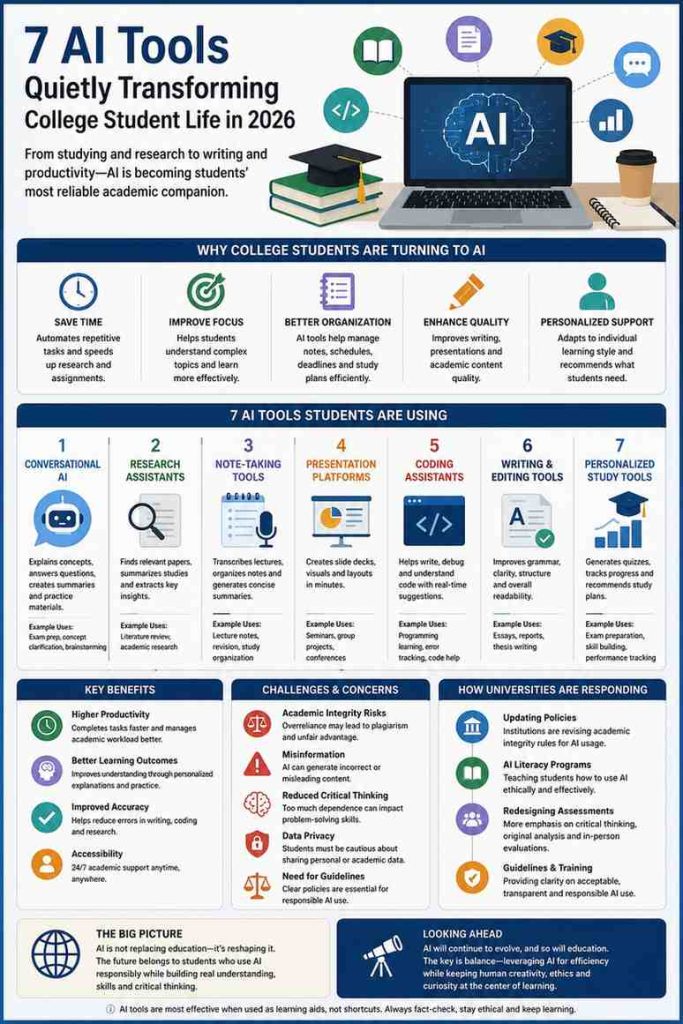
Educational experts note that AI tools can offer meaningful benefits when used appropriately. They can assist with brainstorming ideas, simplifying complex concepts, improving writing clarity, generating study materials, and automating repetitive tasks. At the same time, concerns remain regarding overreliance, plagiarism, misinformation, and the potential erosion of critical thinking skills.
Against this backdrop, several AI-powered platforms have become particularly popular among college students.
ChatGPT and Conversational Learning
One of the most widely recognized AI platforms is ChatGPT, which many students use as a study companion rather than simply a writing assistant.
Students frequently rely on conversational AI to explain difficult concepts in subjects such as mathematics, economics, engineering, computer science, and history. Instead of searching through multiple websites, they can ask specific questions and receive immediate explanations tailored to their level of understanding.
Many students also use conversational AI to generate practice questions, summarize lengthy readings, create revision plans, and identify areas where they need further study.
However, educators continue to emphasize that AI-generated answers should be verified through reliable academic sources and course materials.
AI-Powered Research Assistance
Research-intensive assignments often require students to navigate large volumes of academic literature. AI-driven research tools are increasingly helping students locate relevant studies, identify key findings, and understand connections between scholarly publications.
These platforms can analyze research papers, generate summaries, highlight important sections, and assist students in understanding complex academic language.
For students working on dissertations, capstone projects, or research reports, such tools can significantly reduce the time spent reviewing extensive academic databases while improving information discovery.
Researchers caution that AI-generated summaries should not replace direct engagement with original sources, particularly when accuracy and context are essential.
Smarter Note-Taking Applications
Lecture note-taking has undergone a major transformation with the introduction of AI-enhanced productivity tools.
Modern applications can transcribe spoken lectures, organize information into structured notes, identify important themes, and generate concise summaries. Students who attend fast-paced lectures often find these features useful for capturing information that might otherwise be missed.
Some tools also allow users to search notes conversationally, making it easier to revisit specific topics during exam preparation.
As hybrid and online learning environments continue to expand, AI-powered note management systems are becoming increasingly integrated into student workflows.
Presentation and Design Platforms
Creating professional-looking presentations has traditionally required both design skills and significant time investment. AI-powered design tools are changing that equation.
Students can now generate slide decks, create visual layouts, suggest content structures, and produce graphics with minimal design experience. These capabilities are particularly valuable for group projects, seminar presentations, and academic conferences.
The ability to rapidly transform research findings into visually engaging presentations has become an attractive feature for students managing multiple academic commitments simultaneously.
Coding Assistants for Computer Science Students
Artificial intelligence is also making a substantial impact in programming education.
AI coding assistants can help students understand code, identify errors, suggest improvements, and generate programming examples. For beginners, these tools can serve as educational guides that explain technical concepts in more accessible language.
Computer science educators generally encourage students to use AI coding tools as learning aids rather than shortcuts. Understanding underlying programming principles remains essential, especially in professional software development environments.
The challenge for institutions lies in distinguishing between productive learning support and excessive dependence on automated code generation.
Writing and Editing Support
Academic writing remains one of the most common areas where students seek AI assistance.
Writing tools can help improve grammar, sentence structure, clarity, readability, and organization. For students writing in a second language, these platforms often provide additional confidence and support.
Many students use AI editing tools during the revision process rather than during initial drafting. This approach allows them to maintain ownership of their ideas while benefiting from language and formatting improvements.
Universities increasingly differentiate between acceptable editing assistance and inappropriate content generation, making transparency and responsible usage important considerations.
Personalized Study Companions
A newer category of AI tools focuses on personalized learning experiences.
These platforms adapt to individual learning styles, generate customized quizzes, track progress, identify knowledge gaps, and recommend study schedules based on performance.
Such systems reflect a broader trend toward adaptive education, where technology tailors learning experiences to individual needs rather than applying a one-size-fits-all approach.
Supporters argue that personalized learning can improve engagement and retention, while critics stress the importance of maintaining human interaction and instructor guidance.
The Ethical Questions Facing Campuses
As AI adoption grows, colleges and universities are confronting complex questions about academic integrity, assessment design, and educational outcomes.
Some institutions have revised assignment structures to emphasize critical thinking, in-person discussions, project-based learning, and original analysis. Others are developing AI literacy programs to teach students how to use these technologies responsibly.
The debate is increasingly shifting from whether students should use AI to how they should use it effectively and ethically.
Educational leaders argue that AI literacy may become as important as digital literacy in the modern workforce. Employers across industries are beginning to expect graduates to understand both the capabilities and limitations of AI-powered systems.
A Technology Likely to Remain
The rapid integration of AI into higher education suggests that these tools are unlikely to disappear from academic environments. Instead, colleges, educators, and students are entering a period of adjustment as new norms and expectations emerge.
For many students, AI tools have become practical productivity aids that help manage demanding schedules and growing academic workloads. For educators, they represent both opportunities and challenges that require thoughtful policy development and ongoing adaptation.
The long-term impact of AI on education will depend not only on technological innovation but also on how institutions balance efficiency, academic integrity, critical thinking, and meaningful learning. As universities continue refining their approaches, AI is poised to remain a significant part of the student experience for years to come.
Highlights
- AI tools are becoming increasingly common among college students for studying, research, writing, and productivity.
- Conversational AI platforms are helping students understand complex subjects and prepare for exams more efficiently.
- AI-powered research and note-taking tools are reducing time spent on information gathering and lecture documentation.
- Design and presentation platforms are enabling students to create professional academic materials with limited technical expertise.
- Coding assistants are emerging as valuable learning aids for computer science and software development students.
- Universities are developing new policies and academic integrity guidelines as AI adoption continues to grow.
- Experts say responsible AI use and digital literacy will play an increasingly important role in higher education and future careers.
FAQ
What are AI tools commonly used by college students?
Students often use AI tools for research, note-taking, writing assistance, coding support, presentation creation, exam preparation, and productivity management.
Why are AI tools becoming popular in higher education?
AI tools can help students save time, simplify complex topics, improve organization, and provide personalized learning support, making them useful for managing academic workloads.
Are AI tools allowed in colleges and universities?
Policies vary by institution. Many universities permit responsible AI use while restricting activities that violate academic integrity rules or involve unauthorized content generation.
Can AI replace traditional studying?
Most educators argue that AI should complement rather than replace traditional learning. Critical thinking, independent analysis, and direct engagement with course materials remain essential.
How do AI note-taking tools work?
These tools can transcribe lectures, summarize discussions, organize notes, and help students quickly find information during revision and exam preparation.
Are AI coding assistants useful for beginners?
Yes. AI coding tools can explain programming concepts, identify errors, and provide examples that help students understand software development principles.
What concerns do educators have about AI in education?
Common concerns include plagiarism, misinformation, overreliance on automation, reduced critical thinking, and challenges in assessing original student work.
How are universities adapting to AI technology?
Many institutions are updating assessment methods, revising academic policies, introducing AI literacy programs, and providing guidance on responsible usage.
Will AI become a permanent part of higher education?
Most experts believe AI will remain a significant educational tool as institutions continue developing frameworks for its ethical and effective use.
Edited By E. Devanshi varma
Also Read: IPL Honey-Trap Row Sparks 7 Big Questions Before Playoffs
Follow us on Google News: Click Here