


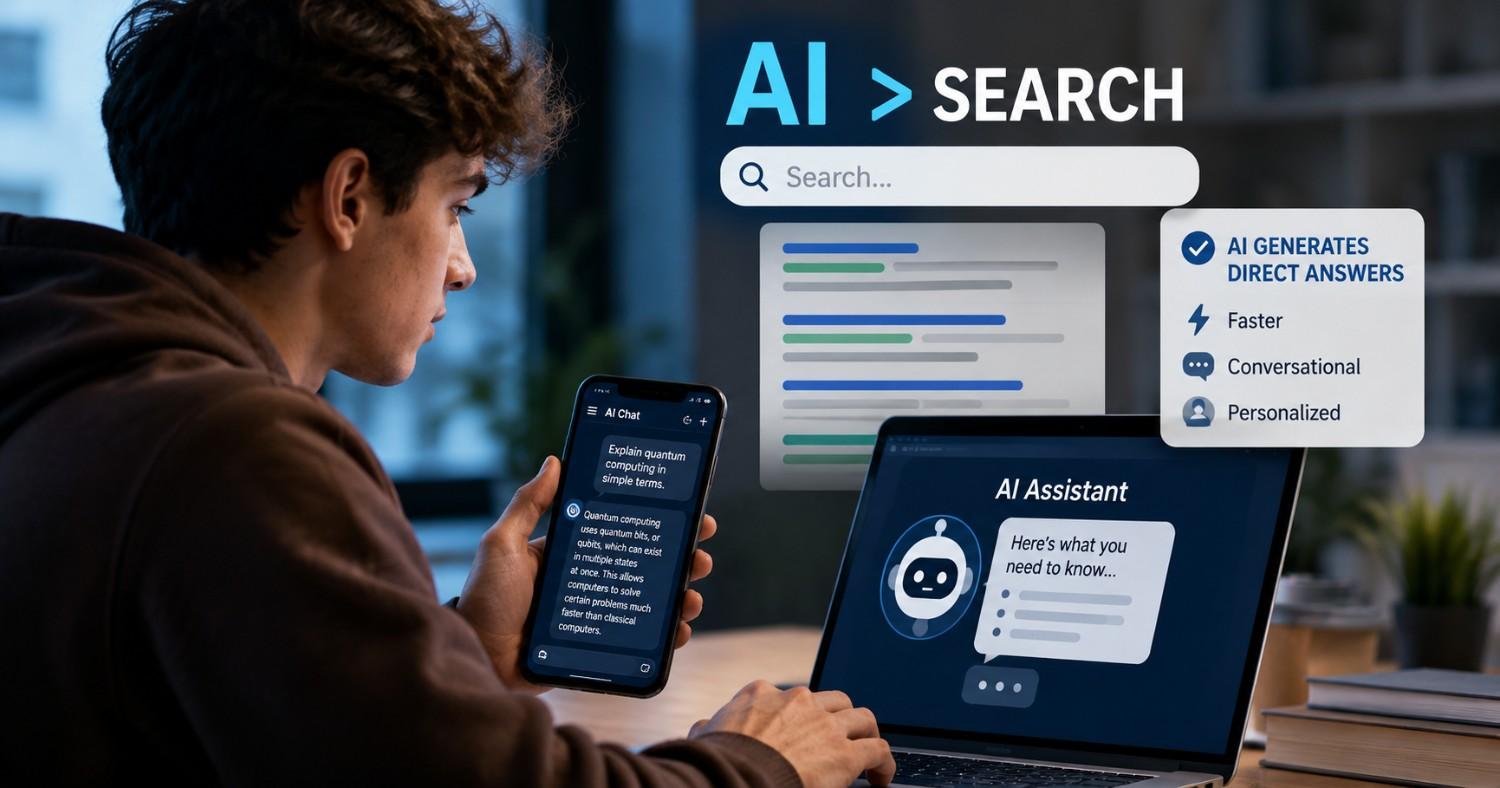
Gen Z is increasingly turning to AI tools instead of traditional search engines for faster answers, personalized assistance, and conversational information discovery.
For more than two decades, internet users have relied on search engines to find information online. Typing a question into Google became second nature for billions of people worldwide, shaping how knowledge is discovered, consumed, and shared. However, a noticeable shift is emerging among younger internet users, particularly Generation Z, who are increasingly turning to artificial intelligence-powered chatbots before opening a traditional search engine.
The trend reflects broader changes in digital behavior as AI tools become more accessible, conversational, and integrated into daily online experiences. While search engines remain dominant across the internet, growing numbers of younger users are experimenting with AI platforms for everything from homework assistance and travel planning to shopping recommendations and career advice.
Industry observers say the trend may represent one of the most significant changes in online information discovery since the rise of social media.
A Different Way to Find Information
Traditional search engines are designed to provide users with lists of websites that may contain relevant information. Users typically browse multiple links, compare sources, and extract the details they need.
AI chatbots operate differently. Instead of presenting pages of search results, they generate direct responses in a conversational format. Users can ask follow-up questions, refine requests, and receive personalized explanations without navigating through numerous websites.
For many Gen Z users who grew up with smartphones, instant messaging, and social media platforms, the conversational nature of AI tools feels more intuitive than traditional search interfaces.
Digital behavior researchers have noted that younger internet users increasingly prioritize speed, convenience, and personalized experiences. AI-powered assistants align closely with those expectations by reducing the number of steps required to obtain information.
Why Gen Z Is Embracing AI Tools
Several factors are contributing to the growing popularity of AI-driven information platforms among younger audiences.
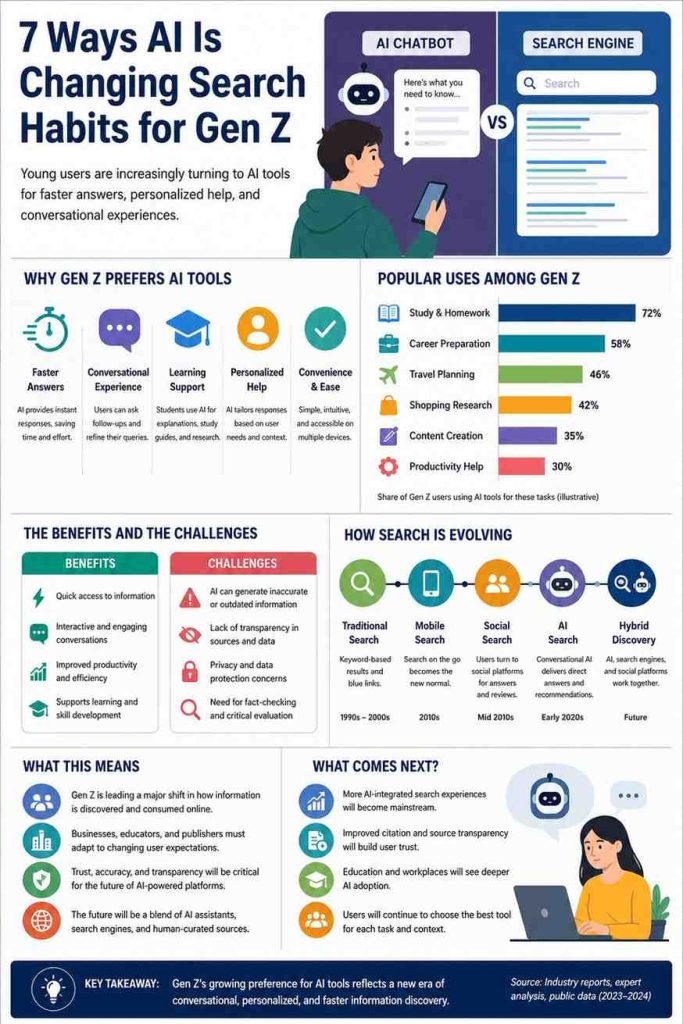
One major reason is efficiency. Rather than reviewing multiple articles or webpages, users can receive summarized answers within seconds. This can be especially appealing when researching broad topics, understanding complex concepts, or seeking quick explanations.
Another factor is interactivity. Unlike conventional search engines, AI systems allow users to continue conversations and ask clarifying questions. This creates a more dynamic experience that resembles talking to a tutor, advisor, or assistant.
Education is also playing a significant role. Students increasingly use AI tools to understand academic subjects, generate study guides, explain difficult concepts, and organize research materials. While educational institutions continue debating appropriate AI use, the technology has already become part of many students’ learning routines.
Career development represents another growing use case. Young professionals often rely on AI systems for resume suggestions, interview preparation, skill development recommendations, and workplace productivity support.
The result is a generation becoming accustomed to receiving information through dialogue rather than through lists of links.
Social Media’s Influence on Search Behavior
The shift toward AI is occurring alongside another major trend: the rise of social platforms as information discovery tools.
Many Gen Z users already use platforms such as short-video apps and social networks to find restaurant recommendations, travel tips, product reviews, and lifestyle advice. Instead of beginning with a search engine, they often start with content created by influencers, experts, or everyday users.
This behavioral change suggests that younger audiences are increasingly comfortable obtaining information from sources that feel more direct, visual, and conversational.
AI chatbots fit naturally into this evolving ecosystem. They provide answers in a format that resembles modern digital communication rather than traditional web navigation.
Experts believe this shift reflects changing expectations about how information should be delivered. Users increasingly want answers rather than links, explanations rather than lists, and conversations rather than searches.
The Opportunities for AI Platforms
The growing adoption of AI tools presents substantial opportunities for technology companies investing heavily in artificial intelligence.
AI assistants can simplify complex tasks, improve accessibility, and help users navigate large amounts of information more efficiently. They can summarize lengthy reports, translate languages, generate content drafts, and provide educational support.
Businesses are also exploring how conversational AI can improve customer service, shopping experiences, and workplace productivity.
For content creators and publishers, AI may offer new methods of audience engagement. Readers who once visited multiple websites may increasingly interact with AI-generated summaries before deciding whether to explore original sources.
This evolution is encouraging organizations across industries to reconsider how information is presented online.
Challenges and Accuracy Concerns
Despite growing enthusiasm, AI-powered information systems are not without challenges.
One of the most frequently discussed concerns involves accuracy. AI models can occasionally generate incorrect, outdated, or misleading information. Unlike traditional search engines, which typically direct users to source materials, AI-generated responses may not always make it immediately clear where information originated.
Media literacy experts emphasize the importance of verifying information through credible sources, particularly when dealing with topics involving health, finance, law, science, or public policy.
Transparency is another ongoing discussion. Users increasingly want to understand how AI systems generate responses, what sources are being used, and how potential biases are addressed.
Privacy considerations also remain important. As AI platforms become more integrated into everyday activities, questions surrounding data collection, user protection, and responsible deployment continue to attract regulatory attention around the world.
These issues suggest that while AI may transform information discovery, trust and reliability will remain essential factors influencing long-term adoption.
What This Means for Search Engines
The growing popularity of AI does not necessarily signal the end of traditional search engines. Instead, many analysts see the development as an evolution of search itself.
Major technology companies have already begun integrating AI-generated answers directly into search experiences. The distinction between search engines and AI assistants is gradually becoming less clear as both technologies converge.
Search providers are adapting by offering conversational interfaces, AI-generated summaries, and more personalized information experiences. At the same time, AI developers are working to improve citation systems, transparency measures, and factual reliability.
Rather than replacing search altogether, AI may reshape how search functions in practice.
Future internet users may rely on a combination of conversational AI, traditional search engines, social platforms, and specialized information services depending on the task at hand.
A New Information Landscape
The changing habits of Gen Z offer an early glimpse into how future generations may interact with information online. Their willingness to embrace AI-powered tools reflects broader shifts in technology adoption, communication preferences, and digital expectations.
As artificial intelligence continues to evolve, the competition between conversational platforms and traditional search methods is likely to intensify. Technology companies, publishers, educators, and policymakers are closely watching how these behavioral changes develop.
What appears increasingly clear is that younger users are helping redefine the way information is discovered and consumed. The internet’s next chapter may not be defined solely by search engines or AI systems, but by a blend of technologies designed to deliver knowledge in faster, smarter, and more personalized ways.
Highlights
- Gen Z users are increasingly turning to AI chatbots before traditional search engines for information and recommendations.
- Conversational AI offers direct answers and follow-up interactions, reducing the need to browse multiple websites.
- Students and young professionals are using AI tools for learning, research, career preparation, and productivity tasks.
- The trend aligns with broader shifts toward conversational and personalized digital experiences.
- Accuracy, transparency, and information reliability remain important challenges for AI platforms.
- Search engines are responding by integrating AI-powered features into their services.
- Experts believe the future of online information discovery will likely combine AI assistants, search engines, and social platforms.
FAQ
1. Why are Gen Z users increasingly using AI before Google?
Many Gen Z users prefer AI tools because they provide direct, conversational answers that can be refined through follow-up questions, saving time compared with browsing multiple search results.
2. Does this mean search engines are becoming obsolete?
No. Traditional search engines continue to serve billions of users and remain essential for accessing original sources, websites, and detailed information. AI is currently complementing rather than completely replacing search.
3. What types of tasks are Gen Z users using AI for?
Common uses include studying, research, writing assistance, travel planning, shopping recommendations, career preparation, productivity support, and general information discovery.
4. Why is AI appealing to younger internet users?
AI platforms offer quick responses, personalized interactions, and a conversational experience that aligns with the communication habits of digitally native generations.
5. Are AI-generated answers always accurate?
No. AI systems can occasionally produce incorrect or outdated information. Users should verify important information through trusted and authoritative sources.
6. How are search companies responding to this trend?
Major technology firms are incorporating AI-generated summaries, conversational search experiences, and advanced assistant features into their products.
7. What role does social media play in changing search habits?
Many younger users already use social platforms for recommendations and information discovery. AI fits into this broader shift toward more interactive and direct forms of information access.
8. Could AI change the future of online information discovery?
Yes. Experts believe AI will play an increasingly important role in how people access information, although traditional search engines and websites are expected to remain important parts of the digital ecosystem.
Edited By E. Devanshi varma
Also Read: IPL Honey-Trap Row Sparks 7 Big Questions Before Playoffs
Follow us on Google News: Click Here