


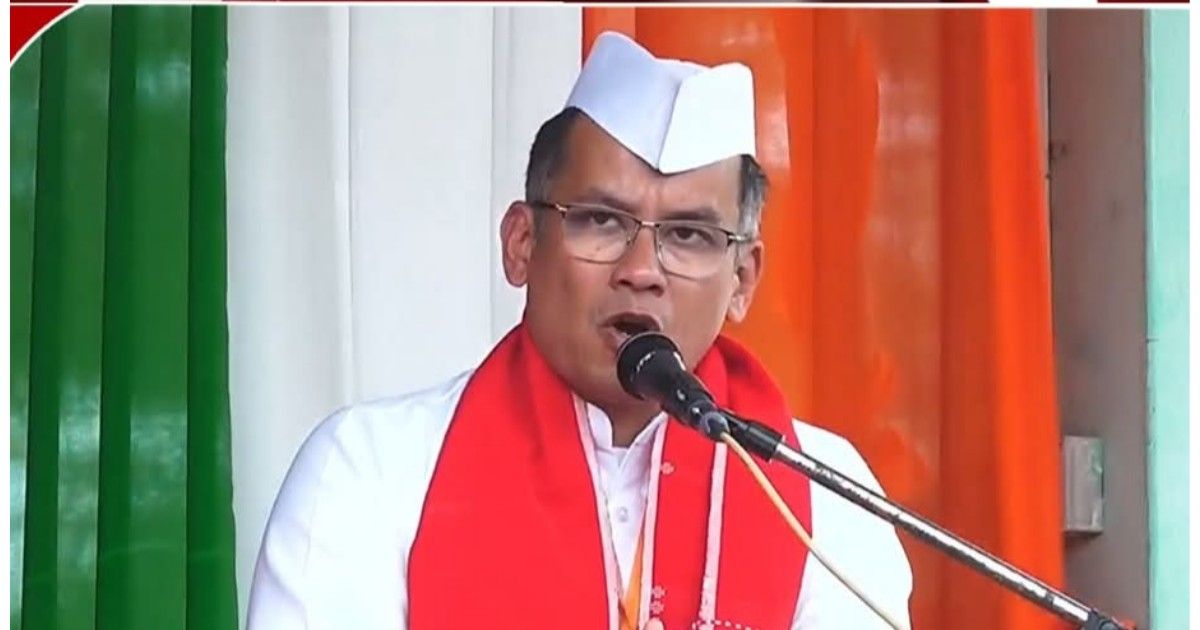
The Assam Assembly Elections 2026 have begun yielding decisive outcomes, with the Bharatiya Janata Party (BJP)-led alliance gaining significant ground across multiple constituencies. One of the most notable developments emerged from the Jorhat Assembly seat, where senior Congress leader and sitting Lok Sabha MP Gaurav Gogoi faced a substantial defeat at the hands of BJP candidate Hitendra Nath Goswami.
The results, declared on May 4 following the completion of counting rounds, indicate a strong performance by the ruling alliance, further consolidating its political influence in the state.
Key Announcements / Highlights
- BJP candidate Hitendra Nath Goswami defeated Gaurav Gogoi in Jorhat by over 23,000 votes
- Assam minister Ranoj Pegu secured a commanding win in Dhemaji constituency
- Bodoland People’s Front (BPF), an ally of BJP, won Majbat seat with a margin exceeding 55,000 votes
- BJP-led alliance continues to dominate early trends in Assam Assembly Elections 2026
Jorhat Sees High-Profile Upset
The Jorhat Assembly constituency witnessed one of the most closely watched contests of the election. Gaurav Gogoi, who currently serves as the president of the Assam Pradesh Congress Committee and represents Kaliabor in the Lok Sabha, was considered a key face of the Congress campaign in the state.
However, BJP’s Hitendra Nath Goswami, a seasoned politician and former Speaker of the Assam Legislative Assembly, secured a decisive victory. According to official data, Goswami received 69,439 votes, while Gogoi managed 46,257 votes.
The margin of victory stood at 23,182 votes, reflecting a clear shift in voter preference in the constituency. The counting process in Jorhat was completed across 14 rounds, with the BJP candidate maintaining a consistent lead throughout.
Additionally, 1,319 voters in the constituency opted for NOTA (None of the Above), indicating a small but notable section of voters choosing to reject all candidates.
Dhemaji: Ranoj Pegu Strengthens BJP’s Hold
In Dhemaji constituency, Ranoj Pegu delivered another strong performance for the BJP. Contesting against Congress candidate Sailen Sonowal, Pegu secured 83,649 votes.
His opponent polled 51,420 votes, resulting in a significant margin of 32,229 votes in favor of the BJP leader. The counting process in Dhemaji was conducted over 17 rounds, and Pegu maintained a steady advantage.
The result further strengthens Pegu’s position as an influential leader in Assam’s political landscape, especially in Upper Assam regions where electoral battles are often closely contested.
NOTA votes in Dhemaji stood at 1,197, reflecting a similar trend of limited voter disengagement.
Majbat: BPF Ally Delivers Massive Win
The BJP-led alliance also received a major boost from the Majbat Assembly constituency, where Bodoland People’s Front (BPF) candidate Charan Bodo emerged victorious.
Bodo secured 84,718 votes, defeating Jharkhand Mukti Morcha (JMM) candidate Preeti Rekha Barla by an impressive margin of 55,546 votes. This marks one of the largest victory margins reported in the early results of the election.
The win highlights the continued relevance of regional allies like BPF in strengthening the BJP’s broader electoral strategy in Assam, particularly in areas with diverse ethnic and tribal populations.
Official Statement (Rewritten)
Election officials confirmed that counting across these constituencies was conducted in multiple rounds, adhering to standard procedures to ensure transparency and accuracy.
The outcomes reflect a clear trend in favor of the BJP-led alliance in the constituencies where results have been declared so far. Officials also noted that voter turnout and participation remained consistent with previous election cycles.
Context / Background
The Assam Assembly Elections 2026 are being closely watched as a crucial political contest in Northeast India. The BJP, which has been in power in the state since 2016, entered the election with a strong alliance network, including regional parties such as the Bodoland People’s Front.
On the other hand, the Congress party has been attempting to regain lost ground by projecting leaders like Gaurav Gogoi as key figures in its campaign. Gogoi, known for his parliamentary presence and political legacy, was expected to play a central role in the party’s revival efforts in Assam.
Jorhat, in particular, has historically been a politically significant constituency, often reflecting broader electoral trends in Upper Assam. The defeat of a high-profile Congress leader in this seat signals a shift that may have wider implications.
Similarly, constituencies like Dhemaji and Majbat are strategically important due to their demographic composition and regional dynamics. Strong performances by BJP and its allies in these areas indicate effective grassroots mobilization and alliance coordination.
Public Impact
The results from these constituencies are likely to have multiple implications for voters and the political landscape in Assam.
For residents, the continuation of BJP-led governance may mean policy continuity in areas such as infrastructure development, welfare schemes, and regional connectivity projects. Leaders like Ranoj Pegu, who have held ministerial roles, are expected to carry forward ongoing initiatives in their constituencies.
At the same time, the defeat of prominent opposition leaders could reshape the political discourse in the state. The Congress party may need to reassess its strategy, leadership positioning, and grassroots outreach efforts to remain competitive in future elections.
The strong performance of alliance partners like BPF also highlights the importance of coalition politics in Assam. Regional parties continue to play a critical role in representing local interests and influencing electoral outcomes.
For voters, these results reinforce the importance of constituency-level dynamics, candidate credibility, and alliance strength in determining electoral success.
Broader Electoral Trends Emerging
While complete results across all constituencies are still awaited, early trends suggest that the BJP-led alliance is maintaining a strong lead in several parts of the state.
Political analysts note that factors such as organizational strength, voter outreach, and strategic alliances have contributed to the BJP’s performance. The party’s ability to retain support in both urban and rural areas appears to be a key factor.
On the other hand, the Congress faces challenges in consolidating its voter base and countering the BJP’s dominance. The loss in Jorhat, involving a prominent leader like Gaurav Gogoi, could have a psychological impact on the party’s cadre and supporters.
What Lies Ahead
As counting continues in other constituencies, attention will remain focused on whether the BJP-led alliance can sustain its momentum and secure a comfortable majority.
The outcomes of remaining seats will determine the final composition of the Assam Legislative Assembly and shape the state’s governance for the next five years.
Political parties are also expected to analyze the results in detail to understand voter behavior, regional trends, and areas requiring strategic adjustments.
The developments in Jorhat, Dhemaji, and Majbat have already set the tone for the election narrative, indicating a strong showing by the BJP and its allies. How this trend unfolds across the state will be crucial in defining Assam’s political future.
Inputs and images : Hindusthan Samachar
Edited By E. Devanshi varma
Also Read: Assam Assembly Polls See 7 Major Highlights as Turnout Peaks, Counting Set for May 4
Follow us on Google News: Click Here