
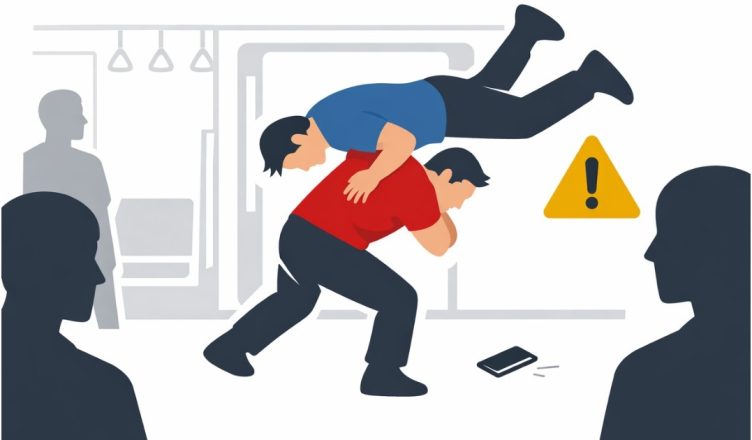
Delhi Metro coach has sparked widespread outrage across India. Social media users described the clash as “WWE-style” because of the aggressive punches and dramatic takedowns seen in the footage.
The incident has raised serious concerns about commuter safety in one of India’s busiest public transport systems. With millions using the metro daily, questions are now being asked about security presence, crowd management, and response time.
Public safety inside metro trains is not just a Delhi issue. It affects urban commuters across India. The video has triggered a national debate on how secure public transport systems really are in 2026.
What the Viral Video Shows
The short clip, widely shared on social media platforms, appears to show two men fighting inside a metro coach. Other passengers are seen watching, moving away, or recording the scene on their phones.
The video shows:
- Physical pushing and punching
- One person thrown to the floor
- Passengers shouting and attempting to separate the men
- No immediate visible intervention by security inside the coach
The incident reportedly took place during regular operating hours. The exact cause of the fight is not officially confirmed in the public domain.
Authorities have not released detailed statements about what triggered the clash. As of now, verified facts remain limited to what can be seen in the circulating footage.
Delhi Metro: A Lifeline for Millions
The Delhi Metro Rail Corporation operates one of the largest and busiest metro networks in the country.
Key facts:
- Over 390 km network length
- Hundreds of stations across Delhi-NCR
- Millions of passengers daily
For many commuters, the metro is the safest and most reliable way to travel. It is often praised for cleanliness, punctuality, and strong security systems.
However, incidents like this can damage public confidence.
When a fight breaks out inside a moving train, passengers feel vulnerable. Unlike platforms, coaches have limited space and no immediate exit.
Public Reaction: Outrage and Concern
The video quickly went viral. Within hours, hashtags related to Delhi Metro safety began trending.
Common concerns raised online include:
- “Where was security?”
- “Why did no one stop it immediately?”
- “Are metro coaches becoming unsafe?”
- “What if children or elderly were present?”
Some users compared the incident to past viral fights in public transport systems across India.
Many commuters shared personal experiences of overcrowding, verbal arguments, and minor scuffles during rush hours.
The anger is not just about one fight. It reflects a deeper fear about safety in crowded public spaces.
Security Systems Inside Metro Trains
Delhi Metro has multiple security layers in place:
- CCTV cameras at stations
- Security checks at entry gates
- Central Industrial Security Force (CISF) deployment at key points
- Helpline numbers displayed for passengers
However, security personnel are usually stationed at platforms and entry points. They are not present inside every coach.
In case of a fight inside a moving train, intervention typically happens when the train reaches the next station.
This gap between incident and response is now under public scrutiny.
Crowding and Urban Pressure
Delhi Metro carries massive passenger volumes, especially during peak hours.
Crowding increases the risk of:
- Arguments over space
- Physical pushing
- Escalation of minor disputes
Urban transport experts say that high density in public spaces often leads to tension.
While fights are not common, viral videos create the perception that such incidents are rising.
Perception can be as powerful as reality when it comes to public trust.
Legal and Safety Implications
Physical violence inside metro premises is a punishable offense under existing laws.
Possible consequences may include:
- Detention by authorities
- Legal charges under relevant sections
- Travel bans depending on severity
Public transport is considered a sensitive zone. Violence not only disrupts services but also endangers uninvolved passengers.
If proven, those involved in such incidents can face serious legal action.
Authorities are expected to investigate the matter based on CCTV footage and passenger reports.
Impact on Women, Elderly, and Children
Safety concerns affect vulnerable groups the most.
Women commuters have long demanded:
- Better surveillance
- Faster response mechanisms
- Dedicated safety staff
Elderly passengers and children are at higher risk in sudden violent situations inside moving coaches.
Even if no one else was injured in this case, the fear factor remains.
Public transport must feel safe for every category of commuter.
Social Media and the Viral Effect
In today’s digital age, a 30-second clip can shape national perception.
Social media amplification can:
- Increase pressure on authorities
- Spread incomplete information
- Trigger emotional reactions
At the same time, viral videos also help bring issues to attention quickly.
The Delhi Metro fight video became a national topic within hours. Newsrooms across India began tracking the incident.
This shows how fast local events can turn into national debates.
Are Such Incidents Increasing?
There is no official data suggesting a sharp rise in violent incidents inside metro trains.
However, visibility has increased.
Earlier, small fights may have gone unnoticed. Now, almost every passenger carries a smartphone.
Recording and sharing have become instant.
This creates two realities:
- Greater accountability
- Greater public anxiety
Authorities must respond quickly to both.
What Experts Suggest
Urban transport experts and safety analysts suggest practical steps:
1. Emergency Alert Buttons Inside Coaches
Dedicated panic buttons could allow passengers to alert drivers or control rooms instantly.
2. Increased Random Security Patrols
Occasional security staff inside trains may deter violent behavior.
3. Public Awareness Campaigns
Clear messaging about penalties for violence can reduce such incidents.
4. Faster Response Protocols
Improving coordination between train operators and station security can reduce reaction time.
Safety upgrades require planning and investment. But public confidence depends on visible action.
Commuter Responsibility Matters Too
While authorities play a key role, commuters also share responsibility.
Simple steps can prevent escalation:
- Avoid arguments in crowded spaces
- Inform authorities instead of engaging physically
- Use helpline numbers displayed inside coaches
Public transport works smoothly when mutual respect exists among passengers.
National Debate on Public Transport Security
The Delhi Metro fight has triggered broader questions:
- Are Indian cities prepared for rising urban populations?
- Is public transport infrastructure keeping pace?
- Are security measures evolving fast enough?
From Mumbai locals to Bengaluru metro systems, safety is a common concern.
Urban India is growing rapidly. Transport networks must adapt accordingly.
Trust Is Hard to Build, Easy to Lose
Delhi Metro has built a reputation over many years.
It is often seen as a model for other cities.
One viral fight does not define the entire system. But it does highlight vulnerabilities.
Public trust depends on quick, transparent action.
Passengers want assurance that:
- Incidents are investigated
- Security measures are reviewed
- Corrective steps are taken
The Bigger Picture: Urban Safety in 2026
India’s cities are expanding fast.
More people depend on shared spaces.
Public safety must evolve alongside urban growth.
Technology can help:
- Real-time monitoring systems
- AI-based behavior detection
- Faster communication networks
However, human behavior remains unpredictable.
Strong rules, visible enforcement, and civic awareness are key.
What Happens Next
Authorities are expected to review the incident carefully.
Possible next steps may include:
- Identification of those involved
- Legal proceedings if required
- Review of in-coach security protocols
Until official updates are released, speculation should be avoided.
Responsible reporting focuses only on verified facts.
Conclusion: A Wake-Up Call for Urban Transport Safety
The viral “WWE-style” Delhi Metro fight video has become more than just a social media trend.
It has sparked a nationwide conversation about commuter security.
Millions rely on metro systems daily.
Safety cannot be optional.
Even isolated incidents must be treated seriously.
For Indian commuters, the message is clear: public transport must remain safe, secure, and trustworthy.
The debate triggered on 24 February 2026 may lead to stronger systems in the future.
If authorities respond with transparency and improvements, public confidence can be restored.
Urban India deserves safe journeys — every day, for everyone.
Follow us on google news: Click Here
Last Updated on: Tuesday, February 24, 2026 7:22 pm by News Estate Team | Published by: News Estate Team on Tuesday, February 24, 2026 7:22 pm | News Categories: News
About The Author
