


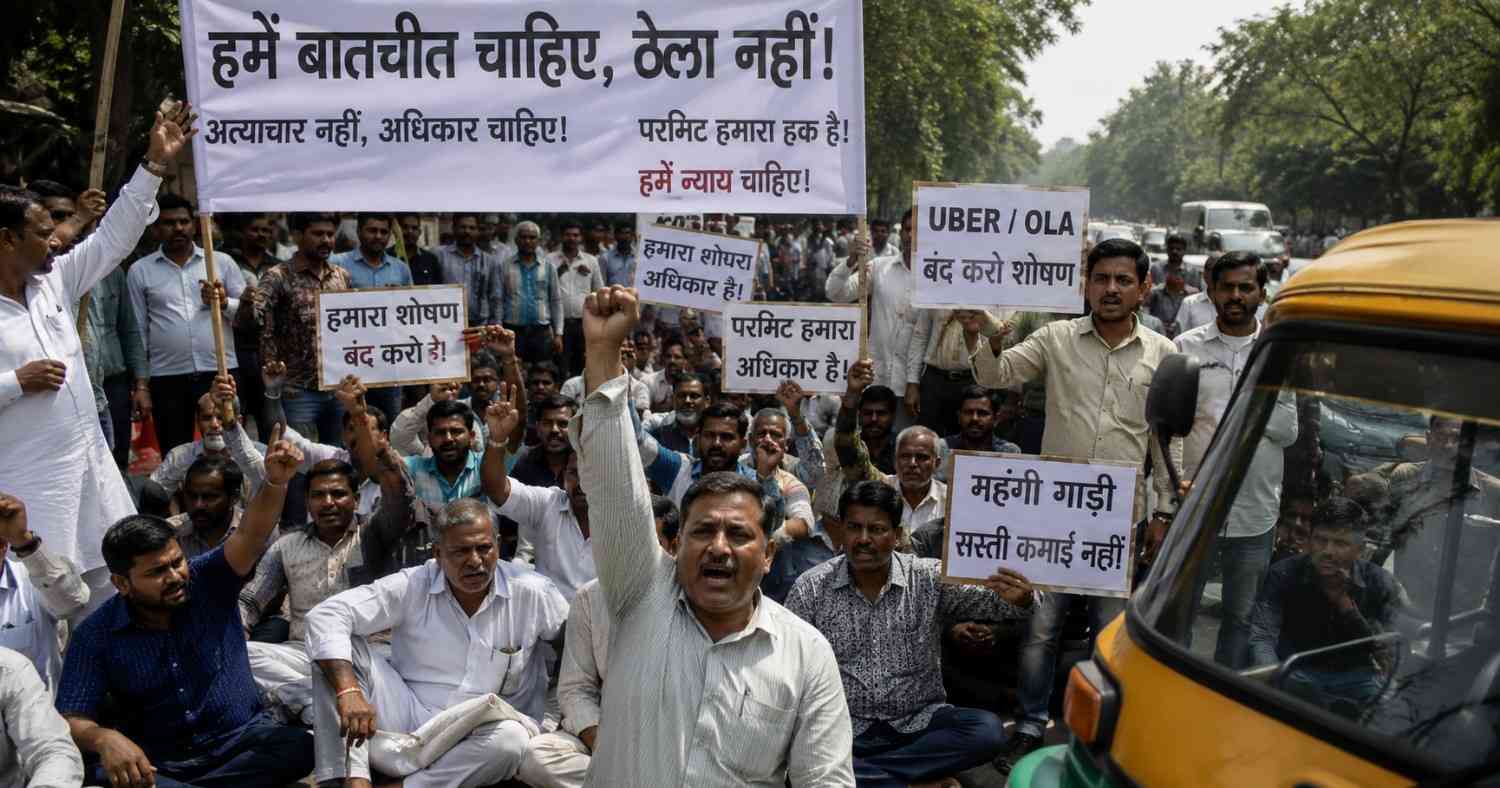
The ongoing taxi and auto-rickshaw strike in Delhi has rapidly evolved from a local transport disruption into a nationwide conversation about urban mobility, gig economy pressures, rising fuel costs, and the future of public transportation in Indian cities. What initially appeared to be a sector-specific protest has now drawn attention from commuters, policymakers, ride-hailing companies, labour unions, and transport experts across the country.
For thousands of daily commuters in the national capital, the strike has translated into longer travel times, overcrowded metro stations, higher cab fares, and growing uncertainty over reliable last-mile connectivity. But beyond the immediate inconvenience, the protests have exposed deeper structural challenges affecting India’s urban transport ecosystem.
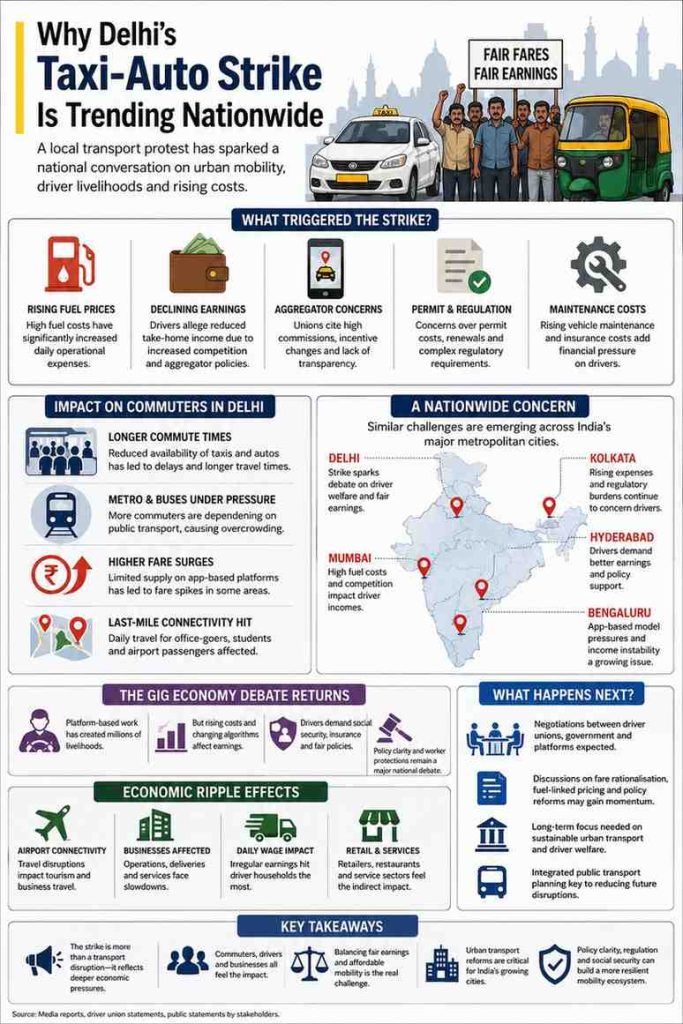
The strike began amid growing dissatisfaction among taxi and auto unions over fuel prices, permit-related issues, aggregator policies, and declining earnings. Several driver groups have argued that operational expenses have risen sharply over the past few years while incomes have either stagnated or declined due to increased competition and changing app-based mobility trends.
As the disruption intensified, social media platforms witnessed a surge in conversations surrounding commuter hardships, app-based fare surges, and the broader economic pressures faced by drivers. The issue soon gained national traction because many of the underlying concerns are not unique to Delhi. Similar tensions have been building in multiple metropolitan cities including Mumbai, Bengaluru, Hyderabad, and Kolkata.
Growing Pressure on Urban Commuters
Delhi’s transport system relies heavily on a mix of metro rail connectivity, buses, auto-rickshaws, taxis, and app-based mobility services. While the metro network handles a significant portion of daily travel, auto-rickshaws and taxis remain critical for first-mile and last-mile connectivity.
The strike has therefore created cascading disruptions. Many office-goers have reported delays in reaching workplaces, while students and airport passengers have faced difficulties securing transportation during peak hours. Ride-hailing platforms have also witnessed fluctuating availability and fare spikes in some areas due to reduced supply.
Transport experts say the situation highlights how dependent large Indian cities remain on informal and semi-formal mobility systems. Even with expanding metro infrastructure, urban commuting still depends heavily on flexible transport services that bridge connectivity gaps.
In densely populated cities, any prolonged disruption in these sectors can quickly create ripple effects across economic activity, workplace productivity, and public convenience.
Why Drivers Are Protesting
One of the central concerns raised by driver unions is the increasing mismatch between operational costs and earnings. Fuel prices, vehicle maintenance expenses, insurance premiums, permit fees, and loan repayments have collectively increased financial pressure on drivers.
At the same time, many drivers working through app-based aggregators argue that incentive structures have changed significantly over the years. Some unions claim that commissions and platform-related deductions have reduced take-home earnings, making it difficult for drivers to sustain livelihoods amid inflationary pressures.
Traditional auto-rickshaw operators have also expressed concerns over growing competition from app-based mobility services. The rapid expansion of ride-hailing technology has transformed urban transportation, but it has also intensified competition among drivers in already crowded markets.
Labour economists note that this reflects a wider national issue affecting gig workers and platform-based service providers. Across sectors such as food delivery, cab aggregation, and logistics, workers have increasingly raised concerns regarding income predictability, social security protections, and algorithm-driven pricing models.
The Gig Economy Debate Returns to the Spotlight
The Delhi strike has once again brought attention to the changing nature of employment in India’s urban economy. App-based transport services created significant employment opportunities over the past decade, particularly in metropolitan regions where demand for convenient mobility expanded rapidly.
However, as competition intensified and operational economics evolved, many drivers began questioning whether current earning models remain financially sustainable. Some drivers argue that rising customer discounts and promotional pricing strategies have indirectly affected their margins.
The debate has broader implications because India’s gig economy continues to grow rapidly. Policymakers have increasingly been examining questions related to worker welfare, social protections, insurance coverage, and minimum earning guarantees for platform workers.
Several states have already explored regulatory frameworks for gig workers, but implementation challenges remain significant. Industry observers believe transport-related protests may continue unless there is greater policy clarity around worker protections and aggregator accountability.
Economic Impact Beyond Transportation
While transport disruptions primarily affect mobility, their impact often extends much further. Daily wage workers, small businesses, retail establishments, and service-sector employees can all experience indirect consequences when commuting becomes unpredictable.
Restaurants, delivery networks, and hospitality services may also see operational strain during prolonged transport disruptions. Airport connectivity challenges can affect tourism and business travel, particularly in a city like Delhi which serves as a major national and international transit hub.
The strike has also renewed discussions around the economic vulnerability of urban transport workers themselves. Many drivers operate on thin margins and remain heavily dependent on consistent daily earnings. Even short periods of reduced activity can significantly affect household finances.
Urban policy researchers say the situation underlines the need for more resilient and integrated public transport planning in rapidly growing Indian cities.
Social Media Amplifies the Issue
One reason the Delhi strike gained national attention so quickly is the role of social media. Videos showing overcrowded transport hubs, commuters struggling to find rides, and long waiting times spread rapidly across digital platforms.
At the same time, many users also voiced support for drivers, arguing that rising living costs and operational expenses have become increasingly difficult to manage. The online conversation therefore evolved beyond commuter inconvenience into a wider debate about affordability, labour rights, and urban infrastructure.
Digital platforms have increasingly become central to how civic disruptions gain visibility in India. Transport strikes, infrastructure breakdowns, and policy protests now often trend nationally within hours due to viral user-generated content and real-time commuter experiences.
What Authorities and Stakeholders May Need to Address
Transport analysts suggest that resolving such disputes requires balancing commuter interests with driver welfare concerns. Short-term negotiations may help end immediate disruptions, but structural issues surrounding urban mobility economics are likely to persist.
Some experts believe cities may eventually need more coordinated frameworks involving transport departments, aggregators, labour representatives, and urban planners. Areas such as fare rationalisation, fuel-linked pricing adjustments, social security mechanisms, and digital platform transparency may become increasingly important policy discussions.
There are also questions about how India’s urban infrastructure will adapt as population density, traffic congestion, and mobility demand continue to rise. Expanding metro systems alone may not fully solve urban transport challenges unless complementary last-mile systems remain financially viable.
The Delhi strike has therefore become more than a temporary civic disruption. It reflects broader tensions shaping India’s rapidly evolving urban economy — from rising operational costs and gig work pressures to infrastructure dependency and commuter expectations.
As negotiations continue and authorities assess possible responses, the nationwide attention surrounding the strike indicates that urban transportation is no longer just a city-level issue. It has become central to conversations about employment, economic sustainability, public infrastructure, and the everyday functioning of modern Indian life.
Highlights
- Delhi’s taxi and auto strike has disrupted daily commuting and triggered nationwide discussions on urban transport challenges.
- Driver unions have raised concerns over fuel prices, declining earnings, permit costs, and app-based aggregator policies.
- The strike has intensified pressure on metro systems and last-mile connectivity across the national capital.
- The issue has renewed debate around gig economy worker protections and income sustainability in India.
- Experts say the disruption exposes deeper structural weaknesses in urban mobility planning and transport economics.
- Social media amplified commuter experiences and driver concerns, helping the issue trend across the country.
- Policymakers may face growing pressure to address fare structures, labour protections, and urban transport reforms.
FAQ
What caused the Delhi taxi-auto strike?
The strike was triggered by multiple concerns raised by taxi and auto unions, including rising fuel costs, operational expenses, permit-related issues, and dissatisfaction with app-based aggregator earnings.
Why is the strike receiving national attention?
The issue reflects broader challenges affecting urban transport workers across India, including gig economy pressures, rising living costs, and concerns over sustainable earnings.
How has the strike affected commuters?
Many commuters in Delhi have faced difficulties finding transportation, increased waiting times, overcrowded public transit systems, and higher ride fares in some areas.
Are app-based cab services also affected?
Reduced driver availability has impacted app-based ride services, leading to fluctuating availability and fare surges in certain parts of the city.
Why are gig economy concerns linked to this strike?
Many drivers working through digital platforms argue that changing commission structures and rising expenses have reduced their take-home earnings over time.
Could similar protests happen in other Indian cities?
Transport experts say similar economic pressures exist in several metropolitan cities, making comparable protests possible if underlying issues remain unresolved.
What role does public transport play during such strikes?
Metro rail and bus services become critical alternatives during transport disruptions, though they can also experience overcrowding during peak periods.
What solutions are being discussed?
Experts have suggested measures such as better fare regulation, fuel-linked pricing mechanisms, improved worker protections, and stronger coordination between governments and transport platforms.
Why does last-mile connectivity matter in Indian cities?
Even with expanding metro systems, many commuters still rely on autos and taxis to travel between stations, homes, workplaces, and commercial areas.
What larger issue does the strike highlight?
The situation highlights the growing challenge of balancing affordable urban mobility with financially sustainable livelihoods for transport workers.
Edited By E. Devanshi varma
Also Read: Assam Assembly Polls See 7 Major Highlights as Turnout Peaks, Counting Set for May 4
Follow us on Google News: Click Here