

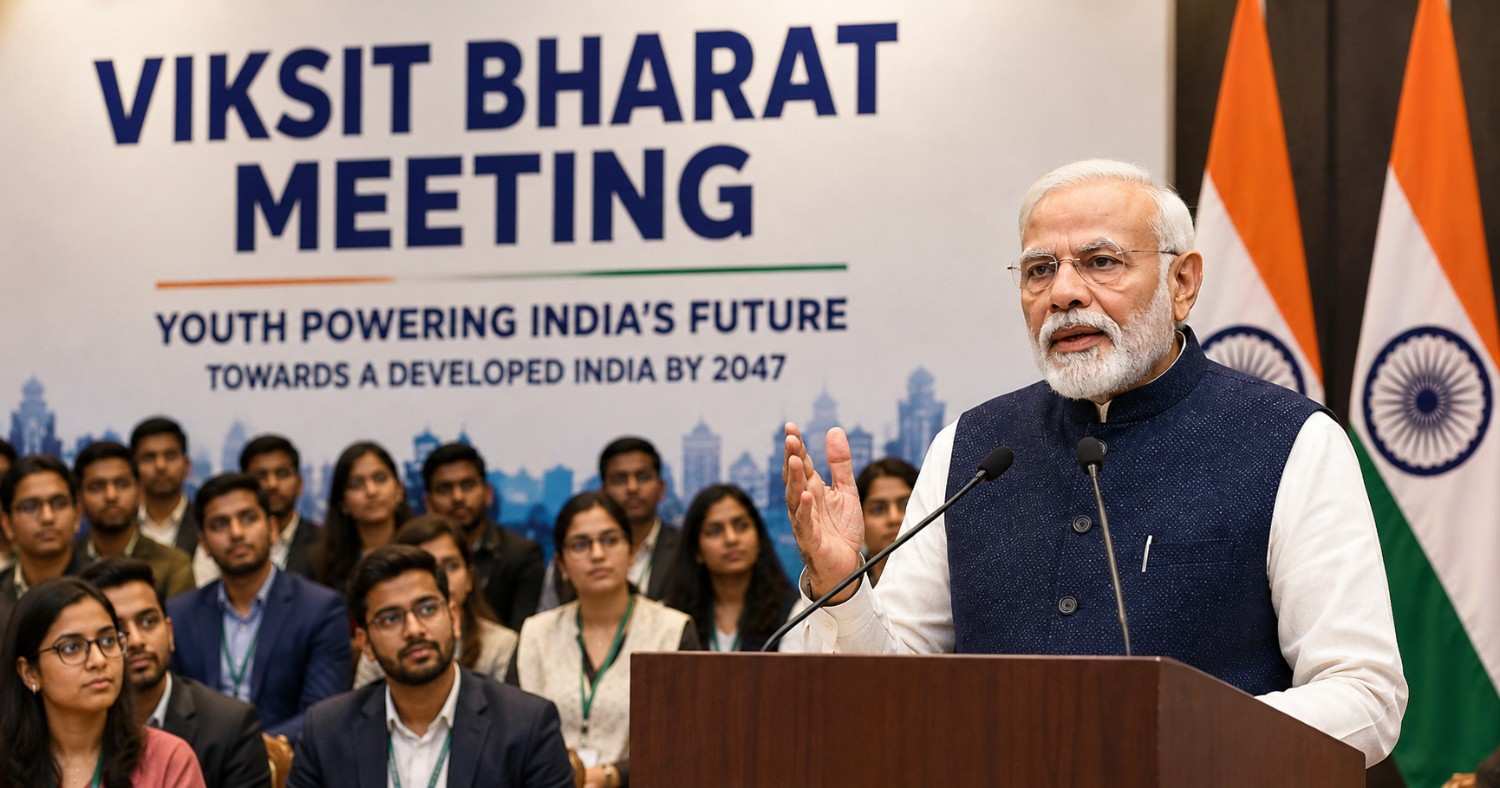
The latest discussions surrounding Prime Minister Narendra Modi’s Viksit Bharat initiative have once again highlighted that focus. As India moves toward its goal of becoming a developed nation by 2047, policymakers, educators, industry leaders, entrepreneurs, and government institutions are examining what role young citizens will play in shaping that future.
The Viksit Bharat vision is more than a political slogan or a government campaign. It represents a broader roadmap aimed at transforming India’s economy, infrastructure, innovation ecosystem, education sector, governance systems, and global competitiveness over the coming decades. With more than half of India’s population below the age of 30, young Indians are expected to be the driving force behind this transformation.
Recent interactions and consultations under the Viksit Bharat framework have sparked discussions about what practical changes could emerge for students, job seekers, entrepreneurs, and young professionals. While many policy details continue to evolve, several themes have consistently appeared in government priorities and national development planning.
A Greater Focus on Skill Development
One of the most significant areas likely to receive increased attention is skill development. As industries undergo rapid technological change, traditional education alone is no longer considered sufficient for employment readiness.
Government initiatives over the past decade have increasingly emphasized vocational training, digital skills, industry partnerships, and workforce preparedness. The Viksit Bharat vision is expected to accelerate these efforts by encouraging educational institutions and training centers to align more closely with industry requirements.
For young Indians, this could mean greater access to certification programs, emerging technology training, apprenticeship opportunities, and industry-integrated learning models designed to improve employability.
Stronger Push for Innovation and Startups
India has emerged as one of the world’s largest startup ecosystems, producing thousands of new ventures across technology, healthcare, fintech, agriculture, and manufacturing sectors.
The Viksit Bharat framework places innovation at the heart of economic growth. As a result, young entrepreneurs may benefit from expanded startup support mechanisms, including mentorship programs, incubation centers, funding opportunities, and research-driven entrepreneurship initiatives.
Government-backed innovation challenges and university-based startup programs are also expected to play a larger role in encouraging young innovators to develop solutions for national and global problems.
A stronger innovation culture could help transform students from job seekers into job creators, contributing to economic growth while generating employment opportunities for others.
Digital Transformation May Open New Opportunities
India’s rapid digital expansion has already reshaped sectors ranging from banking and commerce to education and healthcare. The Viksit Bharat agenda places significant emphasis on technology-driven governance and digital infrastructure.
For young people, this could translate into increased opportunities in fields such as artificial intelligence, cybersecurity, cloud computing, data analytics, robotics, and digital services.
The expansion of digital public infrastructure may also improve access to government services, educational resources, and employment platforms. As technology becomes more deeply integrated into everyday life, digital literacy is likely to become an increasingly important skill for future career success.
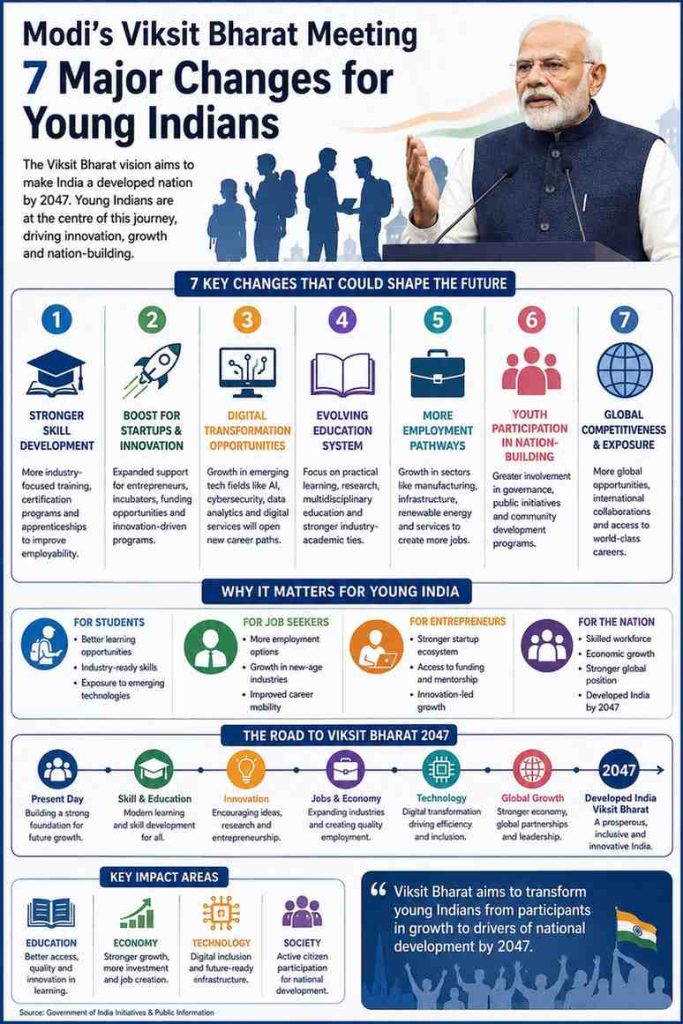
Education Reforms Could Continue to Evolve
The implementation of the National Education Policy has already initiated major discussions about curriculum modernization, multidisciplinary learning, and flexibility in higher education.
Within the broader Viksit Bharat vision, education is viewed as a critical pillar for national development. Future reforms could focus on improving learning outcomes, strengthening research capabilities, promoting innovation, and increasing collaboration between academia and industry.
Students may see greater emphasis on practical learning, problem-solving skills, entrepreneurship education, and emerging technology subjects. Such changes would aim to better prepare graduates for a rapidly changing global economy.
Educational institutions may also be encouraged to adopt international best practices while maintaining a strong focus on India’s development priorities.
Employment Generation Remains a Central Priority
Employment continues to be one of the most important issues for young Indians. As the country’s workforce expands, creating sufficient job opportunities remains a major challenge and opportunity.
The Viksit Bharat vision seeks to support economic growth through manufacturing expansion, infrastructure development, digital transformation, renewable energy projects, and investment promotion.
These sectors have the potential to generate substantial employment opportunities over the coming years. Government efforts to improve ease of doing business and attract investment may also contribute to job creation across multiple industries.
For young professionals entering the workforce, the success of these initiatives could significantly influence career prospects and long-term economic mobility.
Increased Participation in Nation-Building
A recurring theme in discussions surrounding Viksit Bharat is citizen participation. Young people are increasingly being encouraged to contribute ideas, engage in public initiatives, and participate in community development efforts.
This approach reflects a broader belief that achieving long-term national development goals requires active involvement from citizens rather than relying solely on government action.
Youth engagement programs, innovation challenges, public consultations, and volunteer-driven initiatives could become more prominent as policymakers seek to involve younger generations in shaping India’s future.
Such participation may also help build civic awareness and leadership skills among young citizens.
Global Competitiveness Could Create New Pathways
India’s ambition to become a developed nation by 2047 is closely tied to its position in the global economy. Strengthening manufacturing capabilities, boosting exports, advancing technology leadership, and improving research output are all important components of this strategy.
For young Indians, greater global competitiveness could create access to international careers, cross-border collaborations, global educational opportunities, and participation in emerging industries.
As Indian companies expand internationally and foreign investment increases, demand for globally skilled professionals is expected to grow. This could encourage educational institutions and employers to place greater emphasis on international standards, communication skills, innovation, and adaptability.
The ability to compete in a rapidly changing global environment may become one of the defining characteristics of the next generation workforce.
Why the Viksit Bharat Vision Matters
The significance of the Viksit Bharat initiative extends beyond individual policies or government programs. It represents an attempt to create a long-term national roadmap that aligns economic development, technological advancement, social progress, and institutional reform.
For young Indians, the coming decades will likely be shaped by how successfully these ambitions are translated into practical outcomes. Access to quality education, meaningful employment, entrepreneurial opportunities, technological resources, and effective governance will play a major role in determining whether the vision achieves its objectives.
India stands at a unique demographic moment. With one of the world’s youngest populations and a rapidly growing economy, the country’s future trajectory will be heavily influenced by the opportunities available to its youth. The discussions taking place under the Viksit Bharat framework suggest that policymakers increasingly recognize this reality and view young citizens not merely as beneficiaries of development but as active participants in building the India of 2047.
Highlights
- The Viksit Bharat initiative places young Indians at the center of India’s development vision for 2047.
- Skill development and industry-focused training are expected to receive greater policy attention.
- Startup growth and innovation ecosystems could create new opportunities for young entrepreneurs.
- Digital transformation may expand career prospects in emerging technology sectors.
- Education reforms are likely to focus on practical learning, research, and employability.
- Employment generation remains a major objective through manufacturing, infrastructure, and investment-led growth.
- Increased youth participation in governance and nation-building initiatives could shape future policymaking.
FAQ
What is the Viksit Bharat initiative?
Viksit Bharat is a long-term national vision aimed at transforming India into a developed country by 2047 through economic growth, technological advancement, infrastructure development, and social progress.
Why are young Indians important to the Viksit Bharat vision?
India has one of the world’s youngest populations. Young citizens are expected to drive innovation, economic growth, entrepreneurship, and workforce expansion over the coming decades.
Could the initiative create more job opportunities?
Employment generation is a major focus area. Sectors such as manufacturing, infrastructure, technology, renewable energy, and services are expected to contribute to job creation.
How might students benefit?
Students could benefit from education reforms, improved skill development programs, greater industry collaboration, and increased access to technology-driven learning opportunities.
What role does technology play in Viksit Bharat?
Technology is considered a critical pillar of development, supporting digital governance, innovation, economic growth, and improved public service delivery.
How could startups benefit from this vision?
Government-backed innovation programs, incubators, funding opportunities, and entrepreneurship support systems may strengthen India’s startup ecosystem.
Is the initiative focused only on economic growth?
No. The vision also includes social development, education improvements, governance reforms, innovation, sustainability, and citizen participation.
Why is 2047 significant?
The year 2047 marks 100 years of India’s independence, making it a symbolic target for achieving developed nation status.
Edited By E. Devanshi varma
Also Read: IPL Honey-Trap Row Sparks 7 Big Questions Before Playoffs
Follow us on Google News: Click Here