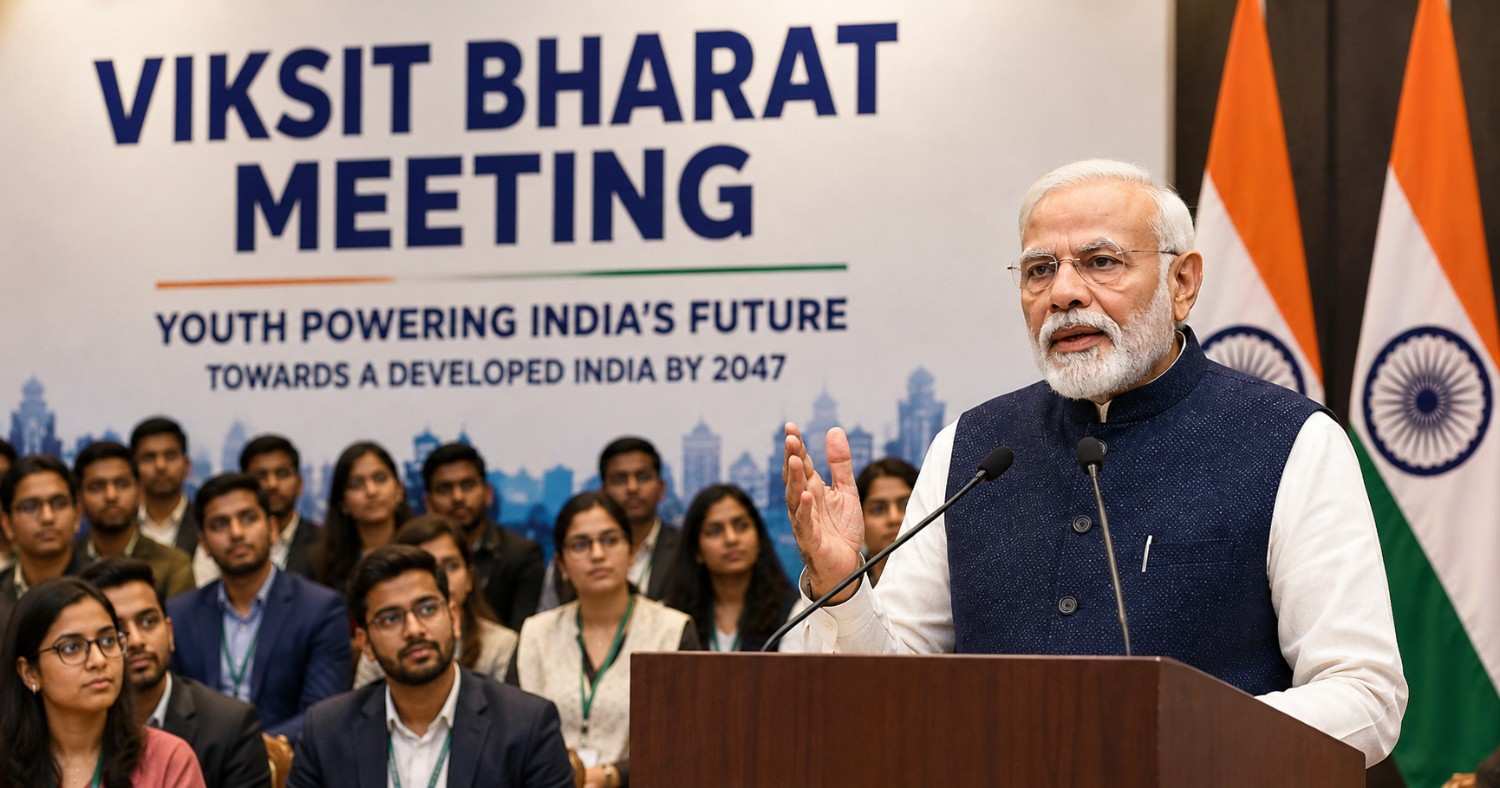


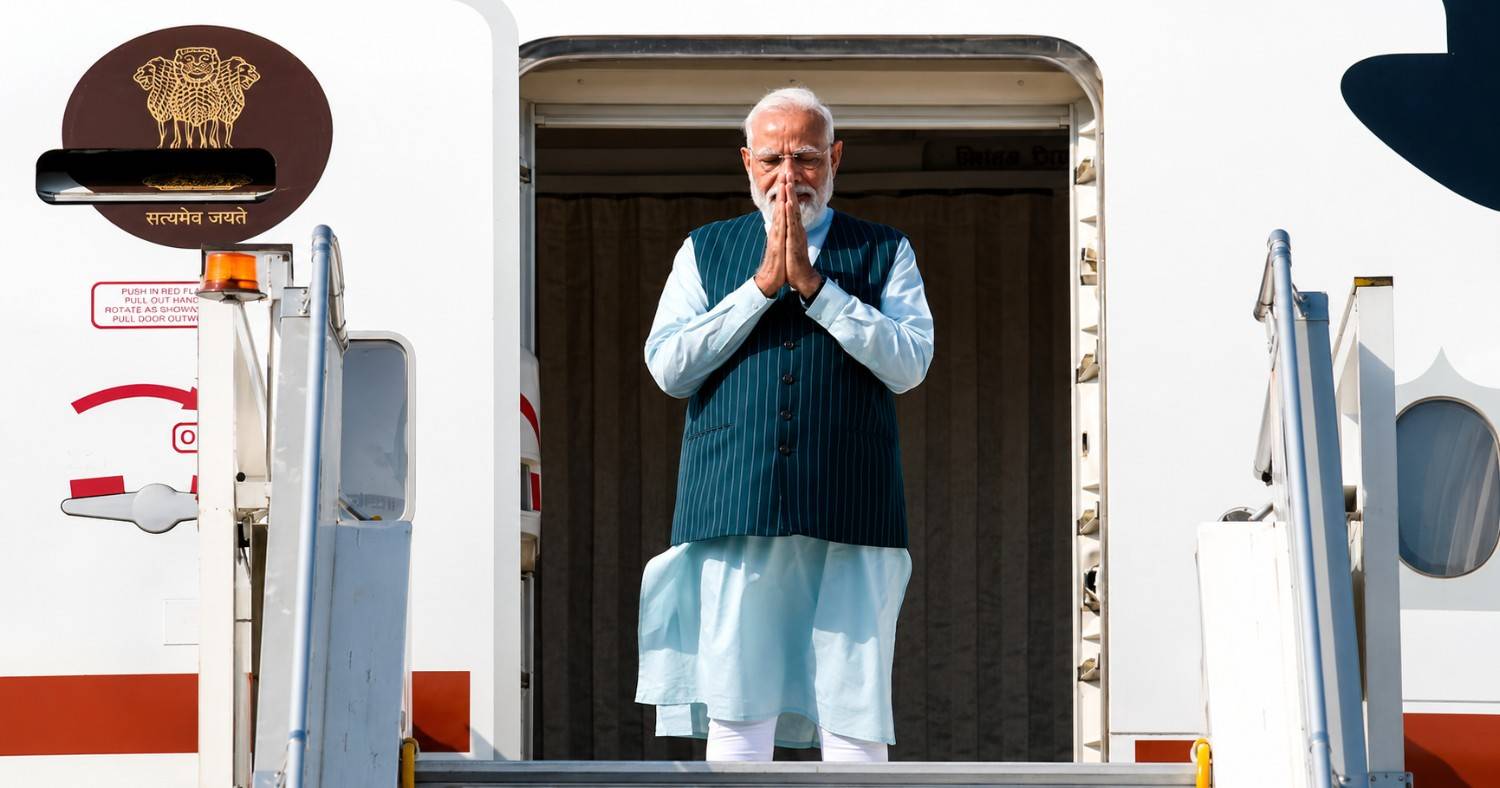
Prime Minister Narendra Modi on Thursday began a multi-country diplomatic tour across Europe and West Asia that is expected to sharpen India’s strategic partnerships at a time of growing geopolitical uncertainty, economic realignments, and intensifying global competition over energy, technology, and supply chains.
The six-day visit will take the Prime Minister to the United Arab Emirates, Netherlands, Sweden, Norway, and Italy, with discussions expected to cover energy security, investment flows, defense cooperation, green transition technologies, innovation partnerships, maritime connectivity, and regional security developments.
The visit comes at a time when India is attempting to deepen its economic and diplomatic footprint across multiple regions simultaneously while balancing relationships with Western powers, Gulf nations, and emerging strategic blocs. Officials familiar with the agenda say the tour is designed not merely as a ceremonial diplomatic exercise but as a coordinated effort to translate political engagement into long-term commercial and strategic outcomes.
UAE Visit Opens Tour With Energy and Investment Focus
The first leg of the visit began in Abu Dhabi, where Modi is scheduled to hold talks with UAE President Mohamed bin Zayed Al Nahyan. The discussions are expected to focus heavily on energy cooperation, bilateral investment expansion, and the welfare of the large Indian community living in the Gulf nation.
India and the UAE have emerged as increasingly close economic partners over the last decade. Bilateral trade has expanded significantly following the Comprehensive Economic Partnership Agreement (CEPA), which came into force in 2022 and accelerated non-oil trade between the two countries. The UAE has also become one of the most important investment destinations and energy suppliers for India.
Officials say the talks are likely to address long-term energy supply arrangements, renewable energy collaboration, strategic petroleum reserves, and opportunities in sectors such as logistics, fintech, digital infrastructure, and advanced manufacturing.
The meeting also carries geopolitical significance due to ongoing tensions in West Asia. Regional instability, disruptions in maritime trade routes, and concerns over global oil supply chains have made Gulf diplomacy increasingly important for major economies including India. New Delhi has attempted to maintain balanced engagement across the region while protecting its energy interests and diaspora population.
The Indian diaspora remains a major pillar of bilateral relations. More than four million Indians live and work in the UAE, contributing substantially to sectors including construction, healthcare, hospitality, finance, and technology. Remittances from the Gulf continue to play an important role in India’s economy, particularly for several southern states.
Europe Leg Reflects India’s Expanding Strategic Outreach
Following the UAE stopover, Modi will travel to the Netherlands for meetings with Dutch leadership and business representatives. The visit is expected to focus on technology cooperation, semiconductor ecosystems, water management, agriculture innovation, and clean energy initiatives.
The Netherlands has increasingly positioned itself as a strategic European partner for India in areas such as port infrastructure, sustainable urban planning, and high-tech manufacturing. Dutch companies have also shown growing interest in India’s expanding digital economy and manufacturing ecosystem under the “Make in India” initiative.
India’s engagement with European countries has accelerated in recent years as global companies seek alternatives to concentrated supply chains and governments look to diversify economic partnerships. Analysts say India is using these diplomatic engagements to position itself as both a major market and a strategic production hub.
In Sweden, Modi is expected to hold bilateral discussions with Prime Minister Ulf Kristersson in Gothenburg, a city known for its industrial and innovation-driven economy. The talks are likely to emphasize green technologies, mobility solutions, research partnerships, and defense manufacturing collaboration.
Sweden has become an important partner for India in areas such as sustainability, electric mobility, urban innovation, and advanced engineering. Several Swedish firms have expanded their India operations in recent years, particularly in renewable energy and industrial technology sectors.
Diplomatic observers note that India’s outreach to Nordic nations reflects a broader shift in its foreign policy priorities toward climate technology partnerships and innovation-driven growth models.
India-Nordic Summit Seen as Major Strategic Engagement
One of the most significant engagements during the tour will be the India-Nordic Summit in Oslo, where Modi will meet leaders from Nordic countries to discuss cooperation across emerging sectors.
The summit is expected to cover climate resilience, clean energy transition, Arctic policy, digital innovation, shipping, sustainable infrastructure, and healthcare technologies. Nordic countries are viewed globally as leaders in green development and social innovation, making them attractive partners for India as it pursues large-scale modernization and sustainability goals.
India has increasingly sought partnerships that support its long-term renewable energy ambitions, including green hydrogen production, battery storage systems, smart grids, and carbon reduction technologies. Nordic investment and technical expertise are expected to feature prominently in those discussions.
The summit also highlights India’s growing importance within European strategic calculations. With global power equations shifting and economic uncertainties affecting multiple regions, several European nations are seeking deeper engagement with India on trade, technology, and security matters.
Modi is also expected to address business and research forums during the Norway leg of the tour, underlining the government’s emphasis on economic diplomacy and innovation-led collaboration.
Italy Visit Likely to Strengthen Strategic Coordination
The final stop of the tour will be Italy, where Modi is expected to meet Prime Minister Giorgia Meloni and President Sergio Mattarella.
India and Italy have moved toward closer cooperation in recent years after a period of diplomatic strain earlier in the previous decade. Relations have improved steadily through cooperation in defense manufacturing, industrial technology, clean energy, and multilateral forums including the G20.
Officials indicate that the Italy discussions could include collaboration in aerospace, maritime security, advanced manufacturing, artificial intelligence, and cultural partnerships.
The strengthening India-Italy relationship also reflects a wider European effort to deepen engagement with Indo-Pacific economies amid changing geopolitical realities. Italy has shown interest in expanding trade ties with India as European businesses seek greater access to fast-growing Asian markets.
Diplomacy Increasingly Linked With Economic Outcomes
A senior government official accompanying the delegation described the visit as part of India’s broader strategy to align diplomacy with economic growth priorities. Unlike traditional state visits focused mainly on symbolic political engagement, recent foreign tours have increasingly included CEOs, investors, technology leaders, and business delegations.
This trend reflects the changing nature of global diplomacy, where investment flows, technology partnerships, energy resilience, and supply chain security have become central to bilateral relations.
India has been actively positioning itself as a reliable economic partner amid global instability triggered by conflicts, inflationary pressures, and trade disruptions. The government is simultaneously seeking foreign investment, advanced technology transfers, and export opportunities while expanding its geopolitical influence.
The tour also takes place ahead of several major global policy discussions expected later this year on energy security, climate financing, AI governance, and international trade reforms. Analysts say India is attempting to strengthen bilateral partnerships before those broader negotiations intensify.
Strategic Timing Amid Global Uncertainty
The timing of the five-nation tour is significant. Global politics remains shaped by conflicts in Europe and West Asia, competition between major powers, disruptions in shipping routes, and concerns about economic fragmentation.
For India, maintaining diversified partnerships has become a central foreign policy objective. New Delhi has attempted to strengthen ties simultaneously with Gulf economies, European powers, the United States, and developing nations without aligning too closely with any one geopolitical bloc.
This balancing strategy has allowed India to expand its diplomatic flexibility while protecting energy access, trade interests, and strategic autonomy.
Experts believe the current tour reflects India’s evolving role as both an economic power and a geopolitical bridge between regions. The emphasis on energy, technology, green transition, and investment suggests that India is increasingly shaping its foreign policy around long-term economic transformation rather than traditional diplomatic symbolism alone.
The presence of a high-level business delegation alongside the Prime Minister further reinforces the government’s intention to convert diplomatic momentum into commercial partnerships and infrastructure investment opportunities. With global supply chains being restructured and countries seeking trusted economic partners, India appears determined to leverage its market size, manufacturing ambitions, and geopolitical relevance to strengthen its international position across multiple regions.
Key Insights
- India’s decision to combine Gulf and European engagements within a single diplomatic tour reflects a broader foreign policy strategy aimed at balancing energy security, technology access, and geopolitical flexibility amid rising global uncertainty.
- The UAE leg of the visit underscores the growing strategic importance of West Asia for India beyond oil imports. Bilateral ties are increasingly driven by investments, logistics, fintech, food security, renewable energy, and the role of the Indian diaspora in strengthening economic integration.
- India’s outreach to Nordic nations highlights New Delhi’s increasing focus on climate-oriented diplomacy. Partnerships in green hydrogen, battery storage, carbon reduction technologies, and smart infrastructure are expected to support India’s long-term energy transition and net-zero ambitions.
- Engagements with countries such as the Netherlands, Sweden, and Italy also align with India’s efforts to position itself as an alternative manufacturing and supply-chain destination as global companies seek diversification beyond China-centric production networks.
- The inclusion of business leaders and investors in the delegation signals the growing merger between diplomacy and economic policymaking. India is increasingly using high-level political visits to secure investment commitments, technology partnerships, and industrial collaborations tied to domestic growth priorities.
- Discussions around maritime security, shipping routes, and regional stability come at a time when disruptions in West Asia and Europe continue to affect global trade flows, freight costs, and energy markets. Stable trade corridors remain critical for India’s import-dependent sectors.
- India’s stronger engagement with European partners could also support ongoing negotiations on trade and technology cooperation frameworks with the European Union, particularly in sectors such as semiconductors, clean energy, artificial intelligence, and digital regulation.
- The India-Nordic Summit carries strategic relevance beyond economics, as Arctic policy, sustainable development, and emerging technologies are becoming increasingly important in future global governance discussions.
- The tour reflects India’s continuing emphasis on “multi-alignment” — maintaining strategic relations with multiple global blocs simultaneously without formal alignment toward any one geopolitical camp. This approach has become central to India’s diplomatic positioning in a fragmented global order.
- With global economies facing inflationary pressures, supply-chain volatility, and slowing growth in several regions, India appears to be leveraging its large domestic market, infrastructure push, and manufacturing ambitions to attract long-term international partnerships and capital inflows.
Inputs and images : Hindusthan Samachar
Edited By E. Devanshi varma
Also Read: Assam Assembly Polls See 7 Major Highlights as Turnout Peaks, Counting Set for May 4
Follow us on Google News: Click Here