


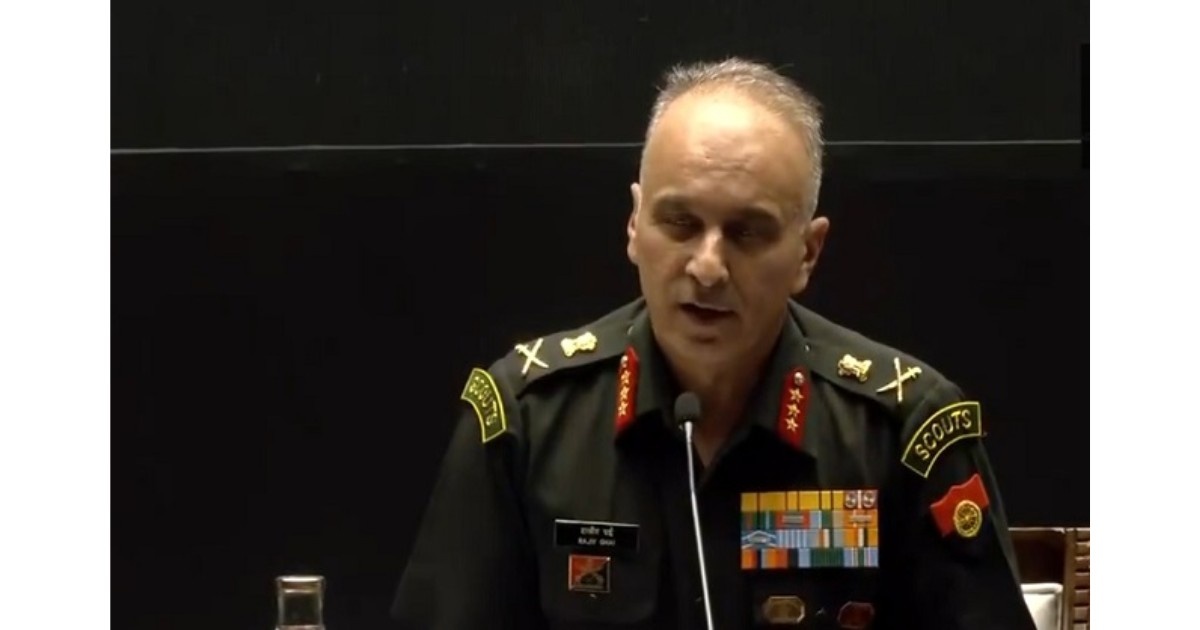
Senior military officials said Operation Sindoor demonstrated India’s coordinated tri-service combat capability, indigenous defence strength, and expanded operational freedom against cross-border terrorism.
India on Wednesday marked the first anniversary of Operation Sindoor, the military campaign launched in response to the terrorist attack in Pahalgam last year, with senior armed forces officials detailing how the operation was planned and executed across land, air, and maritime domains.
At a press conference in Jaipur, Lieutenant General Rajiv Ghai, who served as Director General of Military Operations (DGMO) during the operation, said the armed forces were given “complete freedom” by the government to strike terrorist infrastructure located across the Line of Control (LoC) and inside Pakistan.
The anniversary events were centred in Jaipur, where a Joint Commanders’ Conference was scheduled at the South Western Command headquarters. Defence Minister Rajnath Singh, Chief of Defence Staff Anil Chauhan, and the chiefs of the Army, Navy, and Air Force were expected to participate in discussions on military strategy, national security coordination, and operational preparedness.
The event also included the release of a documentary film related to Operation Sindoor.
Operation Sindoor Planned as a Tri-Service Military Campaign
Speaking about the military operation, Lt Gen Ghai described Operation Sindoor as one of India’s most coordinated security responses in recent years. He said the campaign integrated the capabilities of the Indian Army, Indian Air Force, and Indian Navy through a common operational framework backed by intelligence-sharing and real-time battlefield coordination.
According to the Army officer, nine targets linked to terrorist infrastructure were hit during the operation. Of these, seven were struck by the Indian Army, while two were targeted by the Indian Air Force.
He stated that the strikes were carried out with “perfect timing and complete surprise,” aimed at terror launch pads and operational bases located in Pakistan-occupied Jammu and Kashmir as well as areas deeper inside Pakistani territory.
The Indian military, he said, deliberately moved beyond traditional operational methods to ensure precision strikes without escalating into a broader conflict.
“Operation Sindoor was not an end but just the beginning. India’s fight against terrorism continues,” Lt Gen Ghai said during the media briefing.
Rajasthan Became the Operational Hub
Military officials noted that Rajasthan played a significant role during Operation Sindoor because of its long international border with Pakistan and the strategic sensitivity of several districts in the region.
Due to its logistical and military importance, Rajasthan served as a central operational hub during the campaign. The Army also chose the state to host the first anniversary commemoration events.
Security experts say Rajasthan’s terrain and positioning make it a critical theatre for troop mobilization, surveillance operations, and rapid deployment during periods of military tension between India and Pakistan.
The Joint Commanders’ Conference held in Jaipur was expected to focus on strengthening inter-service coordination and reviewing lessons learned from Operation Sindoor and other recent military exercises.
Government Gave Armed Forces Operational Freedom
Lt Gen Ghai said the government issued two broad directives at the beginning of the operation: dismantle terror networks operating from Pakistan-based camps and prevent future attacks targeting Indian civilians and security personnel.
He added that the armed forces were given operational flexibility to determine how those objectives would be achieved.
According to him, multiple agencies worked in close coordination during the campaign. These included the Defence Ministry, intelligence organisations, cyber warfare units, information operations divisions, border guarding forces, and paramilitary agencies.
He described the operation as an example of an “integrated governmental approach” in which different institutions functioned together under a unified strategy.
Military analysts have increasingly highlighted the importance of integrated warfare, especially in modern conflicts where cyber operations, surveillance systems, electronic warfare, and real-time intelligence are often as important as conventional troop deployment.
Operation Sindoor, officials claimed, reflected this shift in military doctrine.
Intelligence and Electronic Warfare Played a Major Role
The former DGMO said intelligence agencies provided precise targeting information before and during the operation, enabling the armed forces to identify and strike high-value targets with accuracy.
He also highlighted the role of cyber and electronic warfare units, which were tasked with maintaining information dominance and supporting operational secrecy.
Defence experts note that electronic warfare systems can disrupt enemy communication, radar systems, and surveillance infrastructure, giving military forces a strategic advantage during precision strikes.
The operation reportedly relied heavily on integrated intelligence imagery, surveillance inputs, and rapid decision-making systems to execute coordinated attacks within narrow time windows.
Officials did not disclose the exact locations of all the targets hit during the operation, citing national security concerns.
Indigenous Defence Systems Used Extensively
A major focus of the anniversary briefing was the use of domestically manufactured defence equipment during Operation Sindoor.
Lt Gen Ghai said more than 65 percent of India’s defence equipment is now produced within the country, reflecting the government’s push for defence self-reliance under the Atmanirbhar Bharat initiative.
He said several indigenous systems played an important role during the operation, including the BrahMos missile platform, Akash air defence system, surveillance technologies, electronic warfare suites, ammunition, rockets, and targeting systems developed in India.
According to military officials, locally manufactured equipment provided operational advantages because it allowed faster customization, uninterrupted supply chains, and quicker maintenance support during active deployment.
India’s defence manufacturing sector has expanded significantly over the past decade, with increased investment in missile systems, drones, radar technology, and advanced artillery.
Security observers say operations such as Sindoor are increasingly being used to demonstrate the operational reliability of indigenous military technology in real combat scenarios.
Why Operation Sindoor Matters
Operation Sindoor is being projected by the armed forces as a major example of India’s evolving counter-terrorism and cross-border response doctrine.
Unlike earlier operations that were often limited in scale or publicly undisclosed, Operation Sindoor combined military precision, inter-agency coordination, and strategic messaging aimed at deterring future terror attacks.
The campaign also came at a time when global conflicts have highlighted the growing importance of rapid-response warfare, technological integration, and multi-domain military operations.
Officials claimed that India was able to achieve its objectives without entering into a prolonged military confrontation. Lt Gen Ghai stated that Pakistan eventually sought dialogue and requested cessation of hostilities following the strikes.
However, independent verification of battlefield claims made by either side has remained limited, as both India and Pakistan have historically issued competing narratives after military escalations.
Defence experts say the larger significance of Operation Sindoor lies in its attempt to redefine India’s response framework against cross-border terrorism while avoiding wider regional instability.
Public and Strategic Impact
For the Indian government and military establishment, the anniversary serves both as a remembrance of the Pahalgam terror attack victims and as a reaffirmation of India’s security posture.
The operation has also strengthened discussions around defence modernization, indigenous weapons production, and the need for integrated theatre commands within the armed forces.
Military strategists believe that future operations are likely to rely even more on artificial intelligence-assisted surveillance, drone warfare, cyber operations, and indigenous missile systems.
The anniversary events in Jaipur are expected to continue through the day, with military leadership reviewing strategic preparedness and long-term defence priorities amid continuing security challenges in the region.
As India marks one year of Operation Sindoor, military officials have signalled that counter-terror operations and border security will remain central to the country’s defence policy, particularly in response to threats originating from across the border.
Inputs and images : Hindusthan Samachar
Edited By E. Devanshi varma
Also Read: Assam Assembly Polls See 7 Major Highlights as Turnout Peaks, Counting Set for May 4
Follow us on Google News: Click Here