

The internet has always been driven by trends. From viral dance challenges and profile picture movements to photo filters and editing apps, online communities have repeatedly embraced visual fads that spread at remarkable speed. Yet the latest wave sweeping across social media feels different.
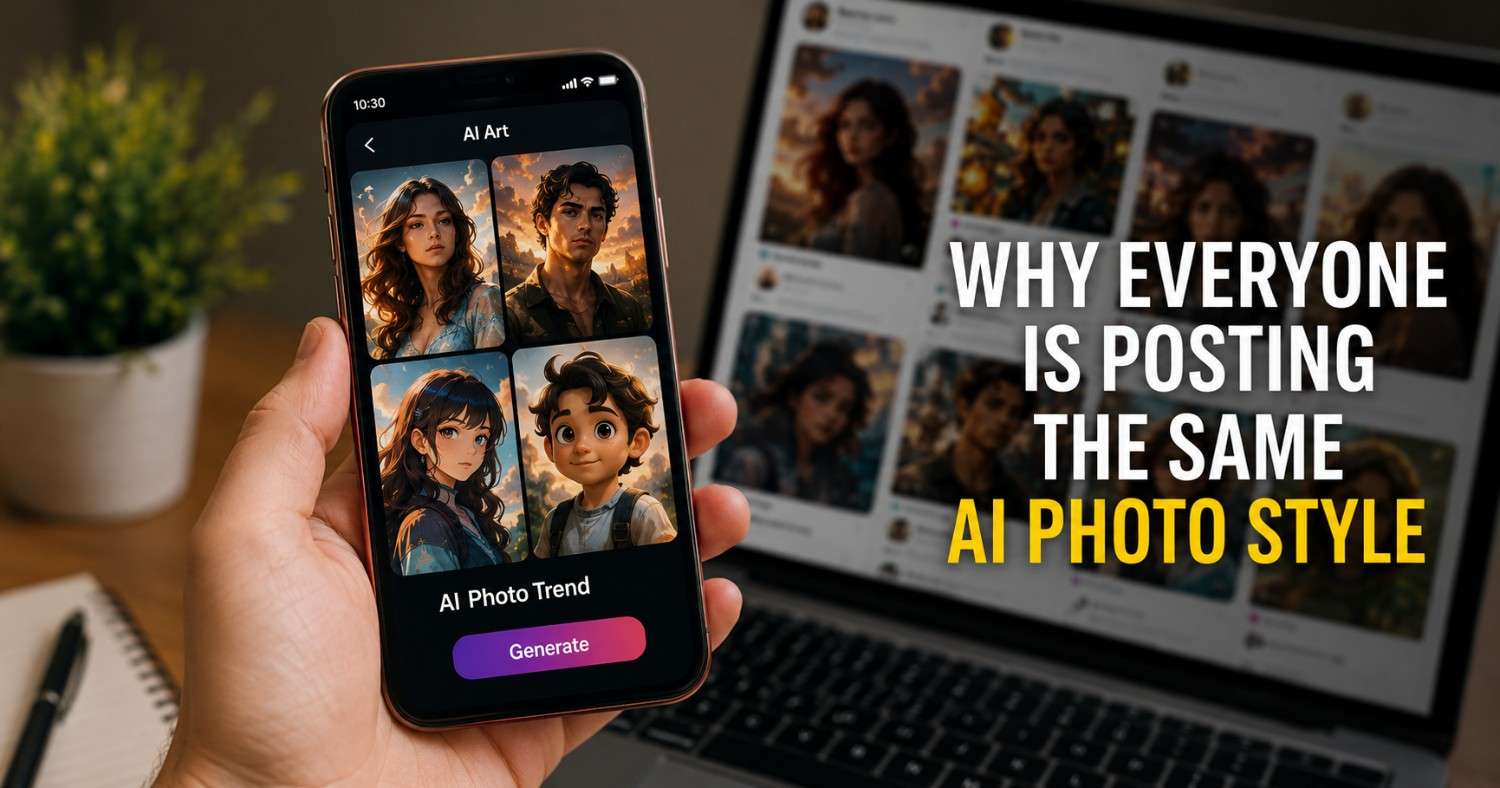
Over the past year, millions of users have begun sharing AI-generated portraits and images that look strikingly similar to one another. Whether it is fantasy-inspired artwork, cinematic portraits, action-figure packaging designs, professional headshots, anime transformations, or retro-themed illustrations, the pattern is familiar: a new AI image style appears, gains traction, and suddenly fills social feeds across multiple platforms.
What makes this trend notable is not simply the popularity of AI-generated imagery. Instead, it is the growing observation that many people are posting nearly identical styles, often generated using similar prompts and powered by the same artificial intelligence tools.
The phenomenon has sparked broader discussions about creativity, originality, technology, and the evolving role of human expression in the digital age.
How AI Image Trends Spread So Quickly
Unlike traditional digital art, which often requires technical skills and years of practice, modern AI image generators allow users to create visually impressive images within seconds.
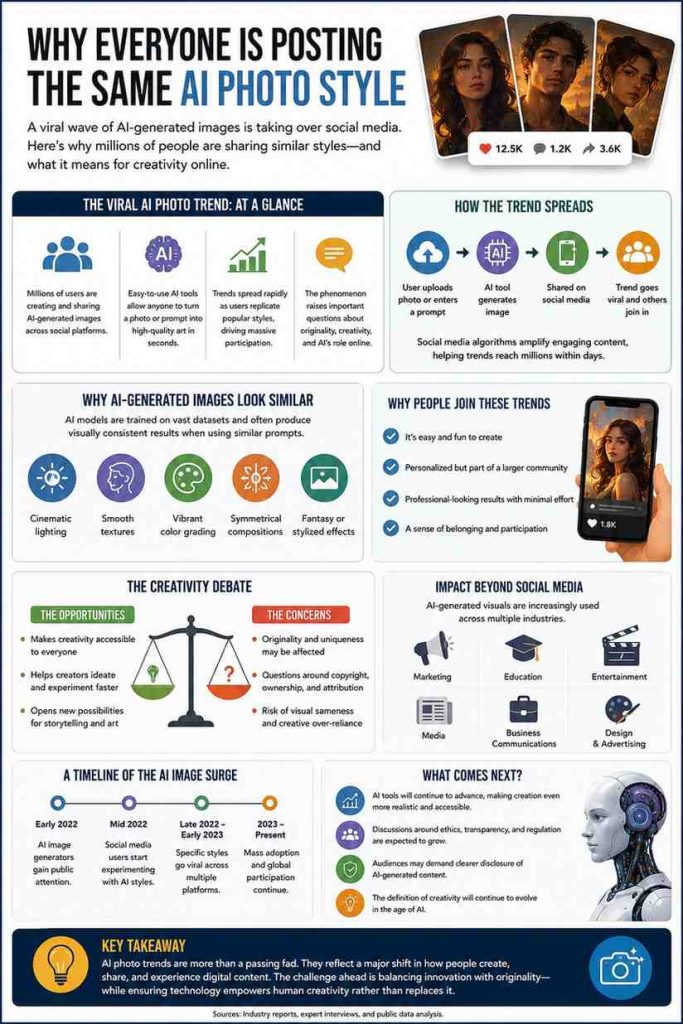
A user typically uploads a photo or enters a short text description. The AI system then generates a transformed image based on patterns learned from enormous datasets. Because the process is simple and accessible, participation barriers are low.
Social media algorithms further accelerate adoption. When users see friends, influencers, celebrities, or brands sharing a particular AI style, curiosity often leads them to try it themselves.
The result is a rapid cycle of imitation and participation. A style that appears in a few hundred posts can quickly expand into millions of variations within days or weeks.
This viral mechanism is not unique to AI. However, AI tools dramatically reduce the effort required to join a trend, making participation faster and more widespread than many previous online movements.
The Appeal of Looking Like Everyone Else
At first glance, it may seem contradictory that users seeking self-expression would willingly adopt identical visual styles. Yet social media history suggests that people often enjoy participating in shared cultural moments.
Profile picture frames, avatar generators, seasonal filters, and photo-editing apps have all demonstrated that users frequently balance individuality with belonging.
AI image trends operate similarly. While the overall style may be standardized, individuals still see their own faces, identities, pets, families, or personal stories represented within the generated artwork.
For many participants, the appeal is not necessarily creating a unique masterpiece. Instead, it is taking part in a broader online conversation.
The experience becomes social rather than purely artistic.
The Technology Behind the Uniform Look
One reason AI-generated images often resemble each other is the way modern generative models are trained.
AI systems learn from massive collections of images and visual patterns. When millions of users request similar outputs using comparable prompts, the generated results frequently converge toward recognizable aesthetic styles.
Certain visual characteristics repeatedly emerge:
- Dramatic cinematic lighting
- Smooth skin textures
- Highly polished facial features
- Symmetrical compositions
- Bright color grading
- Fantasy-inspired backgrounds
- Stylized illustration effects
These characteristics tend to perform well on social media because they are visually striking and immediately recognizable.
As a result, platforms become filled with images that share similar visual DNA, even when generated by different users.
A New Debate About Originality
The widespread adoption of AI-generated photo styles has reignited a longstanding question in art and technology: what makes creative work original?
Throughout history, artists have borrowed techniques, movements, and inspirations from others. Photography, digital editing, graphic design software, and smartphone cameras all faced skepticism during their early years.
AI introduces a new dimension because much of the creative process can be automated.
Supporters argue that users still contribute creative decisions through prompt writing, concept selection, storytelling, and image refinement. They see AI as another tool that expands creative possibilities.
Critics, however, contend that when millions of images share nearly identical aesthetics, meaningful originality may become harder to identify.
The discussion reflects broader concerns about whether technology is enhancing human creativity or encouraging visual conformity.
The Influence of Algorithms
Social media algorithms play a significant role in determining which trends gain momentum.
Platforms generally prioritize content that generates engagement through likes, shares, comments, and watch time. AI-generated images often perform well because they are visually impressive and easily understood at a glance.
When a particular style proves successful, users are incentivized to create similar content.
This creates a feedback loop:
- A trend becomes popular.
- Algorithms promote the trend.
- More users participate.
- Visibility increases further.
- Similar content dominates feeds.
Over time, users may encounter the same aesthetic repeatedly, reinforcing its popularity and encouraging additional participation.
The process highlights how platform design can shape visual culture as much as individual creativity.
What This Means for Artists and Creators
For professional artists, designers, photographers, and illustrators, the rise of AI-generated visual trends presents both opportunities and challenges.
Some creators have embraced AI as a productivity tool, using it to brainstorm ideas, generate concepts, or accelerate workflows.
Others worry that audiences may struggle to distinguish between human-created work and automated outputs. Concerns about artistic attribution, training data, copyright issues, and compensation remain active topics within creative industries.
At the same time, AI tools are introducing visual creation to people who may never have considered themselves artists before.
This democratization of content creation is one of the technology’s most significant impacts. Millions of users can now experiment with visual storytelling, design concepts, and artistic expression without specialized training.
Whether this ultimately strengthens or weakens creative ecosystems remains an ongoing debate.
The Cultural Shift Beyond Social Media
The influence of AI-generated imagery extends beyond personal social media accounts.
Businesses, marketers, educators, content creators, and media organizations are increasingly experimenting with AI visuals for campaigns, presentations, educational materials, and promotional content.
As AI-generated content becomes more common, audiences may begin developing new expectations about visual communication.
Highly polished imagery that once required professional resources can now be produced rapidly and at low cost.
This shift could reshape industries ranging from advertising and entertainment to journalism and education.
It may also encourage greater scrutiny regarding transparency, authenticity, and disclosure when AI-generated visuals are used in public-facing content.
The Future of Online Creativity
The current wave of AI photo trends may eventually fade, much like previous internet crazes. However, the broader transformation they represent is likely to remain.
Artificial intelligence is becoming deeply integrated into how people create, share, and consume digital content. The tools are growing more sophisticated, more accessible, and more influential in shaping online culture.
The central question is no longer whether AI will affect creativity. That reality is already unfolding across social platforms worldwide.
Instead, the more important discussion concerns how people choose to use these technologies. Will AI encourage greater experimentation and creative freedom, or will it push digital culture toward increasingly standardized forms of expression?
As millions continue posting remarkably similar AI-generated portraits and artworks, the answer remains a work in progress. What is clear is that the trend reflects more than a temporary social media obsession. It offers a glimpse into a future where technology, creativity, identity, and community are becoming more interconnected than ever before.
Highlights
- Social media users are increasingly sharing AI-generated images that follow nearly identical visual styles and formats.
- Viral AI image trends are being fueled by easy-to-use generative AI tools that require little technical knowledge.
- Experts say these trends highlight both the creative potential and limitations of AI-generated content.
- The phenomenon raises questions about originality, artistic ownership, and the future of online visual culture.
- Platforms benefit from highly shareable AI content, helping trends spread rapidly across global audiences.
- As AI tools become more accessible, digital communities are debating what authentic creativity means in an automated era.
FAQ
1. Why are so many people posting similar AI-generated photos?
Many users are using the same AI tools, prompts, and templates, which often produce similar visual styles and artistic effects.
2. What is driving the popularity of AI photo trends?
Easy-to-use AI generators, social media sharing, influencer participation, and algorithmic promotion have helped these trends spread rapidly.
3. Are AI-generated images considered original artwork?
Opinions differ. Some view prompt creation and customization as creative work, while others argue that highly similar outputs reduce originality.
4. How do AI image generators create these pictures?
They use machine-learning models trained on large datasets of images and visual patterns to generate new content based on user inputs.
5. Why do AI-generated photos often look alike?
Many AI systems favor certain visual characteristics such as cinematic lighting, smooth textures, and stylized compositions that are popular with users.
6. Are artists concerned about AI-generated content?
Some artists see AI as a useful creative tool, while others raise concerns about copyright, attribution, originality, and professional opportunities.
7. How do social media algorithms influence these trends?
Algorithms tend to promote engaging content. As AI-generated images attract attention, platforms may increase their visibility, encouraging more users to participate.
8. Could AI change the future of digital creativity?
Yes. AI is already influencing how people create and share content, and its impact is expected to grow across multiple industries and creative fields.
Edited By E. Devanshi varma
Also Read: IPL Honey-Trap Row Sparks 7 Big Questions Before Playoffs
Follow us on Google News: Click Here