


The Hindi film industry (Bollywood) is heading toward what many trade analysts describe as one of the most significant release battles in recent memory. With multiple high-budget productions eyeing the same theatrical window, Bollywood is preparing for a box office showdown that could reshape how major studios plan releases in the years ahead.
While release clashes are not uncommon in Indian cinema, the scale of the upcoming competition is attracting unusual attention from filmmakers, distributors, exhibitors, and audiences alike. The convergence of several star-driven projects, each carrying substantial production budgets and high commercial expectations, has raised questions about whether the industry can successfully accommodate multiple blockbuster contenders at the same time.
The stakes extend far beyond opening weekend collections. The outcome could influence distribution strategies, marketing approaches, and even future release calendars for some of Bollywood’s biggest production houses.
Why Release Clashes Matter
A theatrical release is often the most critical phase of a film’s commercial journey. Months or even years of production culminate in a limited window during which a movie must attract audiences, generate positive word-of-mouth, and recover significant investments.
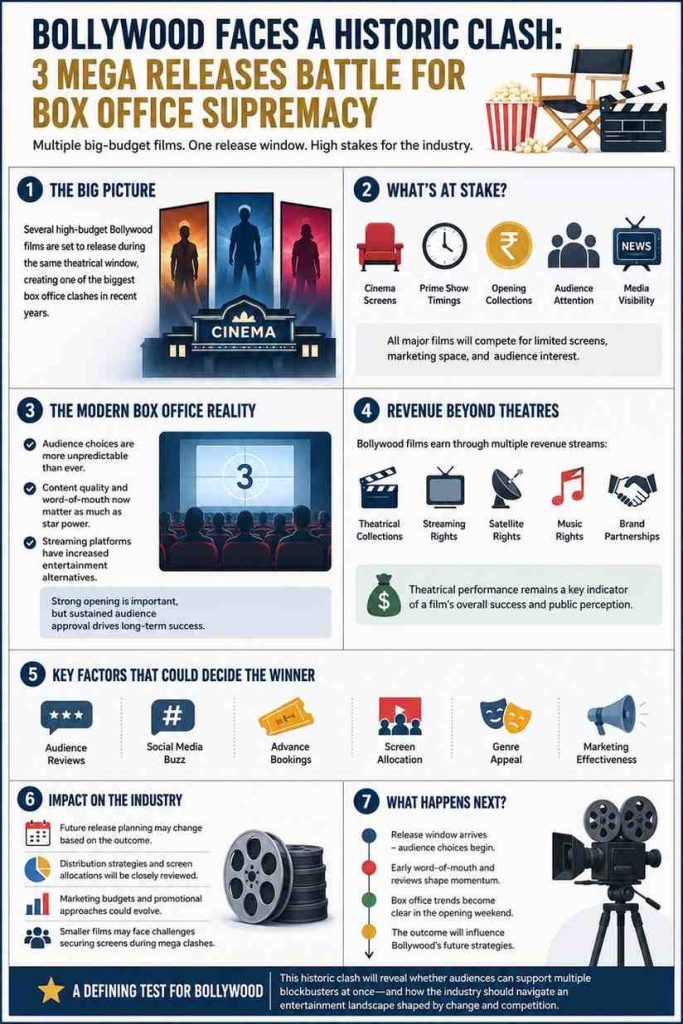
When two or more major films release simultaneously, they compete for several finite resources:
- Cinema screens
- Premium show timings
- Audience attention
- Marketing visibility
- Media coverage
In an era where ticket prices continue to rise and viewers have access to countless entertainment alternatives, securing a strong opening has become increasingly important.
For producers investing hundreds of crores into a project, a crowded release calendar can create both opportunities and risks.
A Changed Box Office Environment
The dynamics of theatrical success have evolved significantly over the past decade. Earlier, Bollywood relied heavily on star power to guarantee large openings. Today, audience behavior appears more unpredictable.
Several recent films featuring major stars have underperformed despite extensive promotion, while content-driven productions have exceeded expectations through positive audience response.
The rise of streaming platforms has also altered viewer habits. Consumers now have greater flexibility regarding when and how they watch entertainment. As a result, theatrical releases must offer a compelling reason for audiences to leave their homes and purchase tickets.
This changing landscape means that release timing has become more important than ever before.
The Economics Behind the Competition
The financial structure of modern Bollywood productions has become increasingly complex.
Large-scale films often recover revenue through multiple channels, including:
- Domestic theatrical collections
- Overseas box office earnings
- Digital streaming rights
- Satellite television rights
- Music rights
- Brand partnerships
However, theatrical performance remains a key indicator of a film’s overall success and public perception.
When multiple major releases compete simultaneously, box office revenue may become fragmented. Instead of one film dominating audience interest, ticket sales can be divided among several options.
For producers, this creates uncertainty. Even a well-reviewed film may struggle to maximize earnings if competing titles attract significant portions of the audience.
The Role of Multiplexes
Multiplex chains play a crucial role during major release clashes.
Cinema operators must decide how to allocate screens among competing films. These decisions are influenced by factors such as:
- Advance booking trends
- Star appeal
- Genre popularity
- Regional audience preferences
- Distributor agreements
A film receiving fewer screens than anticipated can face challenges in reaching its revenue potential, regardless of critical reception.
At the same time, multiplex operators often welcome high-profile clashes because they can increase overall footfall and generate greater consumer interest.
For exhibitors, a crowded release window can sometimes become a profitable opportunity rather than a problem.
Audience Behavior Will Be the Deciding Factor
Perhaps the most important variable is audience choice.
Unlike previous decades, moviegoers now rely heavily on social media reactions, online reviews, influencer discussions, and word-of-mouth recommendations before purchasing tickets.
A strong opening remains valuable, but sustained success increasingly depends on audience satisfaction.
If one film generates overwhelmingly positive reactions, it can quickly dominate conversations and pull viewers away from competing releases.
Conversely, strong films from different genres may coexist successfully by appealing to distinct audience segments.
For example, an action spectacle, a family entertainer, and a romantic drama can sometimes attract different groups of viewers without directly cannibalizing each other’s business.
Lessons From Previous Bollywood Clashes
Bollywood has witnessed several memorable release battles over the years.
Some clashes resulted in clear winners and losers, while others demonstrated that multiple films could succeed simultaneously under favorable circumstances.
Industry history suggests that content quality often outweighs scheduling concerns in the long run.
Several films initially considered disadvantaged due to competition eventually emerged as commercial successes because audiences connected with their stories.
At the same time, there are numerous examples of highly anticipated productions underperforming despite securing advantageous release dates.
These outcomes highlight an important reality: release timing matters, but it is rarely the sole determinant of success.
Marketing Wars Intensify
Another major consequence of a multi-film showdown is the escalation of marketing activity.
Studios increasingly invest in:
- Digital campaigns
- Television promotions
- City tours
- Influencer partnerships
- Fan engagement initiatives
- Interactive content
As release dates approach, competition for audience attention becomes more intense.
Marketing teams must not only promote their own film but also distinguish it from competing releases.
This often leads to innovative promotional strategies designed to generate conversation and maintain visibility across digital platforms.
In today’s media environment, maintaining relevance can be just as important as creating awareness.
Impact on Smaller Films
While major studios may dominate headlines, release clashes can have significant consequences for smaller productions.
Independent and mid-budget films often struggle to secure screens when blockbuster projects enter the market.
As multiplex chains prioritize high-demand releases, smaller films may receive limited theatrical exposure.
This has become a recurring challenge for filmmakers working outside the large-scale commercial ecosystem.
Some producers have responded by exploring alternative release strategies, including direct streaming premieres or carefully selected theatrical windows that avoid major competition.
The trend reflects broader changes in how films are distributed and consumed.
Industry-Wide Implications
The upcoming clash is being closely monitored because it may offer insights into broader industry trends.
Several important questions remain:
- Can multiple blockbuster films succeed simultaneously?
- Has audience demand recovered sufficiently to support several major releases?
- Are traditional release strategies still effective?
- How much influence do streaming platforms have on theatrical attendance?
- What role does social media play in determining box office outcomes?
The answers could shape future decision-making across Bollywood.
Production houses frequently analyze release performance data when planning future projects. A successful multi-film release window may encourage more studios to compete directly, while disappointing results could reinforce the importance of avoiding crowded schedules.
A Defining Test for Modern Bollywood
The impending showdown represents more than a simple box office competition. It serves as a test of Bollywood’s current strength, audience engagement levels, and ability to support multiple large-scale productions in an increasingly fragmented entertainment market.
As release dates draw closer, anticipation is expected to intensify among fans, industry observers, and investors alike.
Whether all participating films thrive or only one emerges as the dominant winner, the results will provide valuable lessons for an industry navigating rapid change. In a cinematic landscape shaped by evolving consumer habits, digital disruption, and growing competition for attention, this historic clash could become one of the most closely studied box office battles Bollywood has witnessed in years.
Highlights
- Multiple high-budget Bollywood films are set to compete during the same theatrical release window.
- The clash is expected to test audience demand, screen availability, and marketing effectiveness.
- Modern box office success increasingly depends on word-of-mouth and audience reception rather than star power alone.
- Multiplex chains face critical decisions regarding screen allocation among competing releases.
- Smaller films could face reduced visibility as major productions dominate cinema schedules.
- Industry stakeholders are closely watching the results for clues about future release strategies.
- The outcome may influence how Bollywood studios plan blockbuster launches in coming years.
FAQ
1. Why is this Bollywood release clash attracting attention?
The clash involves multiple major films targeting the same theatrical window, creating intense competition for screens, audience attention, and box office revenue.
2. How can release clashes affect a film’s performance?
Competing releases can divide audiences and limit screen availability, potentially impacting opening-week collections and overall earnings.
3. Do release clashes always hurt box office results?
Not necessarily. Strong audience response and positive word-of-mouth can help multiple films succeed simultaneously.
4. What role do multiplexes play during major clashes?
Multiplex operators decide screen allocations and show timings, making them a crucial factor in determining a film’s reach and revenue potential.
5. How have streaming platforms changed the situation?
Streaming services have increased entertainment choices, making theatrical attendance more competitive and placing greater emphasis on content quality.
6. Can different genres succeed during the same release period?
Yes. Films targeting different audience segments can coexist successfully if they offer distinct viewing experiences.
7. Why is opening weekend still important?
A strong opening helps build momentum, attract media attention, and improve a film’s chances of long-term box office success.
8. What could the industry learn from this clash?
The results may reveal whether Bollywood audiences can support multiple blockbuster releases simultaneously and how future release calendars should be structured.
Edited By E. Devanshi varma
Also Read: IPL Honey-Trap Row Sparks 7 Big Questions Before Playoffs
Follow us on Google News: Click Here