

Varanasi, April 28 — Senior Bharatiya Janata Party (BJP) leader Nitin Nabin on Monday credited Prime Minister Narendra Modi with significantly advancing women’s dignity and empowerment through a range of welfare schemes and policy interventions over the past ten years.
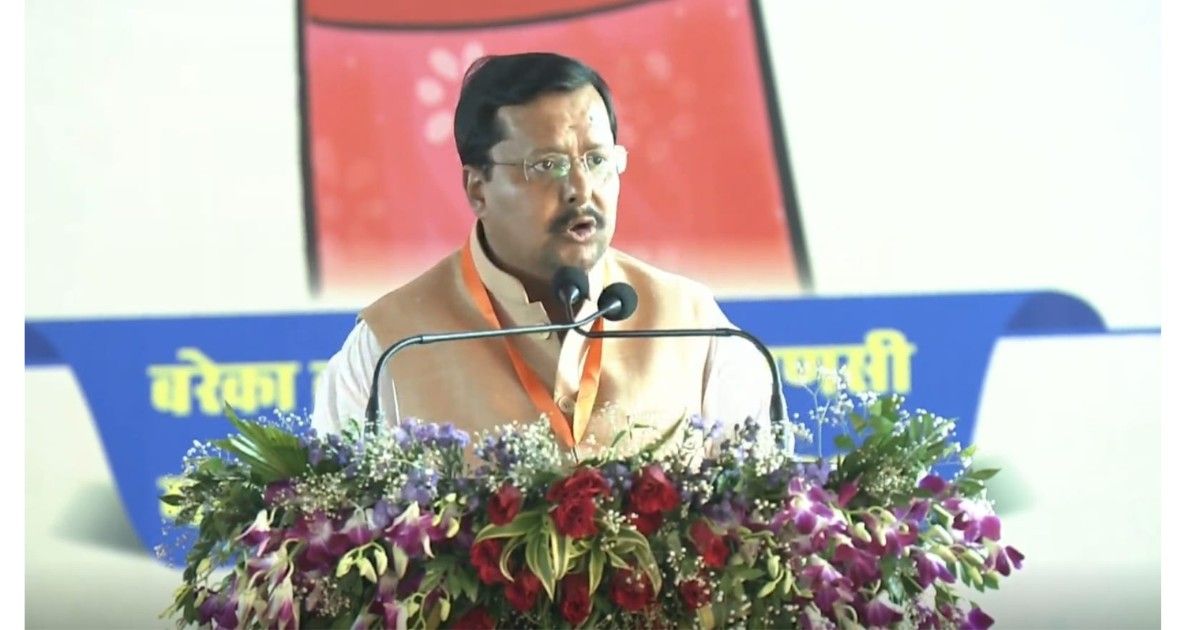
Speaking at the ‘Jan Aakrosh Mahila Sammelan’ held at Bareka Inter-College ground in Varanasi, Nabin outlined several flagship programmes and legislative actions that he said have reshaped the social and economic landscape for women in India. The event was attended by top BJP leadership, including Uttar Pradesh Governor Anandiben Patel and Chief Minister Yogi Adityanath.
Key Announcements and Highlights
During his address, Nabin focused on a cluster of government initiatives that have been positioned as central to improving women’s quality of life. Among them, the Pradhan Mantri Ujjwala Yojana (PMUY) and sanitation programmes under the Swachh Bharat Mission were highlighted as transformative interventions.
The Ujjwala scheme, launched in 2016, aims to provide free LPG connections to women from economically weaker households. Nabin stated that the programme has reduced dependence on traditional cooking methods, particularly firewood and coal-based stoves, which are associated with indoor air pollution and health risks.
He also linked sanitation initiatives—particularly the construction of household toilets—to improved safety, dignity, and hygiene for women. According to him, these efforts have reduced vulnerabilities faced by women, especially in rural areas where open defecation was previously widespread.
Another major scheme discussed was the Pradhan Mantri Awas Yojana (PMAY), under which housing ownership is often granted in the name of women or jointly with male family members. Nabin argued that this provision enhances women’s financial security and social status within households.
Official Statements
Addressing the gathering, Nabin said that the government’s approach to governance has emphasized fulfillment of commitments. He noted that the administration has consistently implemented its announced schemes, presenting this as a departure from previous political practices.
He also criticized opposition parties, alleging that they had attempted to obstruct or undermine welfare initiatives. However, he maintained that such efforts did not affect the delivery of schemes intended to benefit citizens, particularly women.
While praising the government’s initiatives, Nabin framed the broader narrative as one of structural transformation, where policy measures have aimed to address both immediate needs—such as cooking fuel and sanitation—and long-term empowerment through financial inclusion and entrepreneurship.
Economic Empowerment and Social Participation
Beyond welfare schemes, Nabin pointed to economic initiatives designed to integrate women more actively into the workforce and entrepreneurial ecosystem. He highlighted the role of Self-Help Groups (SHGs) and micro-credit programmes, which provide financial support and training to women, particularly in rural areas.
These initiatives are intended to encourage small-scale entrepreneurship, improve financial literacy, and create sustainable income sources. According to government data, millions of women are now part of SHGs, contributing to sectors such as agriculture, handicrafts, and local manufacturing.
Nabin also referenced the growing participation of women in emerging sectors, including technology and education. He cited examples of women excelling in fields such as artificial intelligence, competitive academic platforms, and sports, describing this as evidence of a broader societal shift.
Policy Measures and Legal Reforms
The BJP leader also spoke about legislative measures, including the government’s decision to criminalize the practice of instant triple talaq, which allows a Muslim man to divorce his wife unilaterally. The move was presented as a step toward ensuring legal protection and gender equality for Muslim women.
Additionally, initiatives like Beti Bachao Beti Padhao, launched to address declining child sex ratios and promote girls’ education, were highlighted as part of a wider policy framework aimed at changing societal attitudes.
Nabin argued that these measures collectively contribute to creating an environment where women have greater security, access to education, and opportunities for advancement.
Cultural Context and Symbolism
In his speech, Nabin also invoked the cultural and spiritual significance of Varanasi, often referred to as Kashi. He described the city as a symbol of India’s civilizational heritage and drew parallels between the nurturing role of the Ganga river and the contributions of women to society.
While largely symbolic, this framing sought to connect policy initiatives with broader cultural narratives, positioning women as central to both family structures and national development.
Context and Background
Over the past decade, the Indian government has launched multiple schemes targeting women’s welfare, often combining direct financial assistance with structural reforms. These initiatives have been central to the BJP’s political messaging, particularly in rural and semi-urban constituencies.
Programmes like Ujjwala and Swachh Bharat have received widespread attention for their scale and outreach. According to official figures, over 9 crore LPG connections have been distributed under Ujjwala, while millions of toilets have been constructed nationwide.
However, independent assessments have pointed to challenges such as refill affordability under Ujjwala and maintenance issues in sanitation infrastructure. Similarly, while SHGs have expanded significantly, their long-term sustainability varies across regions.
The government has also emphasized digital and financial inclusion through initiatives like Jan Dhan accounts and direct benefit transfers, which are often linked to women beneficiaries.
Public Impact
The schemes highlighted at the Varanasi event are designed to address multiple dimensions of women’s lives:
- Health and Safety: Access to clean cooking fuel and toilets reduces health risks and enhances personal safety.
- Economic Stability: Housing ownership and financial programmes provide long-term security.
- Education and Awareness: Campaigns like Beti Bachao Beti Padhao aim to shift societal attitudes and improve access to education.
- Legal Protection: Legislative changes offer safeguards against discriminatory practices.
For many beneficiaries, particularly in rural areas, these interventions represent tangible improvements in daily living conditions. However, the extent of impact often depends on implementation quality, local governance, and continued access to resources.
Political Significance
The presence of senior leaders, including Deputy Chief Ministers Keshav Prasad Maurya and Brajesh Pathak, underscored the political importance of the event.
Such gatherings serve both as platforms for public outreach and as opportunities to reinforce the party’s narrative around governance and development. Women voters, in particular, have emerged as a significant demographic in recent elections, making gender-focused policies a central component of political strategy.
Inputs and images : Hindusthan Samachar
Edited By E. Devanshi varma
Also Read: PM Modi Unveils 163 Projects Worth ₹6,332 Crore in Varanasi, Launches New Amrit Bharat Trains
Follow us on Google News: Click Here