

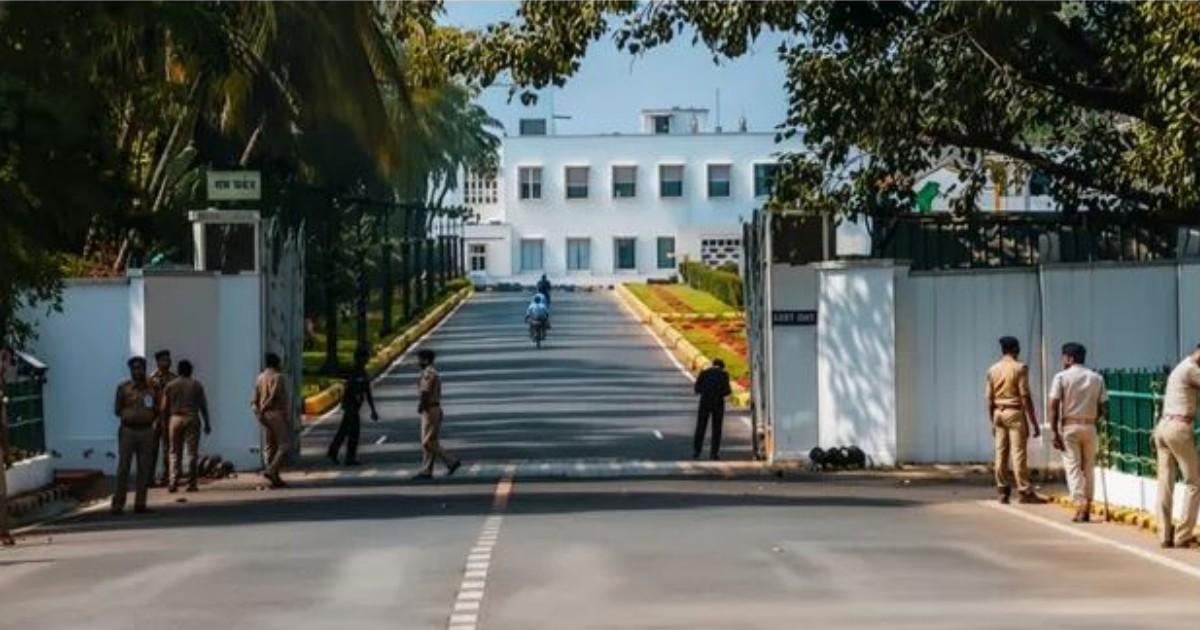
A formal investigation has been launched in Bhubaneswar following Incident allegations that two Indian Revenue Service (IRS) officers were forcibly removed from Lok Bhavan—the official residence of the Governor of Odisha—and taken to a local police station during a pre-approved visit. The incident, which occurred on April 16, has raised concerns within administrative circles over protocol adherence and the treatment of civil servants.
The matter came to light after a written complaint was submitted by the Principal Chief Commissioner of Income Tax, Odisha, detailing the sequence of events and alleging misconduct by security personnel.
Key Developments in the Incident
According to the complaint, a delegation led by the Principal Chief Commissioner had been granted permission for a courtesy meeting with Governor Hari Babu Kambhampati. While the senior official and a few others proceeded for the scheduled interaction, two accompanying IRS officers—identified as Manish Kumar (2015 batch) and Satya Prakash Mishra (2023 batch)—remained in a designated waiting area within Lok Bhavan.
The situation reportedly escalated when the two officers were asked to leave the premises. The complaint alleges that this action was taken on the instructions of an अधिकारी on security duty, specifically the Aide-de-Camp (ADC) from the police wing.
The officers were subsequently escorted out of Lok Bhavan and transported in a police vehicle to Capital Police Station. This development has drawn scrutiny, particularly as the visit had been pre-coordinated and the officers were reportedly authorized to be present within the premises.
Allegations and Verification
A key point of contention in the incident is the allegation that one of the officers was in an inebriated condition at the time. According to the complaint, this claim was cited as a reason for their removal from Lok Bhavan.
However, the complaint further states that this allegation did not hold up upon verification at the police station. Authorities reportedly found no evidence to support the claim, raising questions about the basis on which the officers were detained and removed from the premises.
The absence of substantiated evidence has added to concerns regarding the judgment exercised by those involved in handling the situation.
Official Complaint and Concerns Raised
In his communication to the Governor’s office, the senior Income Tax official described the incident as a “serious breach of protocol.” The letter emphasized that the officers had followed due procedure by informing both the Officer on Special Duty (OSD) to the Governor and the ADC (Navy) about their presence in the waiting area.
Despite this, the officers were allegedly subjected to what was described as “unprovoked and inappropriate treatment.” The complaint further highlighted that the officers were not causing any disturbance and were awaiting their turn as part of the scheduled visit.
The communication also raised concerns about the dignity of civil servants, stating that such actions could undermine institutional respect and professional conduct within administrative frameworks.
Inquiry Ordered by Authorities
Following the submission of the complaint, authorities have ordered a formal probe into the matter. Officials familiar with the development indicated that the inquiry would examine multiple aspects of the incident.
These include whether established protocols were followed, the role and conduct of the security personnel involved, and the circumstances under which the officers were removed and taken to the police station.
The investigation is expected to involve statements from all parties present during the incident, including the officers concerned, security staff, and officials from the Governor’s office.
Understanding Protocol in Official Visits
In India’s administrative system, courtesy visits to constitutional authorities such as a Governor are typically governed by established protocols. These include prior scheduling, security clearance, and designated waiting arrangements for accompanying officials.
Senior officers visiting such premises are generally expected to be treated in accordance with their official status, and any deviations from protocol can raise concerns about administrative coordination and communication gaps.
The incident at Lok Bhavan has brought attention to how such protocols are implemented on the ground, particularly in high-security zones where multiple agencies may be involved in decision-making.
Broader Administrative Context
Incidents involving alleged mistreatment of civil servants are relatively rare but tend to attract significant attention when they occur. This is because they touch upon the functioning of institutional hierarchies and the balance between security enforcement and administrative courtesy.
The IRS, as a premier civil service responsible for taxation and revenue administration, operates within a framework that emphasizes discipline, protocol, and inter-departmental coordination. Any perceived deviation from these norms can lead to concerns within the broader bureaucratic ecosystem.
The current case has already prompted discussions within administrative circles about the need for clearer communication and accountability mechanisms in sensitive environments like Raj Bhavans.
Public and Institutional Impact
While the incident primarily involves government officials, its implications extend beyond internal administrative matters. Such developments can influence public perception of governance, particularly regarding how institutions handle conflicts and ensure accountability.
For citizens, the episode raises questions about procedural fairness and the safeguards in place to prevent arbitrary actions, even within official settings. It also highlights the importance of transparency in resolving disputes involving public servants.
For the administrative system, the outcome of the probe will likely serve as a reference point for handling similar situations in the future. It may also lead to a review of existing protocols to ensure clarity and consistency in their application.
What Happens Next
The inquiry is expected to proceed in the coming days, with authorities gathering evidence and testimonies to establish a clear sequence of events. Depending on the findings, appropriate action may be taken against those found responsible for any lapses.
Officials have indicated that the objective of the probe is not only to address the specific incident but also to ensure that such occurrences are prevented in the future through improved coordination and adherence to protocol.
The findings of the investigation will be closely watched within administrative and political circles, as they may have implications for both institutional practices and accountability standards.
Inputs and images : Hindusthan Samachar
Edited By E. Devanshi varma
Also Read: Dr. Sarvepalli Radhakrishnan – UP CM Pays Tribute Marks 5 Contributions
Follow us on Google News: Click Here