

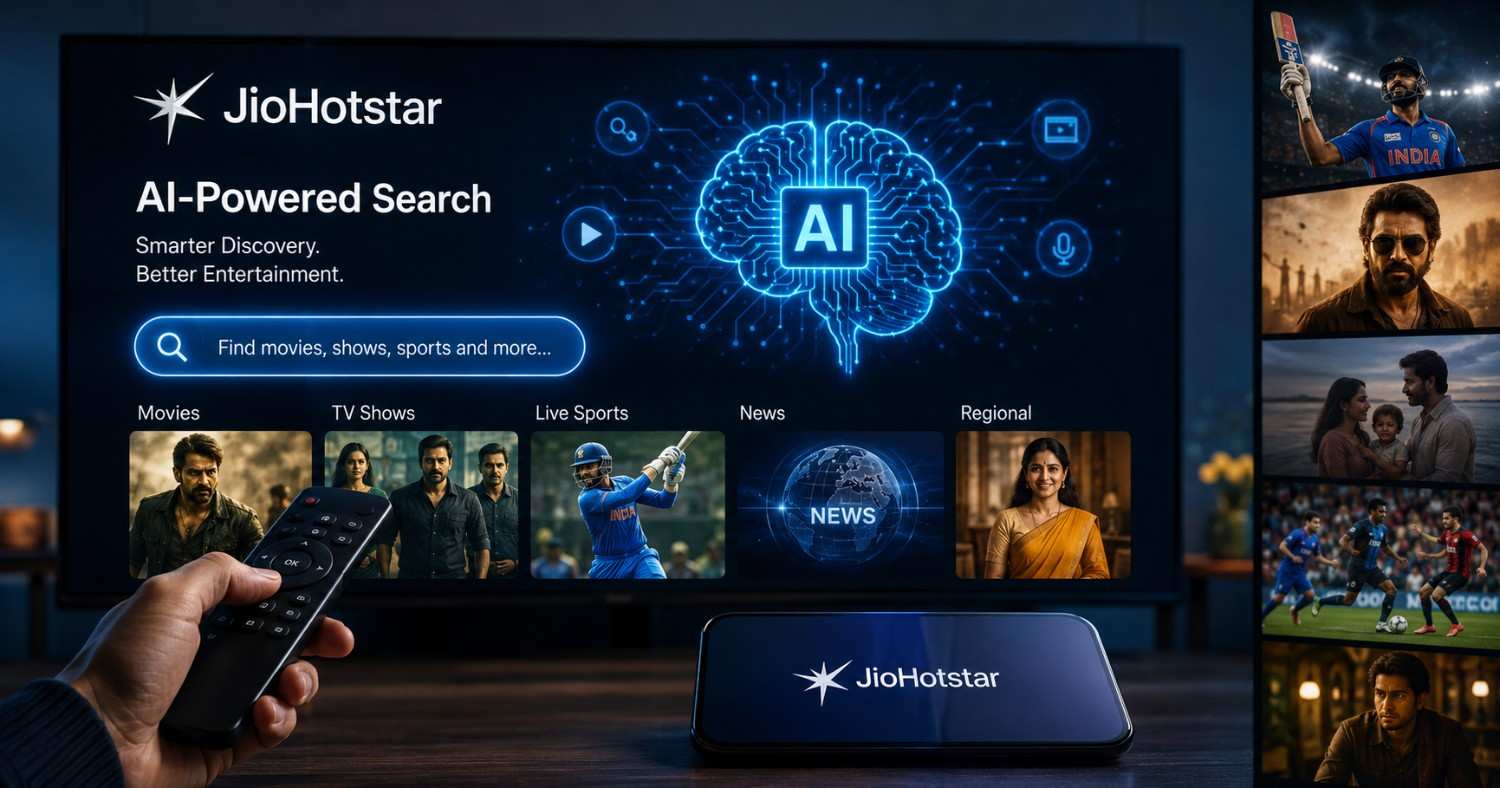
India’s streaming market is entering a new phase where artificial intelligence may play a far bigger role than viewers realize. With audiences consuming enormous volumes of digital entertainment across languages, genres, and devices, OTT platforms are increasingly searching for smarter ways to keep users engaged. JioHotstar’s emerging AI-powered search capabilities could become one of the most significant shifts in how Indian viewers discover and consume content online.
The move comes at a time when the OTT industry is dealing with a growing challenge known as “content overload.” Users today often spend several minutes scrolling through recommendations before choosing something to watch. As streaming libraries expand rapidly with films, web series, live sports, documentaries, and regional entertainment, platforms are under pressure to make content discovery faster, more intuitive, and more personalized.
JioHotstar’s AI-focused direction appears designed to address exactly that problem.
Why AI Search Matters in OTT
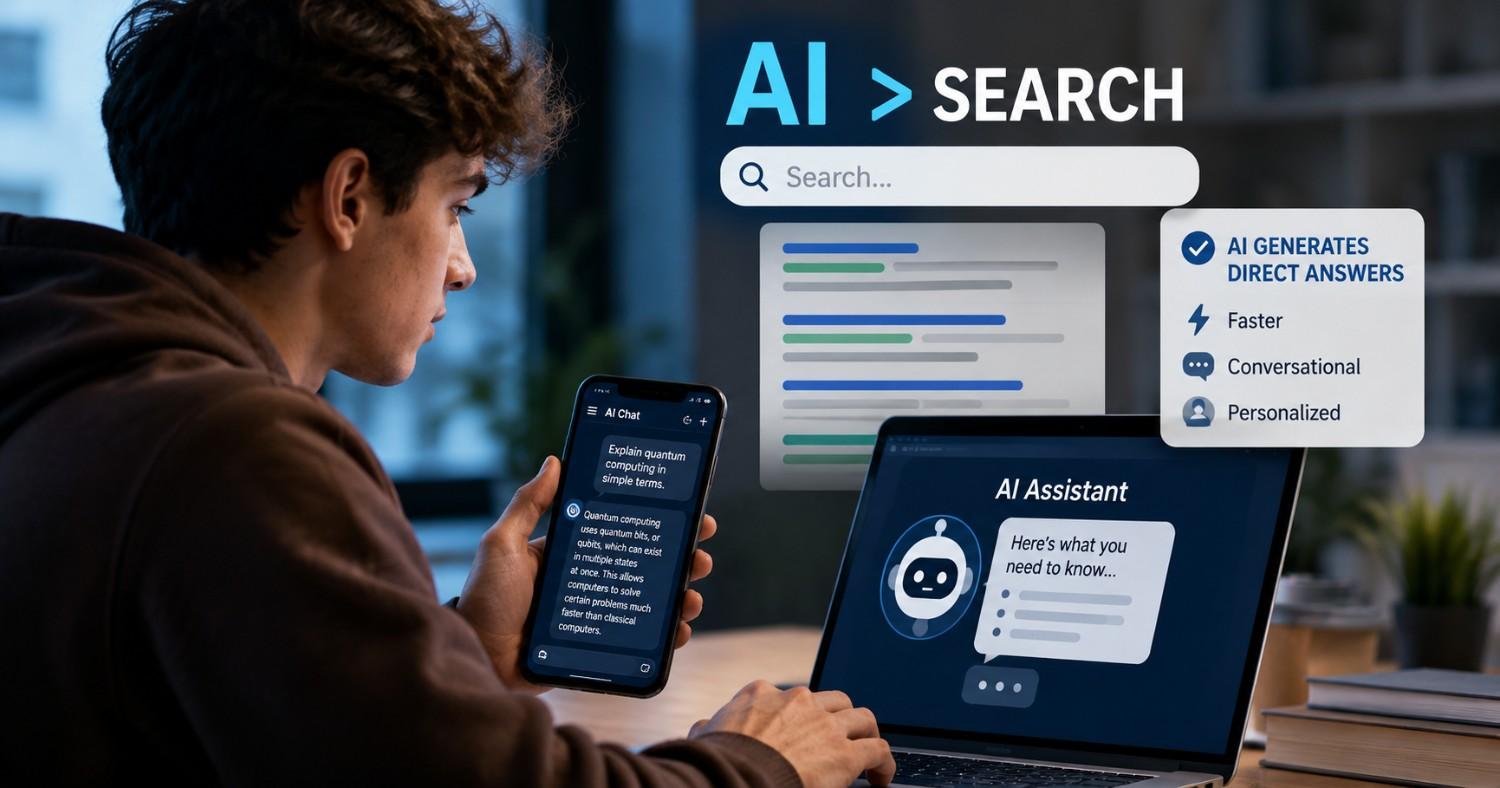
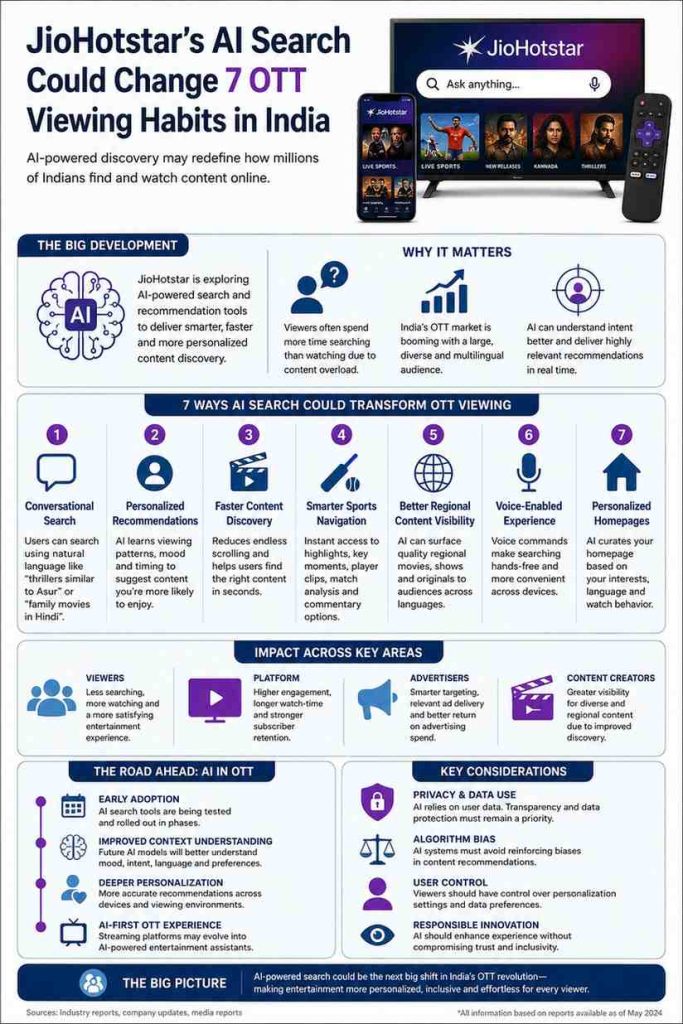
Traditional OTT search systems mainly rely on exact keywords, actor names, titles, or category-based filters. But AI-powered discovery tools are designed to understand intent rather than just text inputs. That means users may eventually be able to search using conversational phrases such as “light comedy for family dinner,” “thriller similar to Crime Patrol,” or “last-over cricket matches with dramatic finishes.”
This represents a major shift from passive recommendation systems toward interactive content discovery.
Industry experts say AI search could fundamentally reshape viewer behavior because streaming platforms are no longer competing only on content quantity. They are competing on attention span, convenience, retention, and personalization quality.
In India, where multilingual audiences consume entertainment across Hindi, Telugu, Tamil, Malayalam, Bengali, Kannada, Marathi, and English content ecosystems, search complexity becomes even more challenging. AI systems capable of understanding regional preferences and mixed-language search patterns may offer platforms a strategic advantage.
India’s OTT Market Is Becoming Hyper-Competitive
India is now one of the world’s fastest-growing streaming markets, driven by affordable mobile data, smart TVs, and expanding digital access in smaller cities. Platforms are aggressively competing for subscriptions, advertising revenue, and viewer retention.
The market has evolved beyond simply offering blockbuster films or sports rights. User experience now plays a central role in platform growth.
Streaming companies are increasingly investing in:
- AI-driven recommendations
- Personalized homepages
- Voice search integration
- Predictive viewing analytics
- Regional content targeting
- Behavioral data modeling
JioHotstar’s AI ambitions fit directly into this broader industry trend.
The company already operates at enormous scale because of its sports streaming reach, entertainment catalog, and growing integration within India’s digital ecosystem. Introducing more advanced AI discovery features could strengthen user engagement during major live events like cricket tournaments, football leagues, and reality television programming.
The Problem of Endless Scrolling
One of the biggest frustrations among OTT users globally is the inability to quickly decide what to watch. Analysts often refer to this as “decision fatigue.”
Streaming platforms today host thousands of titles, but recommendation engines are not always effective. Many users repeatedly encounter recycled suggestions, irrelevant genres, or outdated viewing patterns.
AI-enhanced search attempts to solve this by understanding contextual behavior rather than relying solely on static recommendation algorithms.
For example, a user watching intense crime dramas late at night may receive different recommendations compared to weekend daytime viewing with family members. AI models can theoretically adapt to mood, timing, device usage, language preferences, and even seasonal trends.
This level of personalization could significantly improve watch-time metrics for streaming companies.
Sports Streaming Could See the Biggest Impact
While entertainment discovery is one major application, AI-powered search may have even bigger implications for sports streaming in India.
Sports audiences often seek highly specific moments rather than full matches. Users may want to instantly locate:
- Match-winning sixes
- Specific overs in cricket games
- Highlights involving a favorite player
- Tactical analysis clips
- Language-specific commentary
- Historic rivalries
- Memorable World Cup moments
AI search tools could dramatically reduce the time needed to locate such content.
This is especially relevant because India’s sports streaming audience has become increasingly mobile-first and short-attention-span driven. Younger viewers frequently consume sports through clips, highlights, and personalized feeds instead of full-length broadcasts.
If AI systems can accurately interpret conversational or intent-based queries, platforms may unlock entirely new engagement patterns.
Regional Content Discovery May Improve
India’s OTT ecosystem is unique because regional entertainment is now growing almost as rapidly as mainstream Hindi-language programming.
Viewers increasingly explore films and web series across linguistic boundaries. Telugu cinema, Malayalam thrillers, Tamil action dramas, and Korean content dubbed into Indian languages have all gained wider acceptance.
However, discovery remains inconsistent.
Users often struggle to locate quality regional content unless it is aggressively promoted on homepage banners. AI-based discovery systems may improve visibility for smaller titles by matching viewer interests more intelligently.
For instance, someone watching emotional family dramas in Hindi could receive recommendations for critically acclaimed Malayalam or Bengali films with similar storytelling themes. This kind of intelligent cross-language mapping may help platforms increase content consumption across catalogs.
It could also benefit creators whose projects may otherwise remain buried beneath mainstream releases.
Privacy and Data Questions Remain Important
As AI becomes more deeply integrated into streaming platforms, questions around user data and privacy are likely to grow.
AI recommendation systems rely heavily on behavioral analysis, including viewing history, watch duration, interaction patterns, device usage, and search activity. While personalization improves convenience, critics argue that excessive data dependence can raise transparency concerns.
Globally, regulators are paying closer attention to how digital platforms use consumer data for algorithmic recommendations.
In India, data governance frameworks continue evolving, and OTT companies may eventually face greater scrutiny regarding AI-driven personalization systems.
Users may also increasingly demand clarity about how recommendations are generated and how viewing behavior is tracked.
AI Could Reshape Advertising on OTT Platforms
The implications extend beyond content discovery alone.
Advertising-supported streaming models are becoming more important in India as platforms attempt to balance subscriber growth with monetization. AI systems may help deliver highly targeted advertising based on viewer behavior and preferences.
For example:
- Sports fans could receive event-specific ads
- Regional viewers may see language-targeted campaigns
- Genre preferences could influence brand placement
- Viewing schedules may shape ad timing
This level of precision can improve advertiser efficiency while potentially increasing platform revenue.
However, it also raises ethical discussions around personalization intensity and user profiling.
Streaming Platforms Are Moving Toward Conversational Interfaces
The future of OTT interfaces may look very different from today’s tile-based browsing systems.
Technology companies worldwide are increasingly experimenting with conversational AI assistants capable of acting like entertainment guides rather than static search bars.
Instead of typing keywords, viewers may eventually interact naturally with streaming platforms through voice or chat-style prompts.
Possible future interactions could include:
- “Show me suspense thrillers under two hours.”
- “Find something similar to Panchayat.”
- “Recommend family-friendly cricket documentaries.”
- “What’s trending among Telugu viewers this week?”
JioHotstar’s AI initiatives may represent an early step toward this broader transformation.
The Battle for Viewer Retention Is Intensifying
OTT competition in India is no longer limited to acquiring users. Retaining them has become equally important.
Subscription fatigue is rising globally as consumers juggle multiple streaming services simultaneously. Platforms are therefore trying to create ecosystems where users spend more time browsing, interacting, and consuming content without leaving the app.
AI-powered personalization can directly influence retention by making platforms feel more intuitive and habit-forming.
If users consistently discover relevant content faster, they are less likely to abandon a platform after a short browsing session.
This is particularly important in India’s price-sensitive digital market where customer loyalty can shift quickly.
Industry Experts See AI as the Next Major OTT Evolution
Technology analysts increasingly view AI-assisted discovery as the next major battleground in streaming entertainment.
The first phase of OTT competition focused on content libraries. The second centered on exclusive originals and live sports rights. The next phase may revolve around intelligence-driven user experiences.
Platforms capable of understanding viewer intent more accurately could gain a measurable advantage in engagement, advertising, retention, and content utilization.
For Indian audiences, this could ultimately mean a streaming experience that feels less overwhelming and more responsive to individual preferences.
As digital entertainment ecosystems continue expanding, AI may become less of an optional feature and more of a core expectation.
JioHotstar’s evolving AI search strategy reflects how rapidly streaming platforms are adapting to changing consumer behavior. In a country where millions of viewers consume entertainment daily across languages, devices, and formats, smarter discovery systems may soon become central to how India watches content online.
Highlights
- JioHotstar is exploring AI-powered search and discovery tools aimed at improving how users find content across its OTT ecosystem.
- The development reflects a broader industry shift toward personalized streaming experiences driven by artificial intelligence.
- AI-enhanced recommendations could reduce content discovery fatigue for Indian OTT audiences overwhelmed by large streaming libraries.
- The platform’s strategy may strengthen competition in India’s rapidly evolving streaming market dominated by personalization and engagement metrics.
- Smarter search systems could particularly influence sports streaming, multilingual content discovery, and regional entertainment consumption.
- Industry analysts believe AI-led content navigation may become a major differentiator among OTT platforms in the coming years.
FAQ
What is JioHotstar’s AI-powered search feature?
JioHotstar’s AI-focused search initiative is aimed at improving content discovery by helping users find movies, shows, sports, and regional entertainment more intelligently through personalized recommendations and conversational search patterns.
Why is AI becoming important for OTT platforms?
AI helps streaming platforms improve personalization, reduce content discovery fatigue, increase viewer engagement, and deliver more relevant recommendations based on user behavior and preferences.
How could AI search change viewer experience?
AI-powered systems may allow users to search using natural language queries instead of exact titles or keywords, making discovery faster and more intuitive.
Why is this significant for Indian audiences?
India’s multilingual streaming market creates unique discovery challenges. AI tools may help users explore content across different languages and genres more effectively.
Could AI improve sports streaming on OTT platforms?
Yes. AI search could help viewers quickly locate highlights, key match moments, player-specific clips, and language-based commentary options.
Are there privacy concerns related to AI recommendations?
AI-driven personalization often relies on behavioral data such as viewing history and interaction patterns, which may raise questions around transparency and data usage.
How might AI affect OTT advertising?
AI systems can improve targeted advertising by analyzing viewer interests, language preferences, and content consumption behavior, potentially increasing advertising efficiency.
Will AI replace traditional OTT browsing?
Not entirely, but conversational and intent-based interfaces may increasingly complement traditional homepage browsing and category navigation.
Why are streaming platforms investing heavily in personalization?
As competition intensifies, platforms are focusing on retention and user experience. Better personalization can encourage longer viewing sessions and stronger subscriber loyalty.
Could AI discovery tools benefit smaller or regional content creators?
Potentially yes. Smarter recommendation systems may help surface lesser-known regional titles to audiences with matching interests instead of relying only on homepage promotions.
Edited By E. Devanshi varma
Also Read: Assam Assembly Polls See 7 Major Highlights as Turnout Peaks, Counting Set for May 4
Follow us on Google News: Click Here