

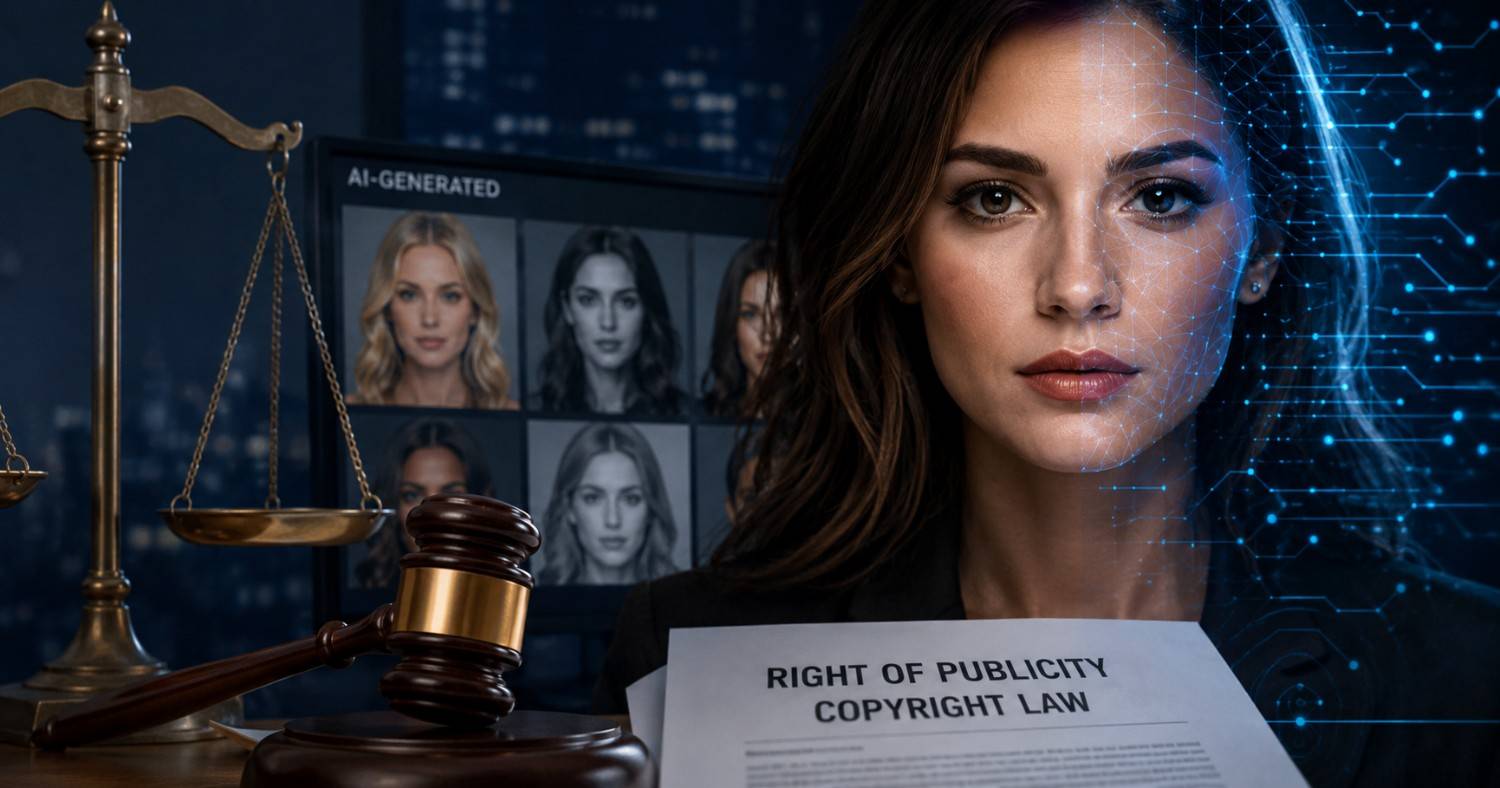
The rapid rise of artificial intelligence image-generation tools for Celebrity is reshaping entertainment, advertising, and online culture, but it is also intensifying legal and ethical concerns surrounding celebrity likeness rights. From hyper-realistic movie posters to viral AI-edited portraits of actors, musicians, and sports stars, the use of synthetic celebrity imagery has sparked a growing debate among legal experts, technology companies, artists, and public figures.
As AI-generated content becomes more sophisticated and widely accessible, regulators and entertainment industry stakeholders are increasingly questioning whether current copyright and personality-rights laws are capable of handling the speed and scale of AI-driven media creation.
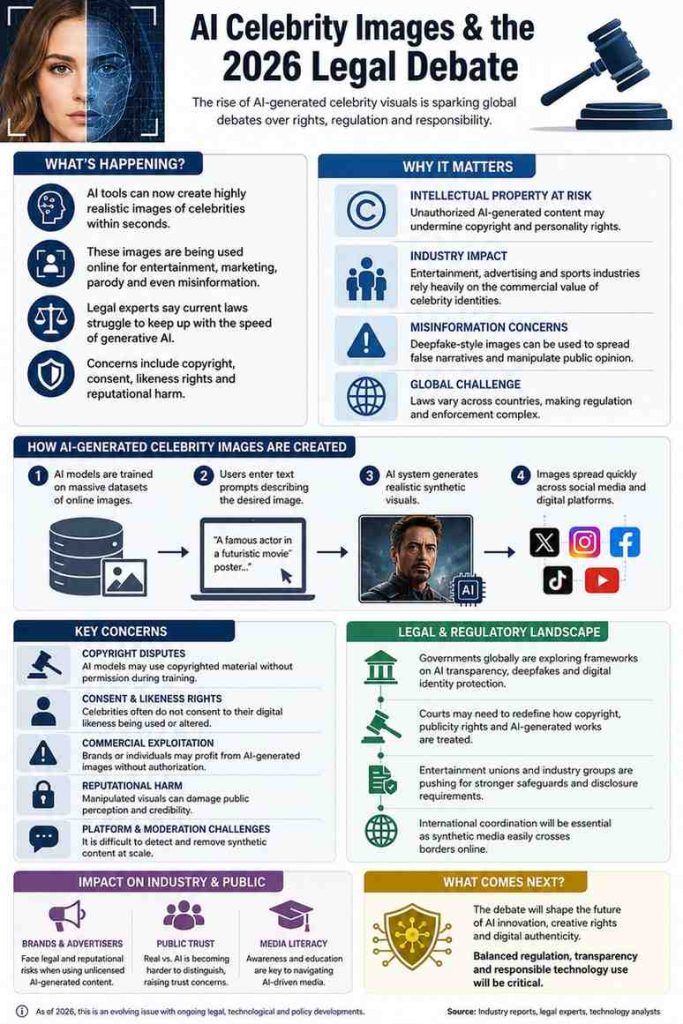
The issue has gained renewed attention in 2026 as several celebrities, talent agencies, and media organizations publicly raised concerns over unauthorized AI-generated visuals circulating online. Many of these images are created using publicly available photographs and machine-learning systems capable of replicating facial features, expressions, and artistic styles with remarkable accuracy.
While some creators defend AI-generated art as a form of digital creativity and experimentation, critics argue that the technology risks commercial exploitation, misinformation, reputational harm, and the erosion of intellectual property protections.
Growing Tension Between Creativity and Consent
AI image generators have evolved rapidly over the past few years. Platforms capable of producing realistic portraits from simple text prompts are now widely used by digital artists, marketers, meme creators, and entertainment fan communities. In many cases, users generate fictional movie scenes, fashion shoots, or fantasy artwork featuring recognizable celebrities without official authorization.
The growing accessibility of these tools has blurred the line between fan-created content and potentially unlawful commercial use.
Legal analysts note that existing copyright frameworks were not originally designed for generative AI systems trained on massive datasets that may include copyrighted photographs, films, promotional materials, or media archives. At the same time, personality and publicity rights laws vary significantly across countries and jurisdictions, creating uncertainty over enforcement.
In some regions, celebrities possess strong protections over the commercial use of their likeness and identity. In others, the laws remain fragmented or underdeveloped, especially regarding AI-generated synthetic media.
The debate has become particularly important for the entertainment industry, where celebrity branding represents significant commercial value. Actors, musicians, influencers, and athletes increasingly monetize their image rights through endorsements, licensing agreements, merchandising, and digital partnerships. Unauthorized AI-generated imagery could potentially undermine those revenue streams.
Entertainment Industry Watching Closely
Hollywood studios, streaming companies, talent agencies, and music labels are paying closer attention to the implications of generative AI technologies. Industry executives are concerned that realistic synthetic content could eventually affect advertising campaigns, film promotion strategies, and celebrity licensing arrangements.
The issue became even more prominent after labor disputes in the entertainment sector over AI usage during recent years. Writers, actors, and creative professionals have repeatedly sought stronger safeguards against unauthorized digital replication of their work and identity.
Some entertainment unions and advocacy groups argue that AI-generated celebrity images should require clear consent mechanisms, particularly when used commercially. Others are pushing for mandatory labeling systems to distinguish AI-generated visuals from authentic photographs.
Technology companies, meanwhile, are attempting to balance innovation with safety measures. Several AI platforms have introduced policies restricting the generation of misleading or harmful celebrity imagery, though enforcement remains inconsistent across services and regions.
Experts say the challenge lies in the sheer speed of content creation and distribution online. Synthetic images can spread across social media platforms within minutes, often reaching millions of users before moderation systems react.
Deepfakes and Misinformation Concerns Expand
Beyond intellectual property disputes, misinformation experts warn that increasingly realistic AI-generated celebrity visuals could contribute to broader trust issues online.
Synthetic media has already raised concerns during elections, global conflicts, and major public events. Although many AI celebrity images are created for entertainment or parody purposes, the same technologies can also be misused to create deceptive or manipulated narratives.
Researchers studying digital misinformation say visual realism can make false claims appear more credible to audiences unfamiliar with AI-generated content. When manipulated celebrity images are shared without context, they may fuel rumors, fabricated endorsements, or misleading public reactions.
Social media platforms have responded by expanding content-labeling systems and moderation policies for synthetic media. However, experts caution that detection tools still face limitations, particularly as AI models continue improving in realism and image quality.
The growing sophistication of AI-generated visuals is also creating new challenges for news organizations and fact-checkers, who increasingly need verification workflows to confirm whether viral images are authentic.
Media literacy specialists argue that public awareness will become increasingly important as synthetic media enters mainstream digital communication.
Copyright Law Faces New Pressure
One of the central legal debates revolves around how AI systems are trained and whether copyrighted material is being used without authorization.
Many generative AI models rely on vast collections of online images gathered from public websites, databases, and digital archives. Critics argue that creators and photographers may not have provided consent for their work to be included in training datasets.
Several lawsuits involving AI companies and copyright disputes have already emerged globally, reflecting growing tension between technology innovation and intellectual property protections.
Legal experts say courts may eventually need to determine whether AI-generated outputs constitute transformative works, derivative creations, or entirely new forms of content under existing law.
The issue becomes even more complicated when celebrity likenesses are involved. In some cases, AI-generated images may not directly copy a specific photograph but still recreate a highly recognizable identity.
This raises broader questions about ownership, consent, digital personality rights, and compensation in the AI era.
Some policymakers are now considering whether new legislation specifically targeting synthetic media and AI-generated likenesses may be necessary.
Brands and Advertisers Enter Sensitive Territory
The advertising industry is also closely monitoring the debate. AI-generated celebrity imagery could potentially reduce production costs for marketing campaigns, but it also introduces significant legal and reputational risks.
Brands using synthetic celebrity visuals without authorization could face lawsuits, public criticism, or accusations of deceptive advertising practices.
Marketing agencies increasingly recognize that consumers are becoming more sensitive to transparency around AI-generated media. Trust and authenticity remain important factors in brand communication strategies, especially in entertainment and lifestyle sectors.
Some companies are exploring licensed AI partnerships where celebrities voluntarily allow controlled digital recreations of their likeness in exchange for compensation and contractual oversight.
This emerging business model may eventually create new commercial opportunities while also establishing clearer ethical boundaries.
However, critics warn that unequal bargaining power or weak regulations could still expose performers and creators to exploitation.
Governments and Regulators Under Pressure
Governments worldwide are gradually increasing attention on AI governance, including synthetic media regulation.
Several countries have proposed or introduced frameworks related to deepfakes, AI transparency, biometric data usage, and online misinformation. However, regulatory approaches differ widely depending on political systems, legal traditions, and technological priorities.
Some policymakers favor strict disclosure requirements for AI-generated content, while others focus on consumer protection, election integrity, or intellectual property reform.
Technology law specialists argue that effective regulation will require international coordination because AI-generated media easily crosses borders through digital platforms.
At the same time, regulators face pressure not to stifle innovation in a rapidly growing AI sector that is attracting major investment globally.
Balancing innovation, free expression, artistic experimentation, and legal accountability remains one of the most difficult aspects of the debate.
Public Attitudes Toward AI Media Continue Evolving
Public opinion around AI-generated celebrity imagery remains divided.
Some audiences view AI-generated art as an exciting technological advancement that expands creative possibilities for independent artists and online communities. Fan-generated fictional scenes, stylized portraits, and imaginative entertainment concepts have become highly popular across social media.
Others worry that unrestricted AI replication of public figures may normalize unauthorized digital impersonation and reduce respect for creative ownership.
The debate also touches broader cultural questions about authenticity in the digital age. As AI-generated media becomes harder to distinguish from real photography, concerns about trust, identity, and originality are expected to grow further.
Educational institutions, digital rights organizations, and technology researchers are increasingly calling for stronger public awareness initiatives focused on AI literacy and responsible content consumption.
Industry analysts believe the legal frameworks established over the next few years could significantly shape the future relationship between artificial intelligence, entertainment, media rights, and online creativity.
For now, the controversy surrounding AI-generated celebrity imagery reflects a much larger global conversation about how societies should govern rapidly evolving technologies that challenge traditional ideas of authorship, ownership, and identity in the digital era.
Highlights
- AI-generated celebrity images are intensifying debates over copyright, consent, and personality rights in the digital media industry.
- Entertainment companies and talent agencies are increasingly concerned about unauthorized synthetic recreations of public figures.
- Legal experts say existing copyright and publicity laws may not fully address challenges created by generative AI technologies.
- Misinformation researchers warn that realistic AI-generated visuals could contribute to online deception and public confusion.
- Brands and advertisers are exploring licensed AI likeness agreements while trying to avoid legal and reputational risks.
- Governments worldwide are considering new regulatory approaches related to deepfakes, AI transparency, and synthetic media governance.
FAQ
What are AI-generated celebrity images?
AI-generated celebrity images are digitally created visuals produced using artificial intelligence systems that can replicate or simulate the appearance of public figures using text prompts or existing image data.
Why are these images creating legal concerns?
The main concerns involve copyright, consent, personality rights, misinformation risks, and the unauthorized commercial use of a celebrity’s likeness.
Are AI-generated celebrity images illegal?
Legality depends on how the images are created and used. Laws vary across jurisdictions, especially regarding commercial exploitation, parody, artistic expression, and publicity rights.
Why is the entertainment industry worried about AI-generated media?
Studios, talent agencies, and performers fear that unauthorized AI-generated content could affect branding, licensing deals, advertising revenue, and creative control over celebrity identities.
How do AI image generators create realistic celebrity visuals?
Many AI systems are trained on large datasets containing publicly available images, allowing models to learn facial features, styles, and visual patterns that can later be recreated digitally.
What role do deepfakes play in this debate?
Deepfake technologies use AI to generate realistic synthetic media, including manipulated videos and images, raising concerns about misinformation, impersonation, and reputational harm.
Are governments regulating AI-generated celebrity content?
Several governments are considering or implementing regulations related to synthetic media, AI transparency, biometric data usage, and digital misinformation.
Can celebrities license their AI likeness legally?
Yes. Some companies are already exploring licensed AI agreements that allow controlled digital use of celebrity likenesses through formal contracts and compensation arrangements.
How are social media platforms responding?
Many platforms are expanding labeling policies and moderation systems for AI-generated media, though enforcement remains inconsistent and technically challenging.
Why does this issue matter beyond celebrities?
The debate reflects broader concerns about authenticity, trust, intellectual property, and digital identity as AI-generated media becomes increasingly realistic and widespread online.
Edited By E. Devanshi varma
Also Read: Assam Assembly Polls See 7 Major Highlights as Turnout Peaks, Counting Set for May 4
Follow us on Google News: Click Here