



For years, investing in India was largely associated with traditional savings instruments such as fixed deposits, gold, and real estate. However, a new generation of investors is transforming the country’s financial landscape. Young Indians are increasingly embracing market-linked investments, with Systematic Investment Plans (SIPs) and direct stock investments emerging as two of the most popular wealth-building avenues.
As digital platforms simplify investing and financial literacy continues to improve, the debate between SIPs and stocks has become increasingly relevant. In 2026, the question is no longer whether young Indians should invest, but rather how they prefer to invest and what factors influence their decisions.
Recent trends suggest that while both options remain popular, SIPs are steadily attracting a larger share of young investors due to their accessibility, disciplined approach, and relatively lower risk profile. At the same time, direct stock investing continues to appeal to those seeking greater control and potentially higher returns.
India’s Young Investors Are Entering Markets Earlier
One of the most significant developments in recent years has been the rise of first-time investors in their twenties. Easy account opening processes, smartphone-based investing apps, and increased awareness through digital content have encouraged young professionals and students to begin investing much earlier than previous generations.
Financial planners note that many investors now start their investment journey within the first few years of employment. Instead of waiting until their thirties or forties, young earners are allocating a portion of their monthly income toward long-term wealth creation.
This shift has coincided with growing awareness about inflation, retirement planning, financial independence, and wealth accumulation. As a result, investment products that offer convenience and long-term growth potential have gained significant traction.
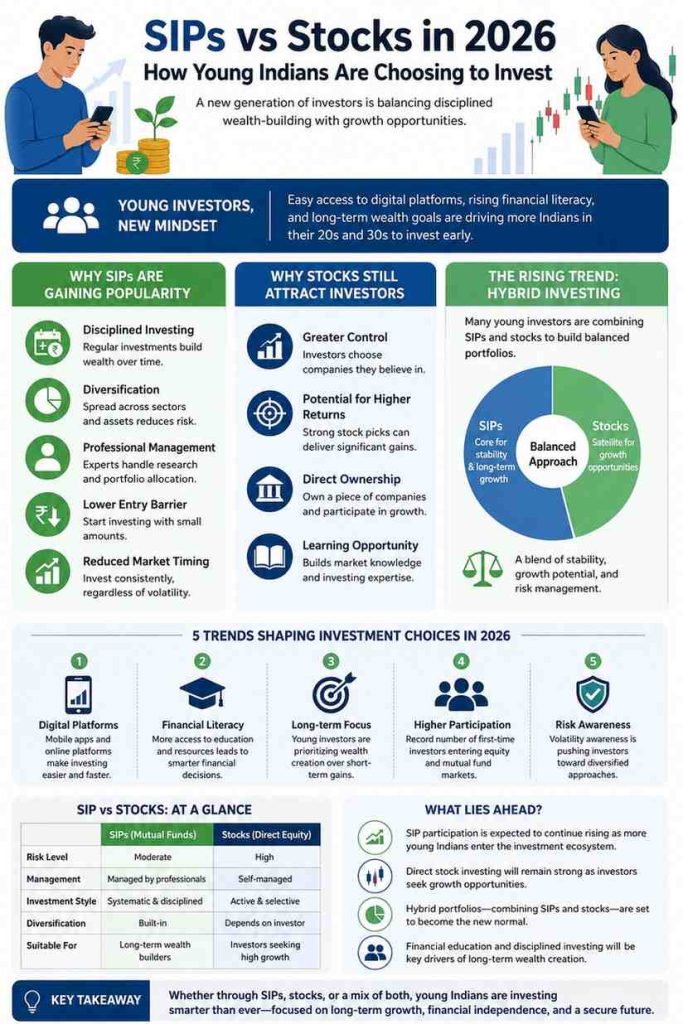
Why SIPs Continue to Attract Young Investors
SIPs have become one of the most widely adopted investment methods among India’s younger demographic. Under a SIP, investors contribute a fixed amount at regular intervals into a mutual fund scheme.
The appeal of SIPs lies in their simplicity. Investors do not need to track market movements daily or identify individual stocks. Professional fund managers handle portfolio construction and asset allocation, making the process easier for beginners.
Several factors are contributing to the growing popularity of SIPs:
Disciplined Investing
SIPs encourage regular investing regardless of market conditions. This disciplined approach helps investors build long-term wealth while avoiding emotional decisions driven by market volatility.
Lower Entry Barriers
Many SIPs can be started with relatively small monthly contributions, making them accessible to students, young professionals, and first-time investors.
Diversification Benefits
Unlike investing in a single company stock, mutual funds typically spread investments across multiple sectors and companies. This diversification can help reduce portfolio risk.
Reduced Market Timing Pressure
Attempting to buy and sell at the perfect moment is often difficult even for experienced investors. SIPs help mitigate this challenge through rupee cost averaging, where investments occur regularly across different market conditions.
Direct Stocks Still Appeal to Risk-Taking Investors
Despite the growth of SIPs, direct stock investing remains highly popular among young Indians, particularly those interested in financial markets and corporate developments.
Stock investing offers ownership in individual companies and provides investors with complete control over their portfolios. Many young investors are attracted by the possibility of generating returns that exceed broader market averages.
Several factors explain the continued appeal of stocks:
Greater Control
Investors can decide which companies to invest in, when to buy, and when to sell. This flexibility appeals to individuals who enjoy researching businesses and market trends.
Potential for Higher Returns
Successful stock selection can generate significant gains over time. Certain sectors, including technology, renewable energy, manufacturing, and financial services, continue to attract investor interest.
Learning Opportunities
Many young investors view stock investing as a way to deepen their understanding of business, economics, and financial markets.
However, direct equity investing also involves higher risk. Poor stock selection, market volatility, and emotional decision-making can lead to losses, especially for inexperienced investors.
The Rise of Hybrid Investment Strategies
Rather than choosing one option exclusively, many young investors are combining SIPs and stocks within the same portfolio.
Financial advisers increasingly recommend a core-and-satellite approach. Under this strategy, SIPs form the core long-term investment foundation, while direct stocks are used selectively to pursue additional growth opportunities.
This balanced approach offers several advantages:
- Stability through diversified mutual fund investments.
- Exposure to potential high-growth companies.
- Better risk management.
- Flexibility to adjust allocations based on financial goals.
The popularity of hybrid investing reflects the growing maturity of India’s retail investor ecosystem. Investors are becoming more sophisticated and are increasingly focused on portfolio construction rather than chasing short-term gains.
Technology Is Reshaping Investment Behaviour
Technology continues to play a central role in how young Indians invest. Mobile-first platforms have transformed investing from a complex process into a routine financial activity.
Features such as automated SIP registration, real-time portfolio tracking, educational content, and digital onboarding have lowered participation barriers significantly.
Artificial intelligence-powered tools, robo-advisory services, and advanced analytics are also helping investors make more informed decisions. These innovations have improved accessibility while encouraging greater participation among younger demographics.
At the same time, experts caution that easy access to investing should not be confused with easy wealth creation. Long-term success still depends on financial discipline, diversification, and realistic expectations.
Market Volatility Is Influencing Preferences
The experience of market fluctuations over the past few years has influenced investment preferences among younger investors. While many individuals entered markets during periods of strong growth, subsequent volatility highlighted the importance of risk management.
SIPs have benefited from this environment because they offer a structured approach that reduces the temptation to react emotionally during market downturns.
Young investors who experienced significant swings in individual stock holdings have increasingly recognized the value of diversification and long-term investing principles.
This does not mean interest in stocks is fading. Instead, investors appear to be becoming more selective and strategic in their stock-picking activities.
Financial Education Is Driving Better Decisions
Another important trend shaping investment choices in 2026 is the rise of financial literacy. Educational content is now widely available through digital platforms, online courses, financial publications, and expert-led webinars.
Young investors are spending more time understanding concepts such as:
- Asset allocation.
- Risk-adjusted returns.
- Portfolio diversification.
- Long-term compounding.
- Tax-efficient investing.
This increased knowledge is helping investors make decisions based on financial goals rather than speculation.
As awareness grows, investors are becoming more likely to evaluate factors such as risk tolerance, investment horizon, and liquidity requirements before choosing between SIPs and stocks.
What the Numbers Suggest About Future Trends
Industry observers expect SIP participation to continue expanding in the coming years as more first-time investors enter financial markets. The recurring investment model aligns well with salary-based income patterns and long-term wealth-building objectives.
At the same time, direct stock ownership is also expected to remain strong, supported by increasing market participation, growing corporate transparency, and broader investor awareness.
Rather than competing directly, SIPs and stocks may increasingly serve complementary roles within modern portfolios. Investors are recognizing that different financial instruments can address different objectives, ranging from stability and diversification to growth and capital appreciation.
The broader trend points toward a more financially engaged generation that is actively managing its wealth rather than relying solely on traditional savings methods. As investing becomes more mainstream, young Indians are demonstrating a willingness to balance ambition with discipline, creating a foundation for more informed and sustainable wealth creation in the years ahead.
Highlights
- SIPs are increasingly becoming the preferred investment route for many young Indians due to simplicity, diversification, and disciplined investing.
- Direct stock investing continues to attract investors seeking greater control and potentially higher returns.
- Technology-driven investment platforms have made market participation easier and more accessible than ever before.
- Many investors are adopting hybrid strategies that combine SIPs with selective stock investments.
- Growing financial literacy is helping young investors focus on long-term goals rather than short-term market speculation.
- Market volatility has strengthened interest in diversified investment approaches and systematic wealth-building methods.
FAQ
1. What is a SIP?
A Systematic Investment Plan (SIP) allows investors to invest a fixed amount regularly into a mutual fund scheme, helping build wealth over time through disciplined investing.
2. Why are SIPs popular among young investors?
SIPs offer convenience, diversification, lower investment entry points, and reduced dependence on market timing, making them attractive for beginners.
3. How is direct stock investing different from SIP investing?
Direct stock investing involves buying shares of individual companies, whereas SIPs invest in mutual funds managed by professional fund managers.
4. Which option carries higher risk: SIPs or stocks?
Direct stock investments generally carry higher risk because returns depend on the performance of individual companies. SIPs typically provide diversification that can reduce risk.
5. Can investors use both SIPs and stocks together?
Yes. Many investors combine SIPs and stocks to balance diversification with opportunities for higher growth.
6. How has technology influenced investing in India?
Digital investment platforms have simplified onboarding, portfolio tracking, and investment execution, encouraging greater participation among younger investors.
7. Why is financial literacy important for investing?
Financial literacy helps investors understand risk, diversification, asset allocation, and long-term wealth creation, leading to more informed decisions.
8. Are SIPs suitable during market volatility?
Many investors consider SIPs suitable during volatile periods because regular investments can average purchase costs over time and encourage disciplined investing.
9. What investment trend is emerging among young Indians in 2026?
A growing number of investors are adopting hybrid portfolios that combine systematic mutual fund investments with selective direct equity exposure.
10. What factors should investors consider before choosing between SIPs and stocks?
Investors should evaluate their risk tolerance, financial goals, investment horizon, market knowledge, and ability to manage volatility.
Edited By E. Devanshi varma
Also Read: IPL Honey-Trap Row Sparks 7 Big Questions Before Playoffs
Follow us on Google News: Click Here