



More professionals are embracing digital detox challenges to reduce screen fatigue, improve focus, strengthen work-life balance, and develop healthier technology habits in an increasingly connected workplace.
In an era where smartphones rarely leave our hands and notifications constantly compete for attention, a growing number of professionals are embracing digital detox challenges as a way to regain focus, improve mental well-being, and establish healthier relationships with technology.
From corporate executives and remote workers to freelancers and entrepreneurs, digital detox programs have emerged as a response to increasing concerns about screen fatigue, information overload, and the blurred boundaries between professional and personal life. What was once considered a niche wellness practice is increasingly becoming part of mainstream workplace conversations.
The trend reflects broader shifts in how employees and organizations view productivity, mental health, and sustainable work habits in an always-connected world.
Why Digital Detox Challenges Are Gaining Popularity
The average professional today relies on multiple digital devices throughout the day. Emails, messaging apps, video meetings, project management platforms, and social media notifications create a constant stream of information that demands attention.
While technology has enabled greater flexibility and connectivity, experts increasingly warn that excessive digital engagement can contribute to stress, burnout, reduced concentration, and sleep disruption.
As a result, many professionals are experimenting with structured digital detox challenges. These initiatives often encourage participants to reduce non-essential screen time, limit social media usage, establish notification-free periods, or designate technology-free hours during the day.
Rather than abandoning technology altogether, the goal is typically to create healthier digital habits that support productivity and well-being.
The Rise of Workplace Burnout Concerns
The popularity of digital detox challenges comes at a time when organizations worldwide are paying closer attention to employee wellness.
The expansion of remote and hybrid work models has brought significant benefits, but it has also blurred traditional work-life boundaries. Many employees report checking emails outside working hours, responding to messages during personal time, and feeling pressure to remain constantly available.
This culture of continuous connectivity can make it difficult for individuals to mentally disconnect from work. Over time, such patterns may contribute to fatigue, decreased engagement, and lower job satisfaction.
Digital detox advocates argue that intentional breaks from technology can help professionals recharge and improve their ability to focus on meaningful tasks.
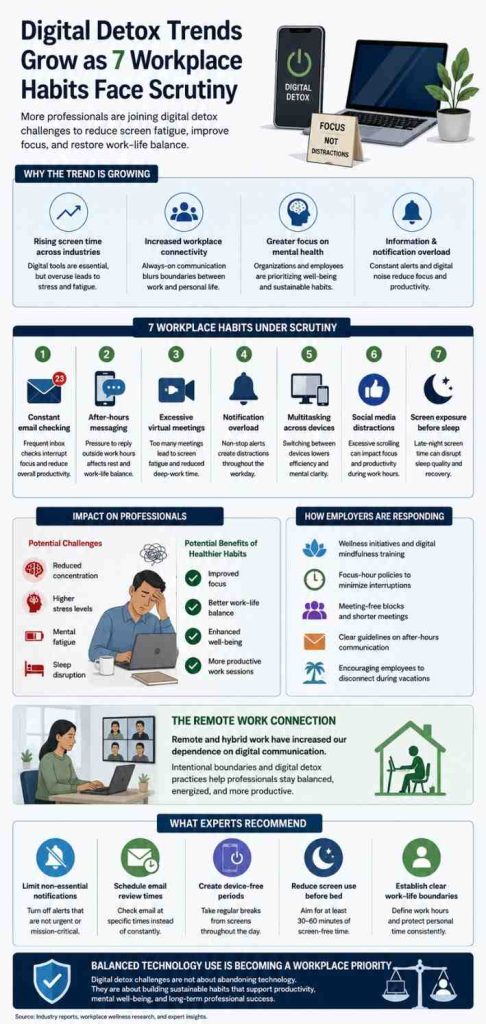
Seven Workplace Habits Under Growing Scrutiny
Several workplace behaviors are increasingly being examined as organizations seek healthier digital practices.
1. Constant Email Checking
Many professionals check email dozens of times throughout the day. Frequent inbox monitoring can interrupt concentration and reduce productivity.
Digital wellness experts often recommend scheduled email review periods instead of reacting immediately to every incoming message.
2. After-Hours Work Communication
The expectation of responding to messages during evenings and weekends has become a common concern among employees.
Some companies are introducing policies that discourage non-urgent communications outside working hours to support work-life balance.
3. Excessive Meeting Culture
Virtual meetings have become a standard part of modern work, but excessive scheduling can contribute to screen fatigue.
Organizations are increasingly experimenting with shorter meetings, meeting-free days, and asynchronous communication methods.
4. Notification Overload
Alerts from multiple apps can create constant interruptions throughout the workday.
Many digital detox participants choose to disable non-essential notifications, allowing them to focus on priority tasks without continuous distractions.
5. Multitasking Across Devices
Switching between smartphones, laptops, tablets, and messaging platforms may create the illusion of productivity while reducing overall efficiency.
Research has consistently suggested that frequent task-switching can negatively affect concentration and performance.
6. Social Media Consumption During Work Hours
While social media can provide professional networking opportunities and industry updates, excessive usage may affect focus and productivity.
Digital detox programs often encourage participants to establish designated times for social media engagement.
7. Screen Exposure Before Sleep
Many professionals continue using digital devices late into the evening, potentially affecting sleep quality.
Reducing screen exposure before bedtime remains one of the most common recommendations within digital wellness initiatives.
How Companies Are Responding
Businesses are increasingly recognizing that employee well-being and productivity are closely connected.
Some organizations have introduced wellness programs that include digital mindfulness training, focus hours, notification management strategies, and guidance on healthy technology usage.
Several companies are also encouraging employees to take uninterrupted breaks during the workday and fully disconnect during vacations.
The growing interest in digital wellness reflects a broader understanding that productivity is not simply about working longer hours but also about maintaining sustainable work habits.
The Role of Remote and Hybrid Work
The shift toward remote and hybrid work arrangements has transformed professional communication patterns.
Digital tools have enabled teams to collaborate across locations and time zones, but they have also increased reliance on screens for nearly every aspect of work.
Many professionals now spend large portions of their day attending virtual meetings, managing digital workflows, and communicating through messaging platforms.
Digital detox challenges have emerged as one response to these changes, helping workers establish clearer boundaries between work and personal life.
For remote employees in particular, intentional periods of disconnection can serve as a way to recreate the separation that traditional office environments once provided.
Mental Health and Productivity Benefits
Supporters of digital detox initiatives point to several potential benefits.
Participants frequently report improved concentration, reduced stress levels, better sleep habits, and increased awareness of how they use technology.
Some individuals also find that limiting unnecessary digital engagement allows them to spend more time on deep work, creative thinking, physical activity, and face-to-face interactions.
Mental health professionals often emphasize that the objective is not to eliminate technology but to use it more intentionally.
This distinction is important because modern workplaces depend heavily on digital tools. Effective digital wellness strategies typically focus on balance rather than complete disconnection.
Challenges and Criticisms
Despite growing popularity, digital detox programs are not without challenges.
Certain professions require constant connectivity due to operational, customer service, or emergency response responsibilities. In such environments, extended periods of disconnection may not be practical.
Critics also argue that digital detox initiatives alone cannot solve workplace stress if broader organizational issues remain unaddressed. Excessive workloads, unrealistic expectations, and insufficient staffing may continue to contribute to burnout regardless of screen-time reductions.
As a result, many experts advocate for combining personal digital wellness practices with organizational changes that support healthier work environments.
A Growing Conversation About Healthy Technology Use
The increasing popularity of digital detox challenges reflects a larger societal discussion about the role of technology in daily life.
As digital tools continue to shape how people work, communicate, and access information, professionals are becoming more aware of the importance of maintaining control over their attention and time.
Organizations are likewise recognizing that employee well-being is an important component of long-term productivity and performance.
Rather than viewing technology as either entirely beneficial or harmful, many digital wellness advocates encourage a more balanced approach—one that leverages the advantages of connectivity while minimizing its potential drawbacks.
As workplaces continue evolving, digital detox challenges are likely to remain part of broader efforts to promote healthier work habits, improve mental well-being, and create more sustainable relationships with technology in an increasingly connected world.
Highlights
- Digital detox challenges are gaining popularity among professionals seeking healthier technology habits.
- Growing concerns about burnout, screen fatigue, and constant connectivity are driving interest in digital wellness initiatives.
- Workplace behaviors such as excessive email checking, notification overload, and after-hours communication are receiving increased scrutiny.
- Remote and hybrid work models have intensified reliance on digital tools, making work-life boundaries harder to maintain.
- Companies are introducing wellness programs and policies designed to encourage healthier technology use.
- Participants often report benefits including improved focus, reduced stress, and better sleep quality.
- Experts emphasize balanced technology use rather than complete disconnection from digital devices.
FAQ
What is a digital detox challenge?
A digital detox challenge is a structured effort to reduce non-essential technology use for a specific period to improve focus, well-being, and productivity.
Why are professionals participating in digital detox programs?
Many professionals are seeking relief from screen fatigue, notification overload, workplace stress, and blurred work-life boundaries.
Does a digital detox mean avoiding technology completely?
No. Most digital detox programs focus on reducing unnecessary digital engagement rather than eliminating technology altogether.
How can excessive screen time affect workplace performance?
Excessive screen exposure may contribute to distractions, reduced concentration, stress, fatigue, and lower productivity.
What workplace habits are commonly targeted during digital detox initiatives?
Common targets include constant email checking, excessive meetings, after-hours communication, notification overload, and unnecessary social media usage.
How has remote work influenced digital detox trends?
Remote and hybrid work arrangements have increased reliance on digital communication tools, leading many workers to seek healthier boundaries around technology use.
Are companies supporting digital wellness efforts?
Yes. Many organizations are introducing wellness programs, focus hours, meeting-free periods, and policies designed to promote healthier technology habits.
Can digital detox challenges improve mental well-being?
Many participants report reduced stress, improved focus, and better sleep quality after adopting healthier digital habits.
Are digital detox strategies suitable for every profession?
Not always. Some roles require constant connectivity, making extended periods of disconnection difficult to implement.
What is the long-term significance of the digital detox movement?
The trend reflects a broader shift toward sustainable work practices, employee well-being, and more intentional use of technology in professional environments.
Edited By E. Devanshi varma
Also Read: IPL Honey-Trap Row Sparks 7 Big Questions Before Playoffs
Follow us on Google News: Click Here