

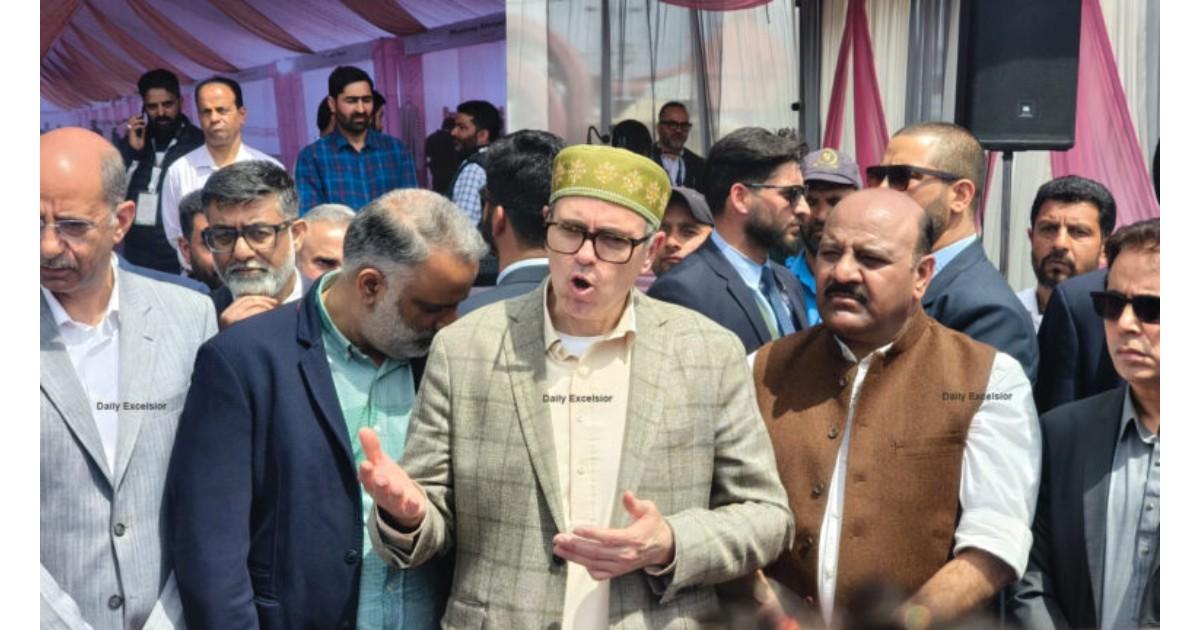
Jammu and Kashmir Chief Minister Omar Abdullah on Wednesday called on opposition parties within the INDIA bloc to formulate a collective response to the proposed parliamentary delimitation bill. Speaking to reporters in Srinagar on April 15, Abdullah emphasized that a fragmented approach by individual parties would weaken the opposition’s position in Parliament.
His remarks come ahead of a key meeting of opposition leaders scheduled to be held in New Delhi at the residence of Congress president Mallikarjun Kharge, where the bloc is expected to deliberate on a unified strategy.
Key Announcements / Highlights
- Omar Abdullah stressed the need for a joint opposition response to the proposed delimitation bill.
- He raised concerns over previous delimitation exercises, alleging political bias in favor of the ruling party.
- The INDIA bloc will discuss its parliamentary strategy at a meeting convened by Mallikarjun Kharge.
- Proposed changes include possible increases in Lok Sabha seats and provisions for women’s representation.
- Abdullah highlighted the importance of coordinated decision-making over isolated party responses.
Opposition Seeks Unified Strategy
Addressing the media, Omar Abdullah underscored the importance of unity among opposition parties when dealing with significant legislative proposals such as the delimitation bill. He noted that the INDIA bloc, a coalition of opposition parties formed to counter the ruling alliance, must arrive at a consensus before taking any stance in Parliament.
According to Abdullah, the complexity and implications of the proposed bill require a coordinated political response rather than fragmented reactions from individual parties. He argued that a divided opposition risks diluting its influence during parliamentary debates and decision-making.
He confirmed his participation in the upcoming INDIA bloc meeting in Delhi, where leaders are expected to discuss both the content of the bill and the broader political strategy. The meeting is seen as crucial in determining how the opposition will engage with the legislation in Parliament.
Concerns Over Past Delimitation Exercises
A significant portion of Abdullah’s remarks focused on previous delimitation exercises, which he criticized for allegedly favoring the ruling Bharatiya Janata Party and its allies.
Delimitation refers to the process of redrawing the boundaries of electoral constituencies to reflect changes in population. While the exercise is intended to ensure fair representation, Abdullah suggested that past implementations were influenced by political considerations.
He pointed to several aspects of the earlier exercise, including the distribution of seats, the restructuring of constituencies, and the reassignment of voters. According to him, these changes appeared to be designed in a way that could benefit the BJP electorally.
Such concerns are not new in Indian politics, where delimitation has often been a contentious issue. Critics have frequently argued that the process, if not conducted transparently, can alter electoral dynamics and impact democratic representation.
Proposed Delimitation Bill: What’s at Stake
The proposed parliamentary delimitation bill is expected to introduce significant changes to India’s electoral framework. While details are yet to be finalized, early indications suggest that the bill may include:
- An increase in the number of seats in the Lok Sabha to reflect population growth
- Adjustments to constituency boundaries across states
- Provisions aimed at enhancing representation, including for women
These proposed changes have far-reaching implications. Increasing the number of Lok Sabha seats could shift the balance of political power among states, particularly between those with higher population growth and those with slower growth rates.
Additionally, any changes to constituency boundaries can influence electoral outcomes by altering the demographic composition of voters in specific regions. This makes the delimitation process highly sensitive and politically significant.
Official Statement Reframed
Omar Abdullah reiterated that the opposition must carefully evaluate the proposed bill before taking a position. He emphasized that decisions should not be made in isolation, as doing so would undermine the collective strength of the INDIA bloc.
He stated that the alliance needs to determine both its response to the bill and its broader role in Parliament during discussions. A unified stance, he suggested, would allow the opposition to present a stronger and more coherent argument.
At the same time, he indicated that the opposition would examine all aspects of the proposed changes, including the increase in parliamentary seats and measures related to representation.
Context and Background
Delimitation in India is carried out by an independent commission, typically after a census, to ensure that each constituency has roughly equal population representation. However, the process has been frozen for several decades to maintain a balance between states with differing population growth rates.
The last major delimitation exercise took place in 2002, based on the 2001 Census. Since then, India’s population has grown significantly, leading to renewed discussions about updating constituency boundaries and increasing the number of parliamentary seats.
The issue has gained prominence in recent years as policymakers consider how to address demographic changes while maintaining equitable representation. At the same time, political parties remain wary of how such changes could impact their electoral prospects.
For opposition parties, the proposed bill represents both an opportunity and a challenge. On one hand, it offers a chance to advocate for fair representation and transparency. On the other, it raises concerns about potential political advantages for the ruling alliance.
Public Impact: Why This Matters
The delimitation process directly affects voters by determining how constituencies are structured and how representatives are elected. Changes to constituency boundaries can influence which communities are grouped together, potentially impacting the issues that receive political attention.
If the number of Lok Sabha seats is increased, it could lead to more granular representation, allowing MPs to focus on smaller populations. However, it may also shift political power among states, particularly those with higher population growth.
Provisions for women’s representation, if included in the bill, could mark a significant step toward gender parity in Indian politics. Increased representation of women in Parliament has long been a demand of various political and civil society groups.
For the general public, the key concerns revolve around fairness, transparency, and accountability. Ensuring that the delimitation process is conducted impartially is critical to maintaining trust in the electoral system.
Opposition Dynamics and Political Implications
The INDIA bloc’s response to the delimitation bill will be closely watched, as it reflects the alliance’s ability to function cohesively on major policy issues. A unified stance could strengthen the opposition’s position in Parliament and enhance its credibility among voters.
Conversely, any internal disagreements could weaken the alliance and provide an advantage to the ruling coalition. This makes the upcoming meeting at Mallikarjun Kharge’s residence particularly significant.
The issue also has broader political implications, as it touches on questions of federalism, representation, and electoral fairness. How the opposition navigates these complexities could shape the political narrative in the lead-up to future elections.
Looking Ahead
As discussions around the proposed delimitation bill continue, the focus will remain on how political parties respond to the potential changes. The INDIA bloc’s meeting in Delhi is expected to provide clarity on the opposition’s strategy and priorities.
With the stakes high, both the government and the opposition are likely to approach the issue cautiously. For citizens, the outcome will play a crucial role in shaping the structure of representation in the years to come.
Inputs and images : Hindusthan Samachar
Edited By E. Devanshi varma
Also Read: Amarnath Yatra Registration Begins with 57-Day Pilgrimage Schedule Announced
Follow us on Google News: Click Here