

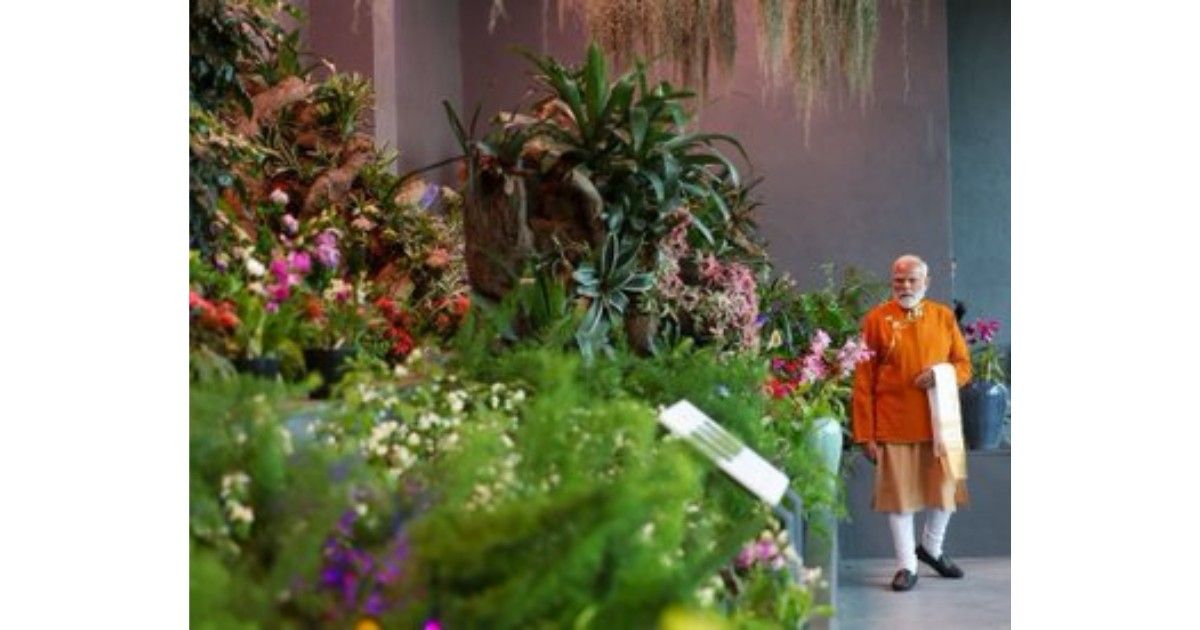
Gangtok, April 28: Prime Minister Narendra Modi visited the Orchidarium at Swarnajayanti Maitri Manjari Park in Gangtok on Tuesday, where he lauded Sikkim’s biodiversity and environmental efforts. Describing the experience as “mesmerising,” the Prime Minister highlighted the state’s unique ecological wealth and its role in promoting sustainable living and conservation.
The visit formed part of his broader engagement in the region, where he interacted with officials, botanists, and local stakeholders involved in preserving Sikkim’s natural heritage.
Key Announcements / Highlights
- Prime Minister Modi praised Sikkim’s biodiversity as “extraordinary”
- Orchidarium showcased as a modern centre for conservation and education
- Emphasis on eco-tourism and sustainable livelihoods
- Digital and interactive systems introduced for public awareness
- Recognition of community-driven conservation efforts
A Closer Look at the Orchidarium
The Orchidarium at Swarnajayanti Maitri Manjari Park has been developed as a modern botanical facility aimed at preserving and showcasing Sikkim’s rich orchid diversity. Designed as a state-of-the-art experience centre, it houses a wide range of orchid species native to the Himalayan region.
Sikkim is known to be home to over 500 species of orchids, making it one of India’s most significant biodiversity hotspots. The Orchidarium serves not just as a display centre but also as a hub for research, conservation, and public education.
The facility integrates several features to enhance visitor experience, including:
- Interactive digital displays explaining plant species
- QR-based information systems for self-guided tours
- Climate-controlled conservatories to preserve rare orchids
- Educational signage focusing on sustainable gardening
These elements aim to make the Orchidarium accessible and engaging for both tourists and researchers, while also spreading awareness about environmental conservation.
Official Statement
Speaking about his visit, Prime Minister Modi said he was deeply impressed by the Orchidarium’s beauty and the state’s commitment to ecological preservation.
He noted that Sikkim’s biodiversity reflects a harmonious relationship between people and nature. According to him, such initiatives not only celebrate natural heritage but also inspire individuals and communities to adopt sustainable lifestyles.
The Prime Minister further emphasized that protecting biodiversity is essential not just for environmental balance but also for future generations. He acknowledged the role of local communities and government efforts in maintaining Sikkim’s ecological integrity.
Interaction with Experts and Local Stakeholders
During his visit, the Prime Minister interacted with forest department officials, botanists, and horticulturists working in the region. These interactions focused on understanding ongoing initiatives that link conservation with economic development.
Officials briefed him on programs that integrate biodiversity protection with eco-tourism. These initiatives aim to create sustainable income opportunities for local communities while ensuring minimal environmental impact.
Local horticulturists also showcased their work in cultivating orchids and other native plants. Their efforts highlight how traditional knowledge and modern techniques can work together to preserve biodiversity.
Context: Sikkim’s Environmental Leadership
Sikkim has long been recognized as a leader in environmental conservation in India. It became the country’s first fully organic state in 2016, banning chemical fertilizers and pesticides to promote sustainable agriculture.
The state’s policies have consistently focused on:
- Protecting forest cover
- Promoting eco-friendly tourism
- Encouraging organic farming
- Preserving indigenous flora and fauna
The development of the Orchidarium aligns with these broader goals. It represents a continuation of Sikkim’s efforts to balance development with environmental sustainability.
The park itself was established as part of the state’s Golden Jubilee celebrations, marking 50 years of Sikkim’s statehood. It is linked to the Jawaharlal Nehru Botanical Garden, further strengthening its role as a centre for biodiversity conservation.
Why This Matters
The Prime Minister’s visit brings national attention to Sikkim’s environmental model at a time when climate change and biodiversity loss are global concerns.
India, as one of the world’s most biodiverse countries, faces challenges in balancing development with conservation. Initiatives like the Orchidarium demonstrate how this balance can be achieved through:
- Public awareness and education
- Integration of technology in conservation
- Community participation
- Promotion of eco-tourism
By highlighting Sikkim’s approach, the visit underscores the importance of replicating similar models in other parts of the country.
Public Impact
The Orchidarium is expected to have multiple benefits for the public:
1. Tourism Boost
The facility adds to Gangtok’s appeal as a tourist destination, attracting nature enthusiasts, researchers, and students. Enhanced tourism can contribute to the local economy.
2. Educational Value
With its interactive features, the Orchidarium serves as a learning space for visitors. It simplifies complex ecological concepts, making them accessible to a wider audience.
3. Livelihood Opportunities
Eco-tourism and horticulture initiatives linked to the Orchidarium create income opportunities for local communities. This includes guided tours, plant cultivation, and related services.
4. Environmental Awareness
By showcasing the importance of biodiversity, the Orchidarium encourages visitors to adopt environmentally responsible practices in their daily lives.
Sustainable Tourism and Future Outlook
The Prime Minister highlighted the role of green spaces like the Orchidarium in promoting sustainable tourism. Unlike conventional tourism models, eco-tourism focuses on minimizing environmental impact while maximizing community benefits.
Sikkim’s approach includes:
- Limiting tourist numbers in sensitive areas
- Encouraging responsible travel practices
- Promoting local culture and products
- Ensuring conservation remains a priority
The Orchidarium fits into this framework as both a tourist attraction and a conservation centre.
Looking ahead, officials indicated that similar projects could be expanded across the state. There are also plans to strengthen research capabilities and collaborate with national and international institutions.
Bridging Conservation and Development
One of the key themes emerging from the visit is the integration of conservation with development. Rather than treating them as separate goals, Sikkim’s model demonstrates how they can complement each other.
For instance:
- Orchid cultivation supports both conservation and income generation
- Eco-tourism promotes environmental awareness while boosting the economy
- Digital tools enhance visitor engagement without harming natural habitats
This integrated approach is increasingly being seen as essential in addressing modern environmental challenges.
Ending Note
Prime Minister Modi’s visit to the Orchidarium in Gangtok not only highlighted Sikkim’s natural beauty but also reinforced the importance of preserving biodiversity through innovative and inclusive approaches. As environmental concerns continue to grow, such initiatives offer practical examples of how conservation, education, and sustainable development can work together, positioning Sikkim as a model for ecological stewardship in India.
Inputs and images : Hindusthan Samachar
Edited By E. Devanshi varma
Also Read: Odisha Roll Ball Team Clinches Bronze, 5 Takeaways from East Zone Championship 2026
Follow us on Google News: Click Here