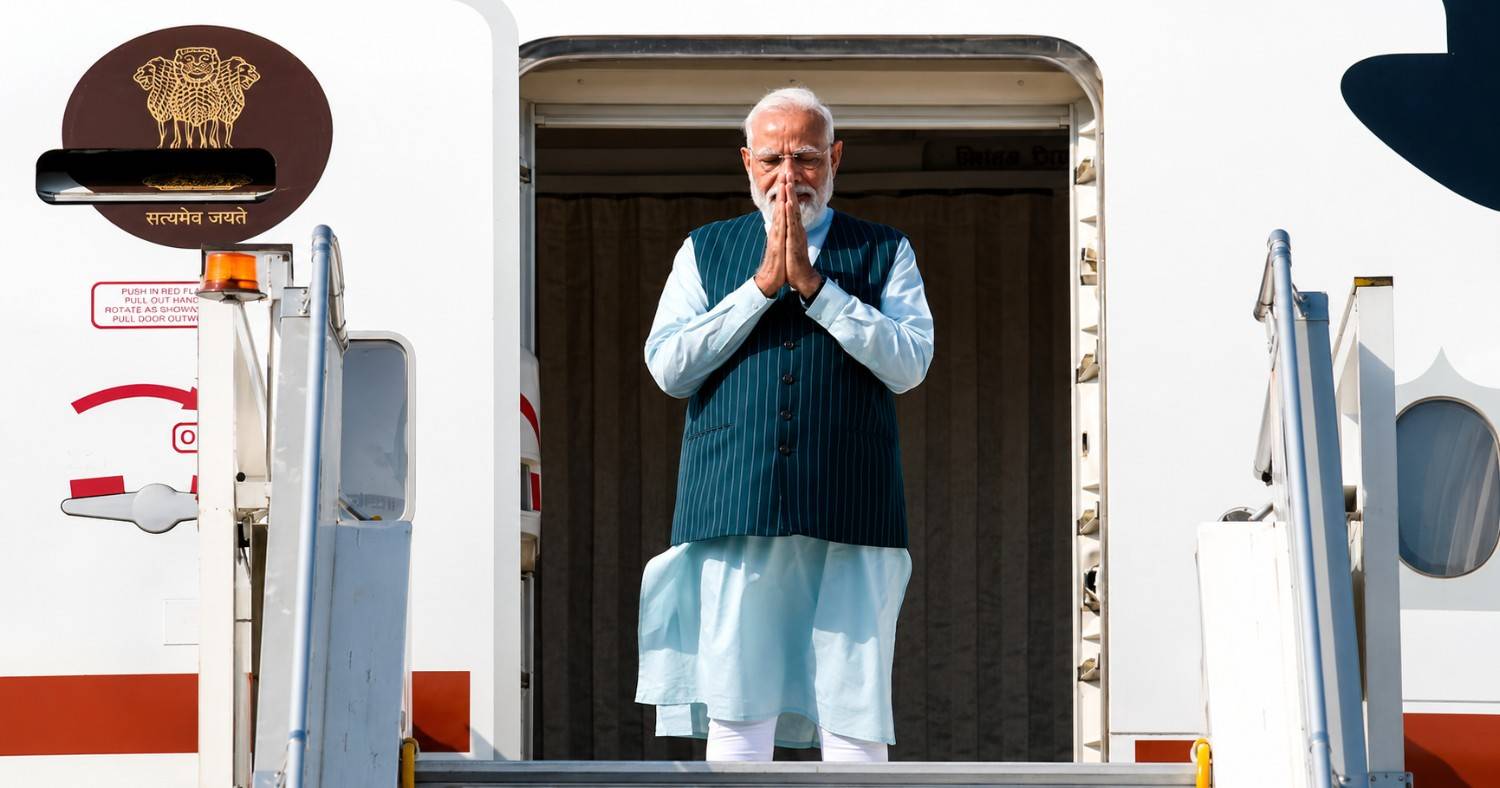


The Uttar Pradesh Assembly has suspended all pre-planned parliamentary committee study visits following Prime Minister Narendra Modi’s nationwide call for austerity amid economic pressures linked to the West Asia crisis.
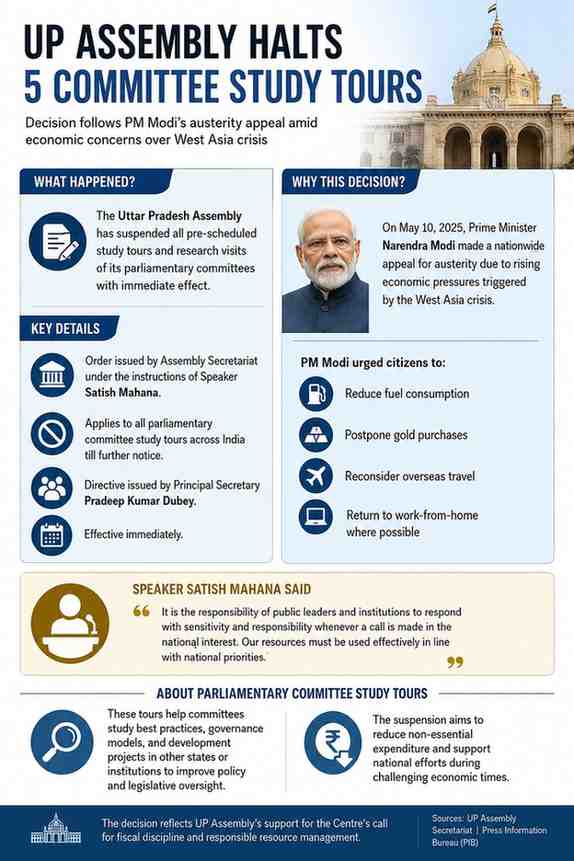
The Uttar Pradesh Assembly on Wednesday announced the suspension of all scheduled study tours and research visits planned by its parliamentary committees, citing the need to align with the Centre’s austerity measures and national priorities. The move comes days after Prime Minister Narendra Modi appealed for economic restraint in response to rising financial pressures triggered by the ongoing crisis in West Asia.
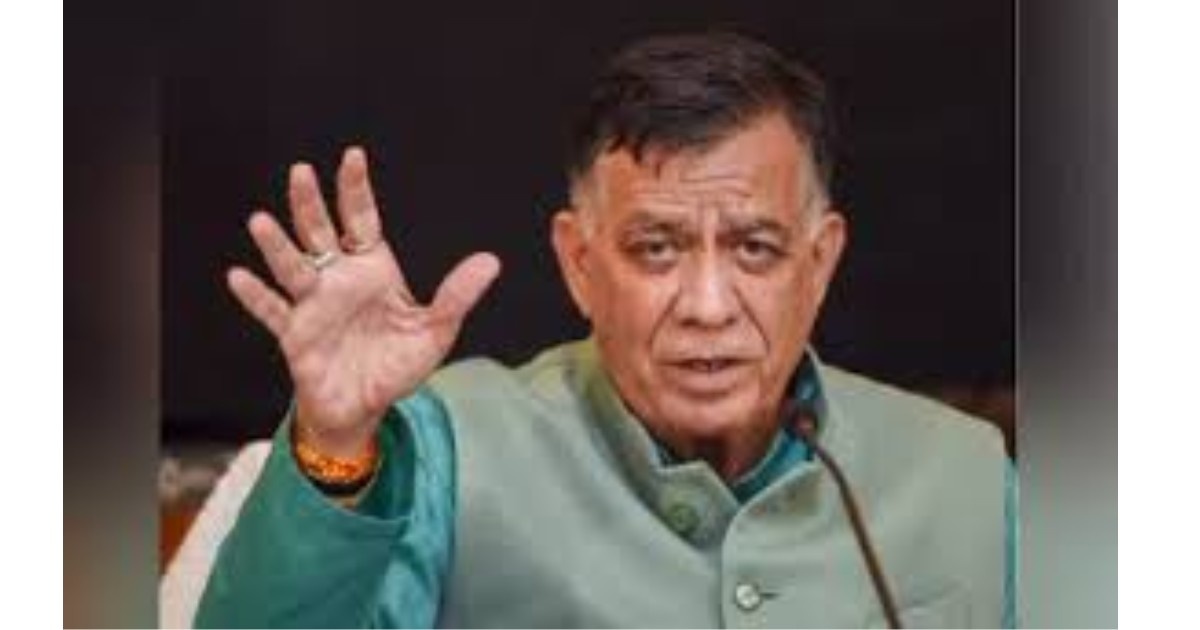
According to an official memorandum issued by the Uttar Pradesh Assembly Secretariat in Lucknow, all committee-related travel programmes have been put on hold with immediate effect until further notice. The directive was issued under the instructions of Uttar Pradesh Assembly Speaker Satish Mahana.
Assembly Secretariat Issues Immediate Directive
The Assembly Secretariat stated that the decision was taken in view of “national interest and present circumstances.” Officials said the suspension applies to all parliamentary committees of the Assembly that had previously planned educational, inspection, or policy-oriented tours to different states or institutions.
The memorandum, issued by Assembly Secretariat Principal Secretary Pradeep Kumar Dubey, clarified that the order came into effect immediately.
Parliamentary committees in state legislatures often undertake study tours to examine governance models, administrative systems, development projects, and implementation of welfare schemes in other regions. Such visits are generally aimed at improving legislative oversight and policy understanding.
However, the Assembly has now decided to postpone these activities temporarily as part of a broader effort to reduce expenditure and support the Centre’s call for fiscal discipline.
PM Modi’s Austerity Appeal Influences State Decisions
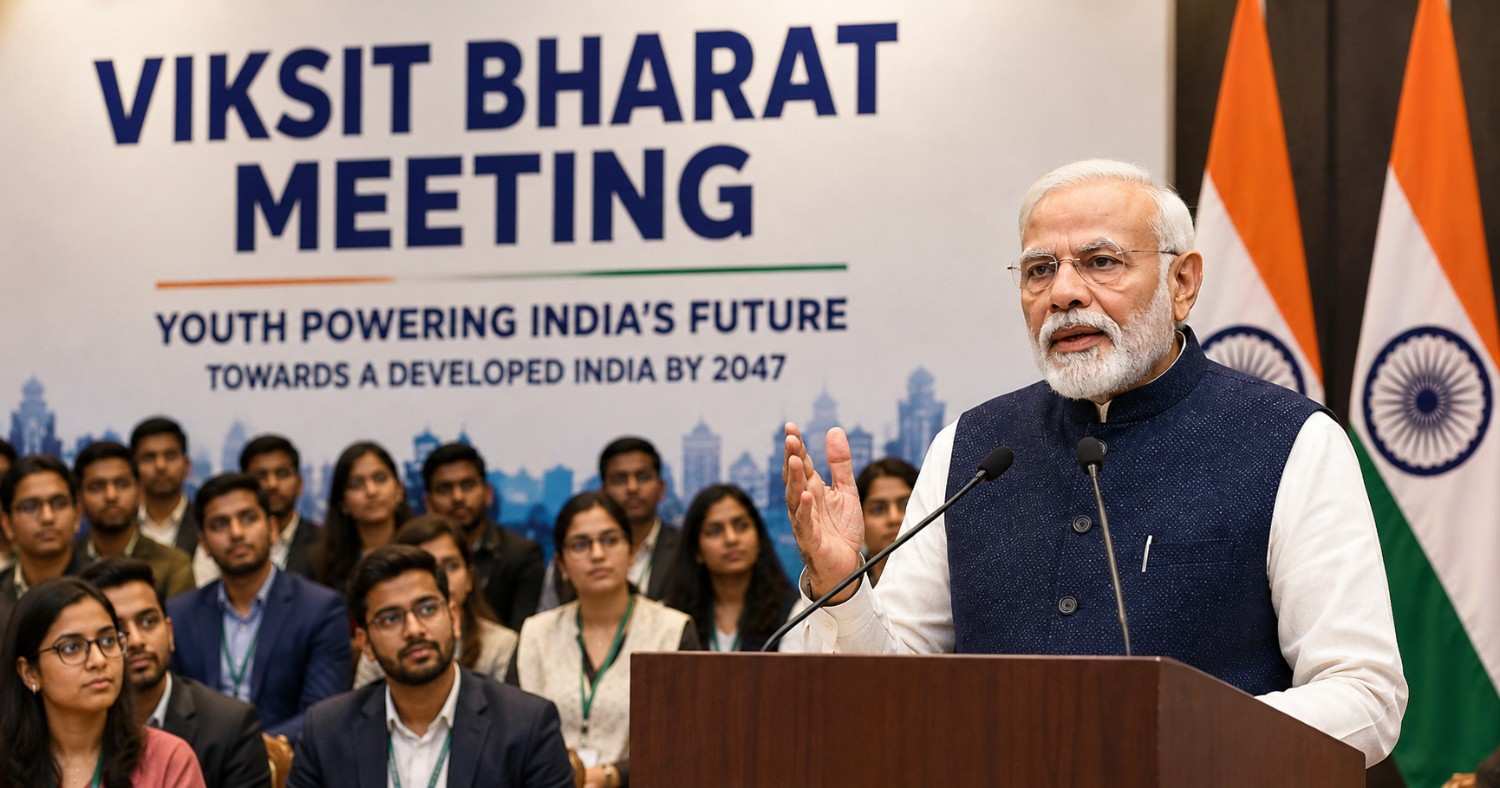
The Uttar Pradesh Assembly’s decision follows Prime Minister Narendra Modi’s appeal made on May 10, urging citizens and institutions to adopt austerity measures in light of growing economic uncertainty linked to the geopolitical situation in West Asia.
During his appeal, Modi advised people to reduce fuel consumption, defer non-essential expenses such as gold purchases, reconsider overseas travel, and, where feasible, return to work-from-home arrangements to ease economic pressure.
The Prime Minister’s remarks came amid concerns over rising global energy prices and disruptions in international trade routes due to tensions in the West Asia region. Economists have warned that prolonged instability in the region could increase import costs for countries like India, particularly in the energy sector, which heavily depends on crude oil imports.
The Uttar Pradesh Assembly appears to be among the first major state institutions to formally respond to the Prime Minister’s call by limiting administrative expenditure linked to official travel.
Speaker Satish Mahana Emphasises National Responsibility
Assembly Speaker Satish Mahana said the legislature had chosen to postpone the study visits in keeping with the spirit of national responsibility and public accountability.
In his statement, Mahana said that whenever a call is made in the national interest, public institutions and elected representatives should respond with sensitivity and responsibility. He added that available resources and preparations should be directed towards national priorities during challenging circumstances.
While the Assembly has not specified how long the suspension will remain in place, officials indicated that the matter would be reviewed periodically depending on the evolving economic and geopolitical situation.
What Are Parliamentary Committee Study Tours?
Parliamentary committee study tours are a common practice in legislatures across India. Committees made up of elected legislators visit various locations to examine successful policy models, administrative practices, and development projects.
These tours often focus on areas such as:
- Urban development
- Rural governance
- Health and education systems
- Agricultural practices
- Digital governance initiatives
- Infrastructure projects
- Environmental management
Committee members typically interact with officials, experts, and stakeholders during such visits. Findings from these tours are later discussed in committee reports and recommendations.
In many cases, these visits also help lawmakers understand how government schemes are implemented on the ground and identify best practices that can be adapted in their own state.
However, such tours also involve public expenditure related to travel, accommodation, logistics, and administrative arrangements. By suspending them, the Assembly is likely seeking to reduce non-essential government spending during a period of economic caution.
Economic Concerns Behind the Austerity Measures
The broader context behind the Centre’s austerity appeal is the growing uncertainty in global markets due to geopolitical instability in West Asia. India imports a significant portion of its crude oil requirements, and any prolonged disruption in oil-producing regions can directly impact fuel prices and inflation domestically.
Higher crude oil prices generally affect transportation, manufacturing, food distribution, and household expenses. Economists have noted that sustained increases in energy costs can place pressure on government finances as well as consumer spending.
The Prime Minister’s appeal for reduced fuel use and discretionary expenditure appears aimed at encouraging both institutions and citizens to adopt precautionary economic behaviour during this period.
While the Centre has not yet announced any mandatory nationwide austerity regulations, several government departments and institutions may voluntarily scale down avoidable spending in response to the advisory.
Administrative Spending Under Scrutiny
The suspension of committee tours also reflects a larger trend in governance where administrative spending is increasingly being reviewed during periods of economic stress.
Government travel and official events are often among the first areas where expenditure reductions are implemented during austerity phases. Similar measures have been adopted in the past during periods of economic slowdown, public health emergencies, or financial crises.
During the COVID-19 pandemic, for instance, many state governments and departments curtailed official travel, postponed conferences, and shifted meetings to digital platforms in an effort to reduce expenses and maintain operational efficiency.
Analysts say the Uttar Pradesh Assembly’s move may encourage other legislative bodies or state departments to adopt similar cost-control measures if economic uncertainty continues.
Opposition and Public Reactions Yet to Emerge
As of Wednesday evening, there had been no major public reaction from opposition parties regarding the suspension of the study tours. Political observers believe the decision is unlikely to trigger immediate controversy because it has been framed as a temporary administrative measure linked to national economic concerns.
Some governance experts, however, note that parliamentary committee visits play an important role in legislative functioning and policy evaluation. They argue that while temporary suspension may help reduce costs, extended delays could affect committee-based oversight and policy learning.
At the same time, supporters of the move say it sends a symbolic message that public institutions are willing to participate in broader national efforts to manage economic pressure responsibly.
Impact on Ongoing Committee Work
The immediate impact of the suspension is expected to fall on committees that had already scheduled inter-state visits or field inspections in the coming weeks. While the Assembly Secretariat has not released details of the affected tours, officials indicated that all pending travel-related arrangements stand deferred.
Committee work inside the Assembly, including meetings, discussions, and report preparation, is expected to continue normally. Legislators may increasingly rely on virtual interactions, digital documentation, and local-level reviews in place of physical visits for the time being.
Administrative officials are also likely to reassess budget allocations linked to travel and logistics in accordance with the new directive.
Broader Political and Governance Significance
The decision carries political significance as well because Uttar Pradesh is India’s most populous state and often sets administrative precedents that are closely watched by other states.
By aligning quickly with the Prime Minister’s austerity appeal, the Uttar Pradesh Assembly has projected institutional support for the Centre’s broader economic messaging. It also reflects how geopolitical developments abroad can influence administrative decisions within state governments and legislatures.
The move highlights the growing connection between global economic uncertainty and domestic governance priorities, particularly in sectors linked to public spending and resource management.
For now, Assembly officials have maintained that the suspension is temporary and intended to ensure that government resources are used cautiously during a period of economic sensitivity. Any future decision to resume committee study tours is expected to depend on the evolving financial and geopolitical situation in the coming months.
Inputs and images : Hindusthan Samachar
Edited By E. Devanshi varma
Also Read: Assam Assembly Polls See 7 Major Highlights as Turnout Peaks, Counting Set for May 4
Follow us on Google News: Click Here