

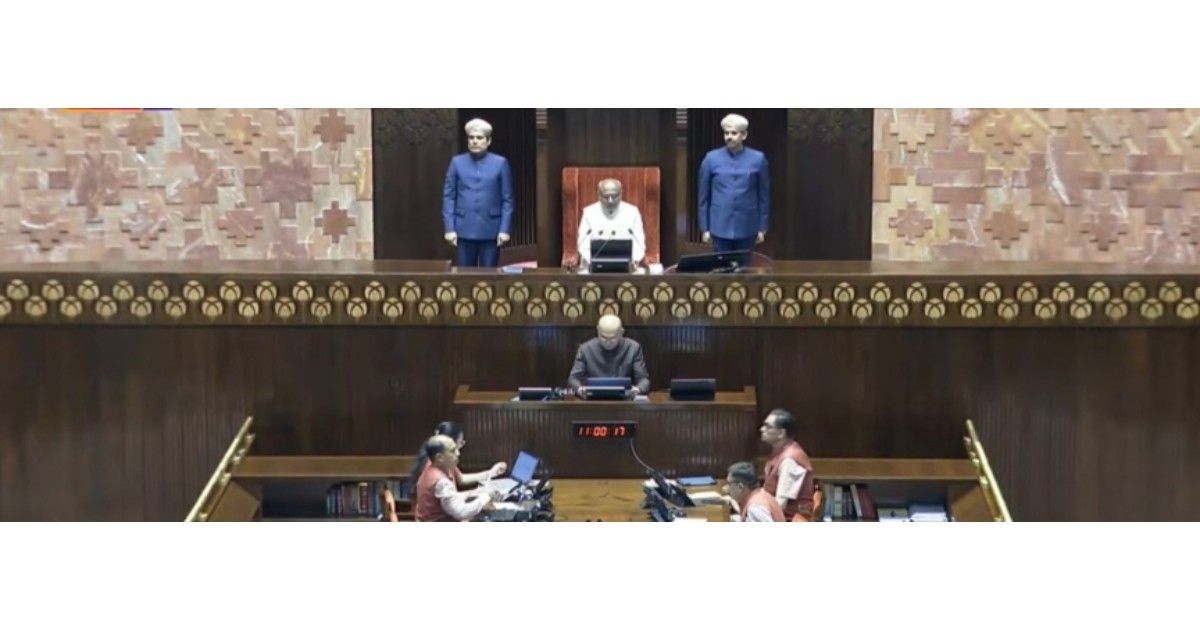
New Delhi, April 16 — The first day of Parliament’s special three-day session began with the swearing-in of newly elected Rajya Sabha members, including Nitin Nabin, as the Upper House prepared for a series of significant legislative discussions. The oaths were administered by Rajya Sabha Chairman C. P. Radhakrishnan before the House was adjourned until 11 a.m. on Friday.
The session opened on a ceremonial note but quickly set the stage for upcoming debates, particularly on a Constitution Amendment Bill concerning women’s reservation, alongside two other legislative proposals.
Key Announcements and Proceedings
The swearing-in ceremony marked the formal entry of 16 new members into the Rajya Sabha. Among them were representatives from multiple states and political parties, reflecting the diversity of India’s federal parliamentary system.
Those who took oath included:
- Nitin Nabin (BJP, Bihar)
- Terash Gowala (BJP, Assam)
- Jogen Mohan (BJP, Assam)
- Sujit Kumar (BJP, Odisha)
- Abhishek Manu Singhvi (Congress, Telangana)
- Vem Narendra Reddy (Congress, Telangana)
- Vinod Kumar Tawde (BJP, Maharashtra)
- Anurag Sharma (Congress, Himachal Pradesh)
- Sanjay Bhatia (BJP, Haryana)
- Promod Boro (UPPL, Assam)
- Karmveer Singh Baudh (Congress, Haryana)
- Phulo Devi Netam (Congress, Chhattisgarh)
- Lakshmi Verma (BJP, Chhattisgarh)
- Shivesh Kumar (BJP, Bihar)
- Ramnath Thakur (JD(U), Bihar)
- Upendra Kushwaha (RLM, Bihar)
Chairman Radhakrishnan congratulated the members following the oath-taking ceremony, formally inducting them into the functioning of the Upper House.
Tributes Mark a Solemn Start
Before legislative business began, the Rajya Sabha paid tributes to former member Mohsina Kidwai and veteran playback singer Asha Bhosle.
Such tributes are a customary part of parliamentary proceedings, allowing members to acknowledge the contributions of prominent figures in public life, politics, and culture. The inclusion of Asha Bhosle, a towering figure in Indian music, reflects Parliament’s recognition of contributions beyond politics.
Legislative Agenda Ahead
While the first day focused largely on formalities, the upcoming sessions are expected to be more substantive. According to the agenda preview, Friday’s proceedings will initiate discussions on a Constitution Amendment Bill related to women’s reservation.
The proposed legislation seeks to expand political representation for women in legislative bodies. While details of the current bill are expected to be debated in the House, such proposals historically aim to reserve a certain percentage of seats for women in Parliament and state assemblies.
In addition to this, two other bills are scheduled for discussion, following deliberations in the Lok Sabha. The government is reportedly aiming for the passage of these bills by the end of the session, indicating a tight legislative schedule.
Official Statements and Reactions
After taking oath, Nitin Nabin shared his response publicly, describing the moment as a significant milestone in his political career. In his message, he emphasized his commitment to representing Bihar’s interests at the national level and contributing to broader development goals.
Reframing his statement in formal terms, Nabin expressed that his induction into the Rajya Sabha marks the beginning of a renewed phase of public service. He highlighted his intent to advocate for his state’s priorities while supporting national development initiatives aligned with the government’s broader vision.
Such statements are typical following parliamentary induction, as newly elected members outline their priorities and reaffirm their commitment to public service.
Understanding the Role of the Rajya Sabha
The Rajya Sabha, or Council of States, is the upper chamber of India’s bicameral Parliament. Unlike the Lok Sabha, whose members are directly elected by the public, Rajya Sabha members are elected by state legislatures or nominated.
The House plays a critical role in reviewing legislation, representing states’ interests, and ensuring checks and balances within the parliamentary system. Members serve staggered six-year terms, ensuring continuity in governance.
The swearing-in of new members is a key procedural step that allows them to participate fully in debates, voting, and committee work.
Political Significance of the New Inductees
The composition of the newly sworn-in members reflects both political continuity and regional representation. The presence of multiple members from states like Bihar, Assam, and Chhattisgarh indicates ongoing political activity in these regions.
For parties such as the BJP and Congress, these inductions strengthen their presence in the Upper House, which is crucial for passing legislation, especially constitutional amendments that require broader support.
Leaders like Abhishek Manu Singhvi bring legal expertise to parliamentary debates, while regional leaders such as Promod Boro and Upendra Kushwaha represent specific community and regional interests.
Why the Women’s Reservation Bill Matters
The upcoming debate on the Constitution Amendment Bill for women’s reservation is expected to be one of the most closely watched aspects of the session.
Efforts to increase women’s representation in Indian politics have been ongoing for decades. Currently, women’s participation in Parliament remains relatively low compared to global benchmarks.
A constitutional amendment is required for such a policy because it involves changes to the structure of political representation. This means the bill must be passed by both Houses of Parliament with a special majority and, in some cases, ratified by state legislatures.
If passed, the bill could significantly alter the composition of legislative bodies, potentially leading to more inclusive policymaking.
Public Impact and What It Means for Citizens
The swearing-in of new members may appear procedural, but it has tangible implications for governance. Each member brings specific priorities, regional concerns, and policy perspectives that shape parliamentary discussions.
For citizens, this means:
- Greater representation of diverse regions and communities
- Potential for new policy initiatives and debates
- Strengthened legislative scrutiny through fresh participation
The anticipated women’s reservation bill, in particular, could have long-term social and political implications. Increased representation of women in legislatures is often linked to more inclusive policymaking, especially in areas such as health, education, and social welfare.
Looking Ahead
With the formalities of the first day completed, attention now shifts to the substantive legislative agenda. The coming days will determine the trajectory of key bills, particularly the proposed constitutional amendment.
The government’s ability to secure support in the Rajya Sabha will be critical, given the need for a special majority in constitutional matters. Opposition parties are also expected to play a significant role in shaping the debate.
As the session progresses, the focus will remain on whether consensus can be achieved on key reforms and how effectively the newly inducted members contribute to parliamentary proceedings.
Inputs and images : Hindusthan Samachar
Edited By E. Devanshi varma
Also Read: Machail Mata Yatra Opens with New Safety Rules, 1 Key Requirement for Devotees in Kishtwar
Follow us on Google News: Click Here